
Stocks across Asia rose on Thursday, driven in part by investor excitement about artificial intelligence and the surge in semiconductor names, while the coming summit between U.S. President Donald Trump and China’s Xi Jinping added geopolitical focus to markets.
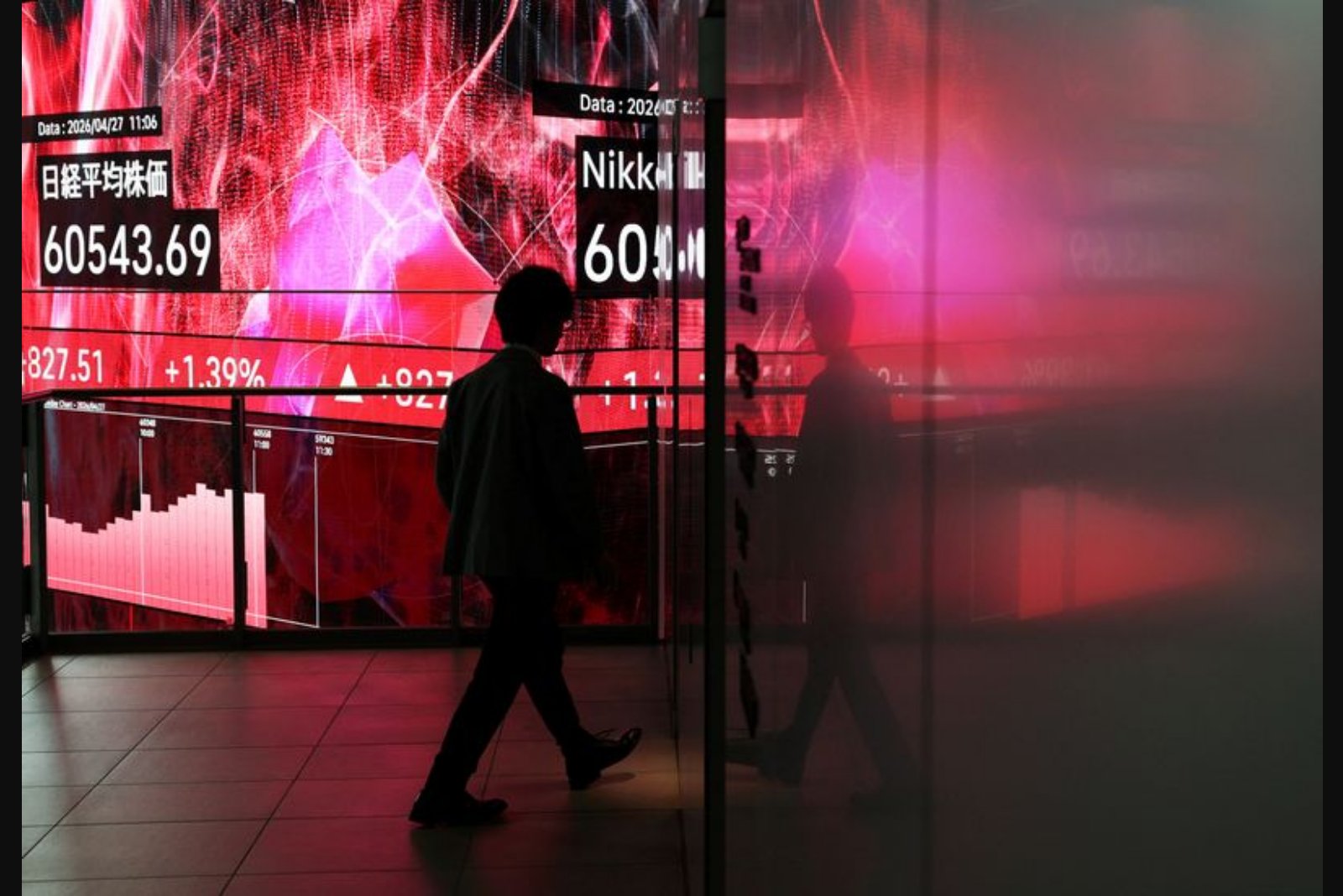
MSCI’s broadest index of Asia-Pacific shares outside Japan advanced 1.2%, keeping the benchmark close to the record high reached last week. Japan’s Nikkei remained at a fresh all-time peak, with some firms reporting earnings improvement helped by AI-linked demand.
South Korea’s KOSPI climbed 1.7% on the day and has now posted an extraordinary gain of 88% so far in 2026. One of the standout performers powering that rally, SK Hynix, has surged more than 200% this year and is reported to be hovering near a $1 trillion market capitalization, which would make it only the second South Korean company after Samsung to reach that milestone.
Investor expectations were also reflected in futures markets, where European contracts pointed to a firm open and U.S. stock futures were up 0.23% in early trade. But several strategists urged caution, highlighting that the ongoing war in the Middle East and persistently high oil prices could reintroduce inflation concerns.
"Markets are trying to run two playbooks at once: AI and earnings says buy growth, but geopolitics and energy priced are quietly re-writing the inflation trajectory in the background," said Charu Chanana, chief investment strategist at Saxo. "While today’s session may still follow the AI momentum, a macro reality check remains likely from the Trump-Xi meeting."
Political developments were central to the market narrative as Donald Trump traveled to Beijing for a string of meetings with Xi Jinping. The U.S. president aims to secure economic wins, preserve a fragile trade truce and manage flashpoints including the Iran war and U.S. arms sales to Taiwan.
On the diplomatic front, Michael Strobaek, global chief investment officer at Lombard Odier, framed expectations for the summit modestly. "I think that, amid the uncertainties around the Middle East ceasefire, that may be enough for now," Strobaek said, adding that preserving the status quo could be the most the meeting achieves given limited groundwork for a breakthrough.
Energy markets showed little change in early trading, leaving commodity-linked inflation risks intact. Brent crude futures traded near $105.76 a barrel, while U.S. West Texas Intermediate futures were about $101.14 per barrel. Oil prices remain substantially above pre-war levels, a factor that market participants say could feed into global inflation pressures.
Currency markets reacted to recent U.S. inflation surprises, supporting the dollar. U.S. producer prices posted their largest monthly increase since early 2022, following consumer price data earlier in the week that showed annual inflation rising at the fastest pace in three years. Those hotter-than-expected readings prompted some investors to price in the possibility the Federal Reserve’s next move could be a rate hike rather than a cut.
The euro traded around $1.1716, near a one-week low, and sterling was at $1.35282. The dollar index, which measures the U.S. currency against six peers, stood at 98.458 in early trading. The Japanese yen fetched 157.88 per U.S. dollar, a level that has kept market participants alert to the prospect of renewed official intervention after recent sharp moves.
In the bond market, U.S. yields held near recent highs. The two-year Treasury yield was at 3.9708%, down 1.9 basis points on the session but still close to the one-and-a-half-month high reached the previous day. The benchmark 10-year yield stood at 4.4629% after approaching a near one-year high on Wednesday.
Overall, the market tone combined enthusiasm for AI-related earnings momentum and semiconductors with an undercurrent of caution tied to geopolitical risks and energy prices. Traders and strategists warned that while the near-term session may ride the AI wave, the broader macro backdrop could prompt reassessments depending on developments from the Trump-Xi talks and the trajectory of oil and inflation data.