
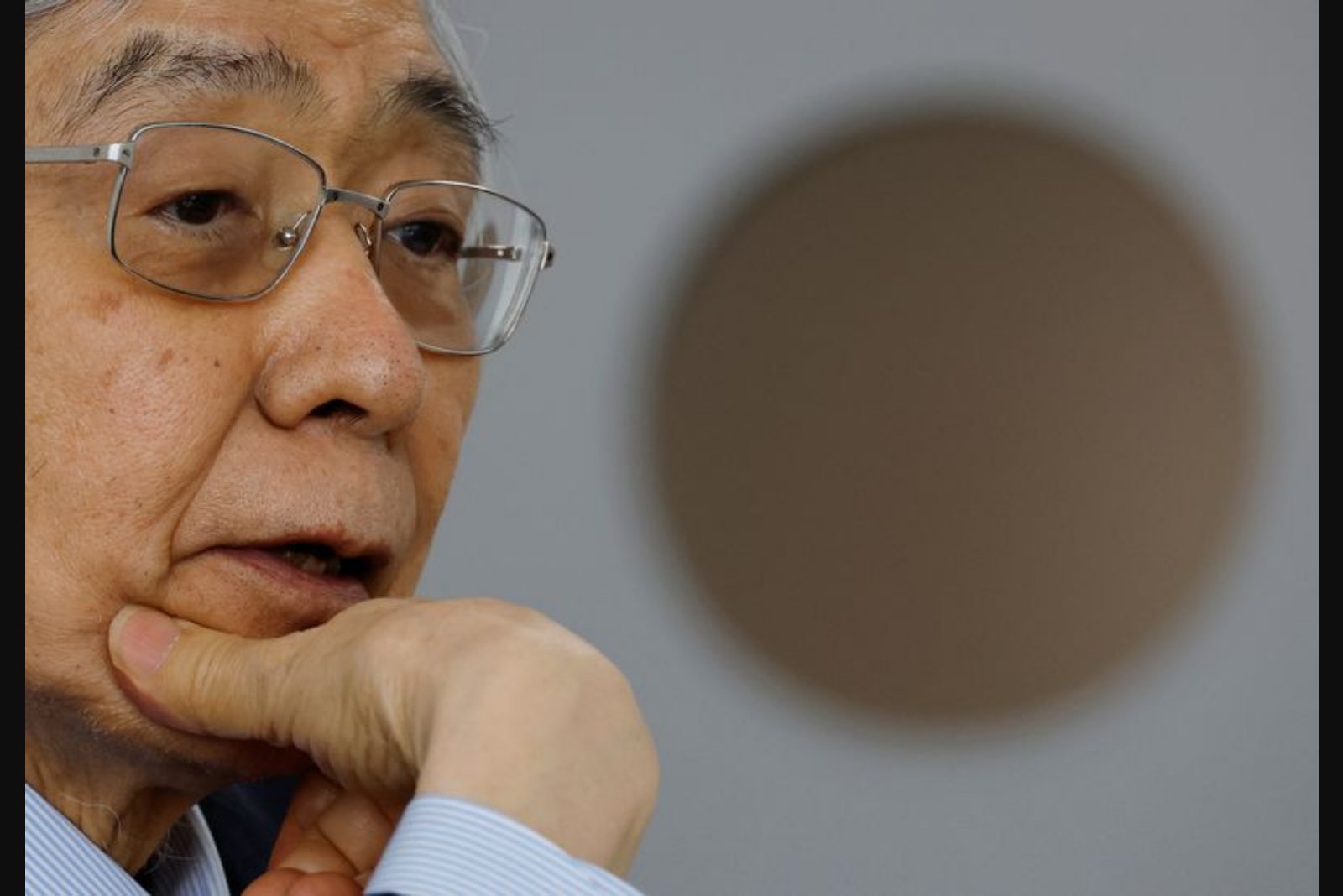
Former Bank of Japan governor Haruhiko Kuroda said on Wednesday he saw little likelihood that the yen would weaken past the 160-per-dollar mark, because authorities appeared to be defending that level through currency intervention. Kuroda said he considered a dollar/yen rate in the 120-130 range to be closer to an equilibrium determined by Japan's economic fundamentals.
The dollar was trading around 157.80 yen on Wednesday.
Kuroda identified two principal factors behind the yen's recent downtrend. First was the rising cost of importing oil, a trend he traced to the effects of the Ukraine war. Second was the interest rate gap between Japan and the United States. Both forces, he said, placed downward pressure on the currency even as authorities took steps to resist further depreciation.
Speaking from his perspective as someone who previously oversaw Japan's exchange-rate policy as the nation's top currency diplomat before assuming the central bank's governorship, Kuroda also commented on the broader domestic economy. He described Japan as being in "extremely good shape," saying inflation had moved around the central bank's 2% target and attributing much of that inflation to solid wage gains.
Addressing bond yields, Kuroda said that with the central bank gradually increasing its policy rate and inflation running around 2-3%, it was natural for the 10-year Japanese government bond yield to reach current levels near 2.58%.
The remarks recalled Kuroda's decade-long tenure as BOJ governor, which lasted until 2023, during which he implemented a large stimulus program aimed at ending prolonged deflation and stagnation. His successor, Kazuo Ueda, has overseen an exit from the ultra-loose policy stance in 2024.
Summary
Haruhiko Kuroda said the yen was unlikely to decline beyond 160 per dollar as authorities seemed to be defending that level. He argued that a dollar/yen rate around 120-130 better reflects Japan's fundamentals, pointed to higher oil import costs since the Ukraine war and U.S.-Japan interest rate divergence as key drivers of the yen's weakness, and described domestic inflation and wage gains as supporting a gradual rise in the 10-year JGB yield to about 2.58% as policy rates climb.
Key points
- Kuroda sees 120-130 dollar/yen as an equilibrium that aligns with Japan's fundamentals; authorities appear to be defending the 160 level - impacts currency markets and exporters/importers.
- Main drivers of the yen's weakness are higher oil import costs since the Ukraine war and an interest rate divergence between Japan and the United States - relevant to energy importers and fixed income markets.
- Japan's economy is described as extremely healthy, with inflation near 2% driven by solid wage gains and a 10-year JGB yield around 2.58% viewed as consistent with a gradually tightening central bank - implications for bond investors and banks.
Risks and uncertainties
- Ongoing currency intervention - if authorities continue to defend the 160 level, currency market volatility and intervention-related uncertainty could persist, affecting exporters, importers, and FX traders.
- Persistence of elevated oil import costs since the Ukraine war - continued pressure on the trade balance and inflation could affect corporate costs, especially for energy-intensive sectors.
- Interest rate divergence with the U.S. - sustained gaps in policy rates could keep pressure on the yen and influence capital flows and the outlook for domestic bond yields.