
Overview
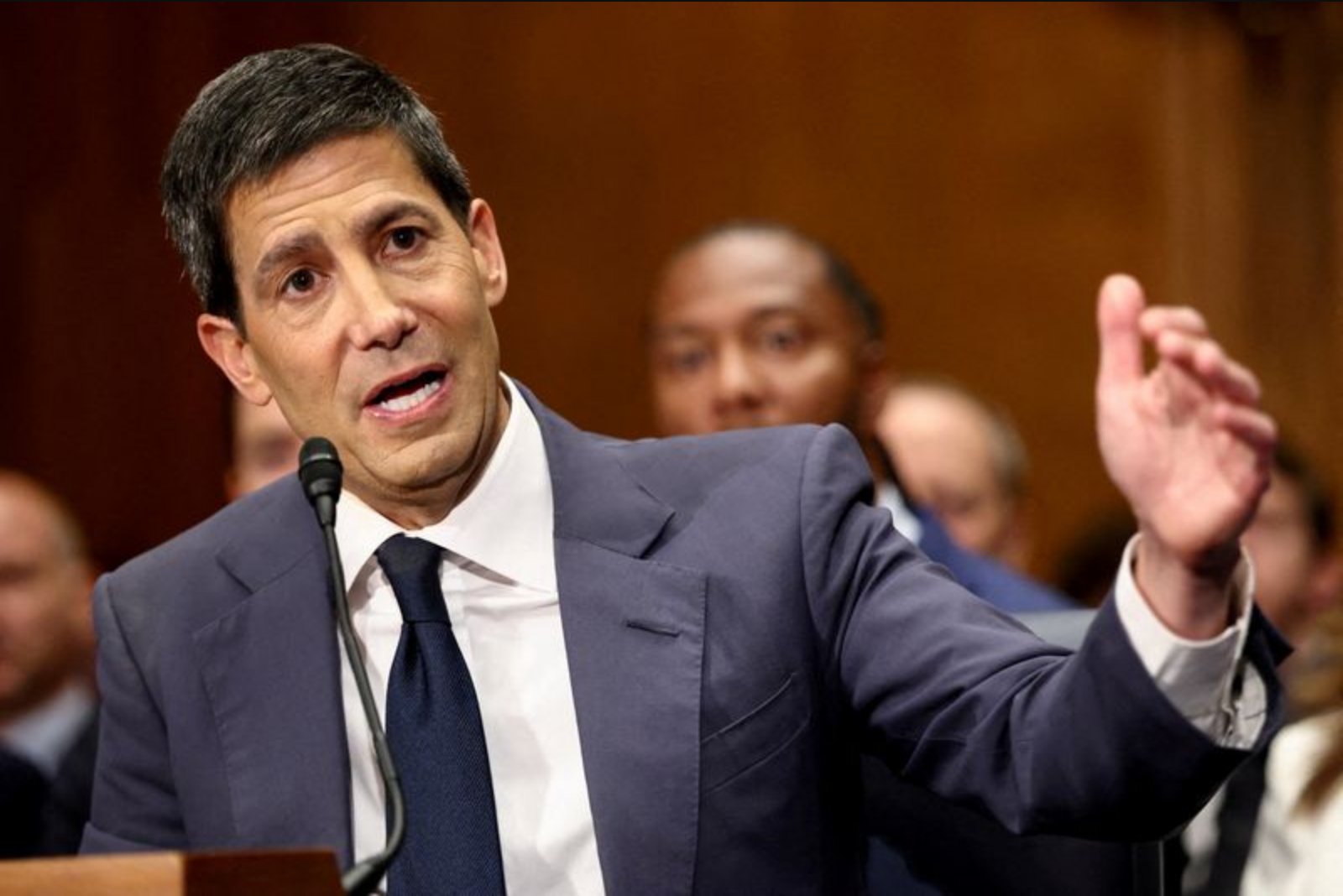
Kevin Warsh, a 56-year-old lawyer and financier who left the Federal Reserve 15 years ago in opposition to an aggressive bond-buying program, is expected to take the helm of the U.S. central bank this month with a broad plan to reform its practices. That earlier program has left the Fed with a portfolio of about $6.7 trillion, an operational legacy Warsh has criticized in the past.
His proposals extend beyond technical econometric adjustments to include changes in how the Fed communicates with markets and the public. Those adjustments would touch sensitive areas that have hardened into institutional practice since the 2007-2009 recession and financial crisis - areas that, former officials say, are difficult to alter quickly without careful planning and internal debate.
Potential near-term moves and limits
Insiders and former colleagues anticipate that Warsh could move quickly on matters that are within his personal discretion, including changes in the tone of public communication and how frequently the Fed explains policy decisions. He has signaled a preference for a leaner, less explanatory approach to central banking - a return, in his words and in his critics' characterization, to a more restrained, opaque style that predates the post-crisis emphasis on transparency and forward guidance.
But even actions that are personally directed have trade-offs. A number of former Fed officials note that some tools the Fed now routinely uses - notably the post-meeting press conference by the chair - have been judged useful by a majority of outside experts. In a recent Brookings Institution survey of 29 academic and private-sector Fed experts, nearly all respondents called the post-meeting press conference "useful or extremely useful," and just over half said the same about the Fed's quarterly Summary of Economic Projections and the accompanying "dot plot."
Former St. Louis Fed President James Bullard has described press conferences as "an international standard" for explaining policy choices and the outlook, and said changing that practice "would be hard."
Policy terrain Warsh will inherit
Warsh arrives amid a governance environment shaped by tension between the White House and the Fed. President Donald Trump nominated Warsh to replace Jerome Powell, whose eight-year tenure as Fed chair ends this week. Tensions between the White House and Powell had included public demands for rate cuts, efforts to remove a sitting governor and a Justice Department criminal inquiry into Powell that has since been closed. The case involving Governor Lisa Cook remains pending before the U.S. Supreme Court. Powell has opted to keep his seat on the Fed's Board of Governors while the legal matters complete, in part to shield the institution from further political or legal pressure.
Warsh's first substantive policy challenge will be reconciling political pressure for lower interest rates with economic data that, at present, leave limited room for easing. The U.S. unemployment rate is a relatively low 4.3 percent, and inflation remains comfortably above the Fed's 2 percent target and appears to be moving higher. When Warsh presides over his first Federal Open Market Committee meeting in June, a near-term success might be defined simply as keeping colleagues from adopting language suggesting a rate hike could be warranted - a sign that internal debate about the appropriate path for rates is active. At the Fed's April 28-29 meeting, three policymakers dissented in favor of language that contemplated a possible future rate increase; that perspective could gain traction if inflation broadens beyond components tied to tariffs or elevated oil prices.
Arguments Warsh has advanced
Over the past year, Warsh has offered several lines of argument that, if accepted by colleagues, could support lower short-term interest rates despite current data. He has suggested that productivity gains driven by artificial intelligence might reduce price pressures, that a smaller footprint in longer-dated Treasury securities could create room for lower policy rates, and that alternative measures of inflation may show slower price growth than the metrics now emphasized by the Fed.
Former colleagues caution that these ideas, while potentially coherent in theory, require rigorous support to be persuasive. Building the empirical case and winning over fellow policymakers would likely involve commissioning internal reviews and research, staged debate at the FOMC and gradual operational adjustments rather than sudden shifts. "There are so many things that he wants to do and it is just going to take time to work through that," said Randall Kroszner, who served with Warsh as a Fed governor from 2006 to 2009. "It’s not just 'off with their heads' or suddenly tomorrow we’re going to have the balance sheet be $4 trillion."
Paths to operational change
Former Fed staff and officials see a likely sequence of steps under Warsh: internal reviews of analytics and operations; debates at the FOMC; and, if consensus emerges, adjustments to operational rules such as those governing bank reserves - a possible vehicle for reducing the size of the Fed's balance sheet. Changes to the Fed's communication toolkit, including the Summary of Economic Projections and the dot plot, are also on the table. There is broad dissatisfaction within parts of the Fed system about aspects of the SEP, suggesting it could be a faster target for reform compared with deep technical shifts.
Yet the SEP and post-meeting press conferences have become potent instruments for shaping public expectations. Any attempt to downplay or eliminate them would not only require internal buy-in, but would also risk confusing markets and the public if not carefully managed.
Opposing views and the role of research
On specific points, debate is already materializing. The idea that shrinking the Fed's holdings of longer-dated securities would clear the way for policy rate cuts meets skepticism among some former officials. Similarly, while the theoretical notion that AI-driven productivity gains could reduce inflation is broadly accepted in principle, there are sharp differences over timing and net effect. Chicago Fed President Austan Goolsbee recently sketched an alternative scenario: if expectations of large AI-driven gains spur households and firms to spend more now, that demand could accelerate inflation and force the Fed to consider rate increases instead.
Goolsbee summarized the core of the disagreement as a question of timing and risk - whether supply-side disinflation from productivity improvements arrives quickly enough to offset any near-term demand boost. "He might be right in the impact on demand versus the impact on supply," Goolsbee told reporters after a conference in Los Angeles. "I think it is worth thinking about ... I don’t know what the debate ground rules are going to be ... I hope, for my purposes ... it will be rooted in serious economic research."
What to expect next
Observers expect Warsh to begin with a series of assessments designed to lay empirical groundwork for larger shifts. Fast, unilateral change appears unlikely in areas that have become entrenched as standard practice at the Fed. Instead, the process is expected to be incremental - commissioning research, debating alternatives openly at the FOMC and then, where consensus permits, adapting operational rules and communications to reflect new priorities.
For markets and sectors sensitive to interest rates, inflation measures and central bank communications - including fixed income markets, banking and interest-rate sensitive real economy sectors - the pace and clarity of any transition will matter. Immediate effects are likely to be more about signaling and tone than about sudden changes in policy settings.
Reporting note: This article synthesizes statements, recent Fed meetings and comments from current and former officials regarding the agenda and likely implementation path for changes at the Federal Reserve under Kevin Warsh.