
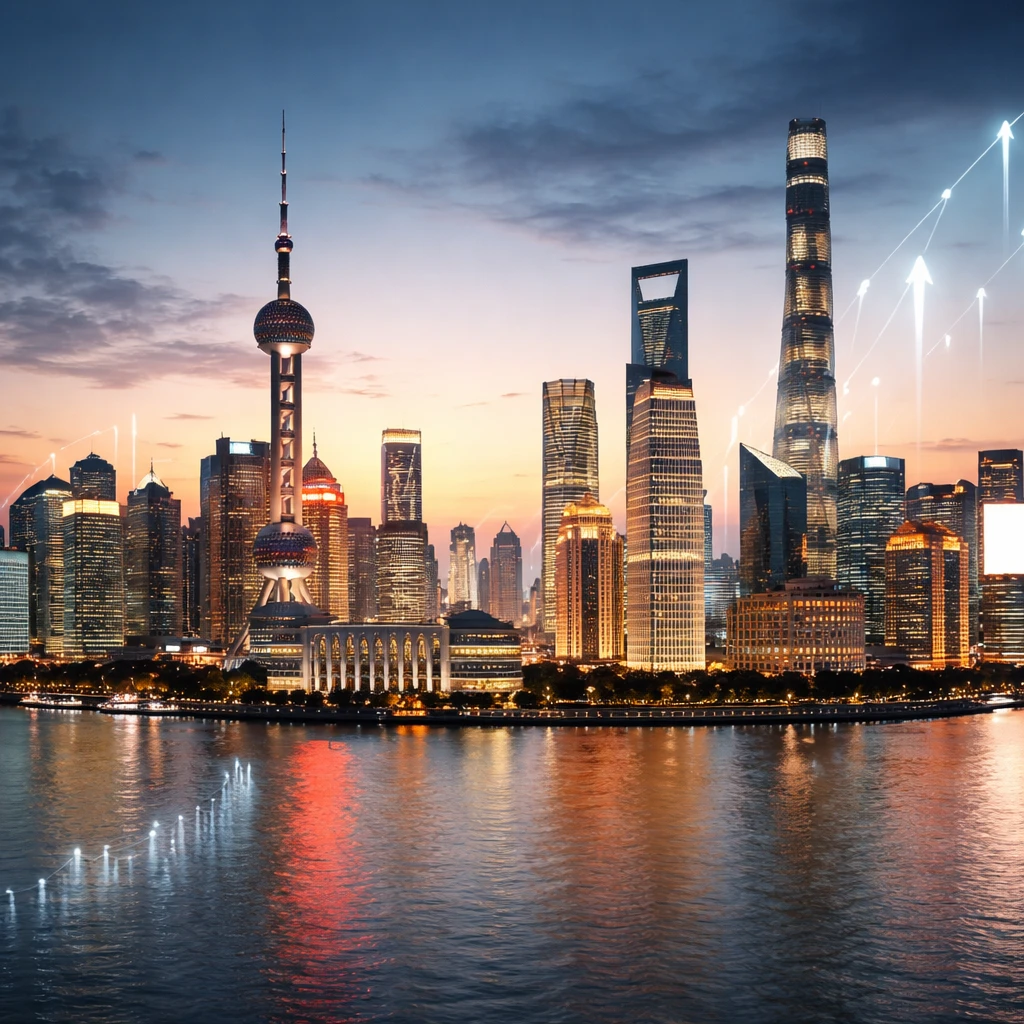
Shanghai stock indexes reached levels not seen since 2015 on Wednesday as investors increased allocations to technology names ahead of a scheduled meeting between President Donald Trump and Chinese leader Xi Jinping later this week. Hong Kong equities, which had been lower earlier in the session, finished the day in positive territory.
Market participants noted a particular lift for Chinese artificial intelligence-related stocks after news that Nvidia's Jensen Huang would be among a group of chief executives traveling with President Trump to Beijing. The move coincided with renewed appetite for tech exposure in mainland markets.
The Shanghai Composite began the trading day under pressure but rallied to close up 0.7%, marking its strongest close since July 2015. The blue-chip Shanghai Shenzhen CSI 300 index advanced about 1%.
Investors have pinned much of their attention on the upcoming bilateral talks, which are the first face-to-face meetings between the two leaders in more than six months. The talks are being viewed as an opportunity to stabilize relations that have been strained by trade disputes, the Iran war and other policy differences.
On the content of the summit, Jonas Goltermann, Chief Markets Economist at Capital Economics, wrote in a note: "While Iran will no doubt come up, it is unclear to what extent Xi can, or wants, to help the US out on that front." He added: "Our sense is that trade is more likely to be a core issue at the summit."
Commenting on the competitive dynamics around artificial intelligence, Ed Yardeni wrote in his daily blog: "Dialogue is helpful, and global cooperation on AI security would benefit everyone, but the competitive stakes are too high for either side to give much ground," followed by: "Trump and Xi will talk all things AI security in Beijing this week, but we are not counting on an entirely friendly, or open discussion."
Participants in markets appeared to be less focused on immediate fallout from the Iran war and on inflation developments, instead concentrating on the potential outcomes of the leadership meeting. Observers noted the summit could also touch on energy supply concerns in the Gulf region.
Hong Kong shares, after trading down earlier in the session, recovered to close higher on Wednesday. Overall, the moves in both mainland and Hong Kong markets reflected a rotation into technology names and a market tone influenced by the diplomatic agenda for the week.
Market snapshot: Shanghai Composite closed up 0.7% - highest since July 2015; Shanghai Shenzhen CSI 300 rose 1%. Hong Kong ended the session in positive territory after reversing earlier losses.