
Market snapshot
U.S. stock futures traded narrowly around the flatline on Wednesday as investors awaited both a high-profile diplomatic engagement and fresh inflation-related data. By 03:33 ET (07:33 GMT), the Dow futures contract had eased by 26 points, or 0.1%, S&P 500 futures were up 12 points, or 0.2%, and Nasdaq 100 futures had climbed 151 points, or 0.5%.
Trading followed a mixed session on Wall Street the previous day, when markets grappled with geopolitical tension between Washington and Tehran as well as a pullback in chipmaking stocks after recent gains driven by renewed enthusiasm around artificial intelligence. At the same time, data showed that U.S. consumer prices rose at another brisk pace in April following a steep gain in the prior month, a development that has reinforced concerns about persistent inflation.
Inflation and rates
Investors have pushed up the amount of Fed rate increases they expect through next April by a new high of 20 basis points, reflecting concerns that geopolitical-driven energy shocks could exacerbate price pressures. The benchmark 10-year U.S. government bond yield climbed to its highest level since June 2025, and the typically rate-sensitive 2-year note also moved higher. Rising yields, which tend to move inversely to bond prices, can reduce the relative appeal of equities.
Traders will also have an opportunity to review a producer prices tracker later in the day, a report that could add to the picture of inflationary momentum beyond consumer price measures.
Trump travels to China
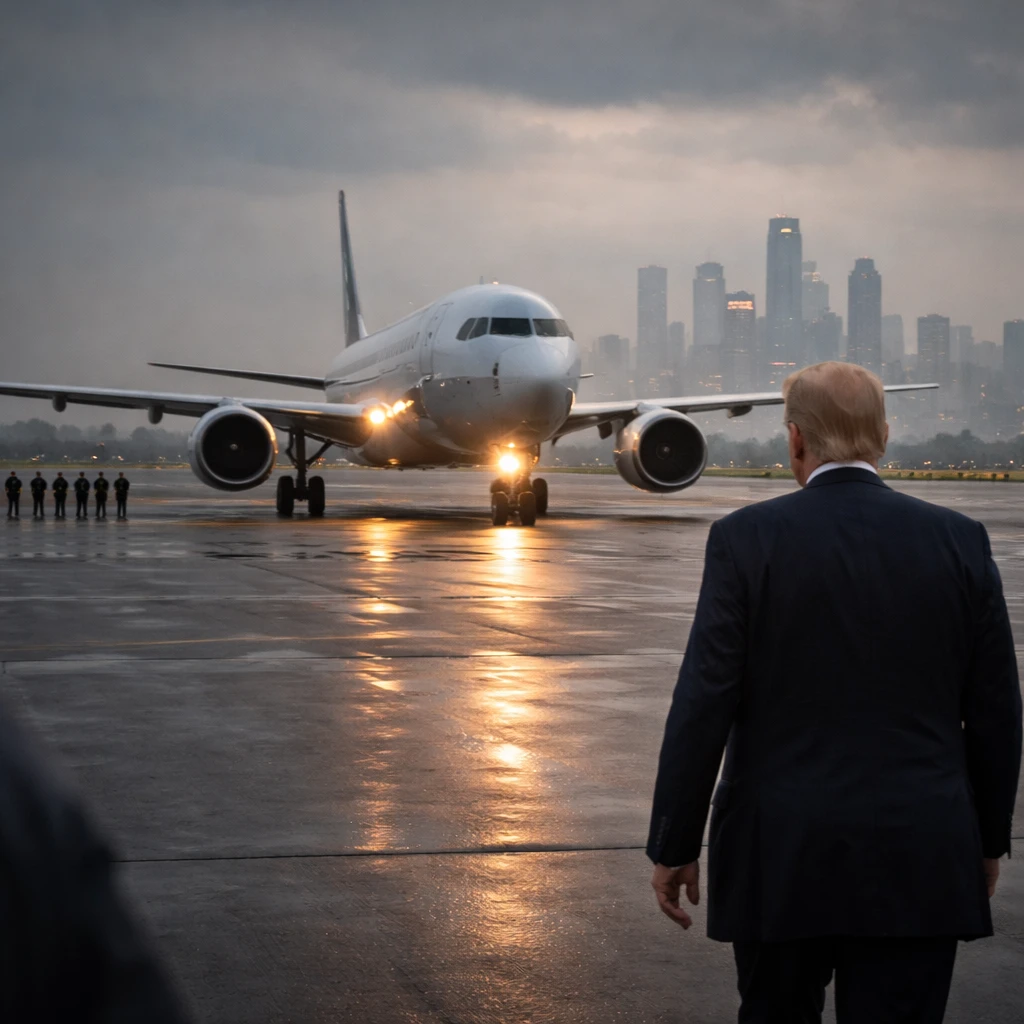
Attention has shifted to Beijing, where President Donald Trump is scheduled to meet Chinese leader Xi Jinping this week. The two presidents are expected to cover an array of issues, including trade and Taiwan. Observers also expect the conflict between the U.S. and Iran to be a focal point of discussions.
Analysts have suggested that China could play a role as an intermediary, because it is a major importer of Iranian crude, and might be asked to help guarantee any lasting peace deal. Nonetheless, some commentators have scaled back expectations that a definitive breakthrough on peace will result from the summit.
Diplomatic momentum toward a U.S.-Iran agreement appears to have slowed. Earlier in the week, President Trump dismissed an Iranian reply to a U.S. peace proposal as "unacceptable" and described the response as a "piece of garbage." Media reports have also circulated about the possibility of the White House resuming strikes against Iran. Tehran, meanwhile, has not signaled further steps to try to appease U.S. demands.
Oil: easing but elevated
The ongoing stalemate has effectively closed the Strait of Hormuz, a critical chokepoint along Iran's southern coast through which about a fifth of global oil flows. That constriction in supply routes has kept oil prices well above the roughly $70 per barrel level seen before the U.S. and Israel launched a joint assault on Iran in late February.
Analysts at Deutsche Bank noted an "increased nervousness [among investors] that a U.S.-Iran deal looks further away than most would have hoped" after earlier signs of a potentially imminent accord. As a result, Brent crude futures, the international benchmark, were last reported down 0.9% at $106.82 a barrel, a level substantially higher than the pre-conflict price baseline.
Cisco opens earnings season for April periods
On the corporate calendar, networking equipment maker Cisco Systems will report results after U.S. markets close, tabbed to kick off a series of earnings releases for firms with fiscal quarters ending in April. Results for the earlier March-ending reporting period were strong, providing some support to broader equity markets even as geopolitical tensions and the prospect of rising inflation loomed.
In February, Cisco reported adjusted gross margin that fell short of expectations, a shortfall attributed in part to a sharp increase in memory chip prices. The supply of those processors has tightened amid a rapid build-out of AI infrastructure, pushing costs higher. In response, CEO Chuck Robbins said the company was raising its own prices and revising contractual terms with customers to offset rising component costs.
Federal Reserve leadership on the cusp
The U.S. Senate is expected to vote on Wednesday to confirm Kevin Warsh as the next Federal Reserve Chair, a move that would replace Jerome Powell, whose term ends later this week. The previous day the Senate approved Warsh's nomination to the Federal Reserve's Board of Governors in a 51-45 vote, which also granted him a 14-year term on the board.
The board confirmation vote split largely along party lines, with Democrat John Fetterman of Pennsylvania joining Republicans in supporting Warsh's placement on the central bank's board. President Trump nominated Warsh to lead the Fed, with the president having consistently urged policymakers to cut interest rates to help boost economic activity.
What to watch next
- Market reaction to the producer prices tracker, which could influence expectations for inflation and interest rate paths.
- Developments from the Trump-Xi meeting, particularly any signals related to China’s potential role in mediating U.S.-Iran dynamics or statements on trade and Taiwan.
- Oil price movements driven by the ongoing closure of the Strait of Hormuz and investor sentiment about the prospects for a U.S.-Iran settlement.
- Cisco’s earnings and any management commentary on margins, component costs, pricing actions and contractual updates.
- The Senate vote on Kevin Warsh to become Fed Chair and any subsequent market reassessment of monetary policy outlook.
Bottom line
Markets entered a period of uncertainty with a mix of geopolitical tensions, inflation readings and key corporate and policy milestones all converging over a short time frame. Futures were largely flat as investors balanced the prospect of diplomatic engagement between the U.S. and China and a fresh batch of inflation data against oil market tightness and an important corporate earnings release from Cisco.
Key points
- U.S. futures were mostly unchanged ahead of President Trump's trip to China and fresh inflation data; bond yields rose to multi-month highs.
- Oil remains significantly above pre-conflict levels due to the effective closure of the Strait of Hormuz, keeping energy markets and inflation expectations under focus.
- Cisco reports after the bell, starting a wave of earnings for April-ending fiscal periods; the firm has previously cited margin pressure from higher memory chip prices and said it is raising prices and changing contract terms.
Risks and uncertainties
- Geopolitical risk: The stalemate between Washington and Tehran and the resulting transit disruption through the Strait of Hormuz could keep oil prices elevated, affecting energy sector costs and broader inflation trends.
- Inflation trajectory: Strong consumer price data for April and rising bond yields increase the risk that central banks may face renewed pressure to tighten policy, with implications for rate-sensitive sectors and equities.
- Policy uncertainty: The Senate is poised to vote on Kevin Warsh as Fed Chair; any change in Fed leadership could influence expectations for interest rates and market positioning.