
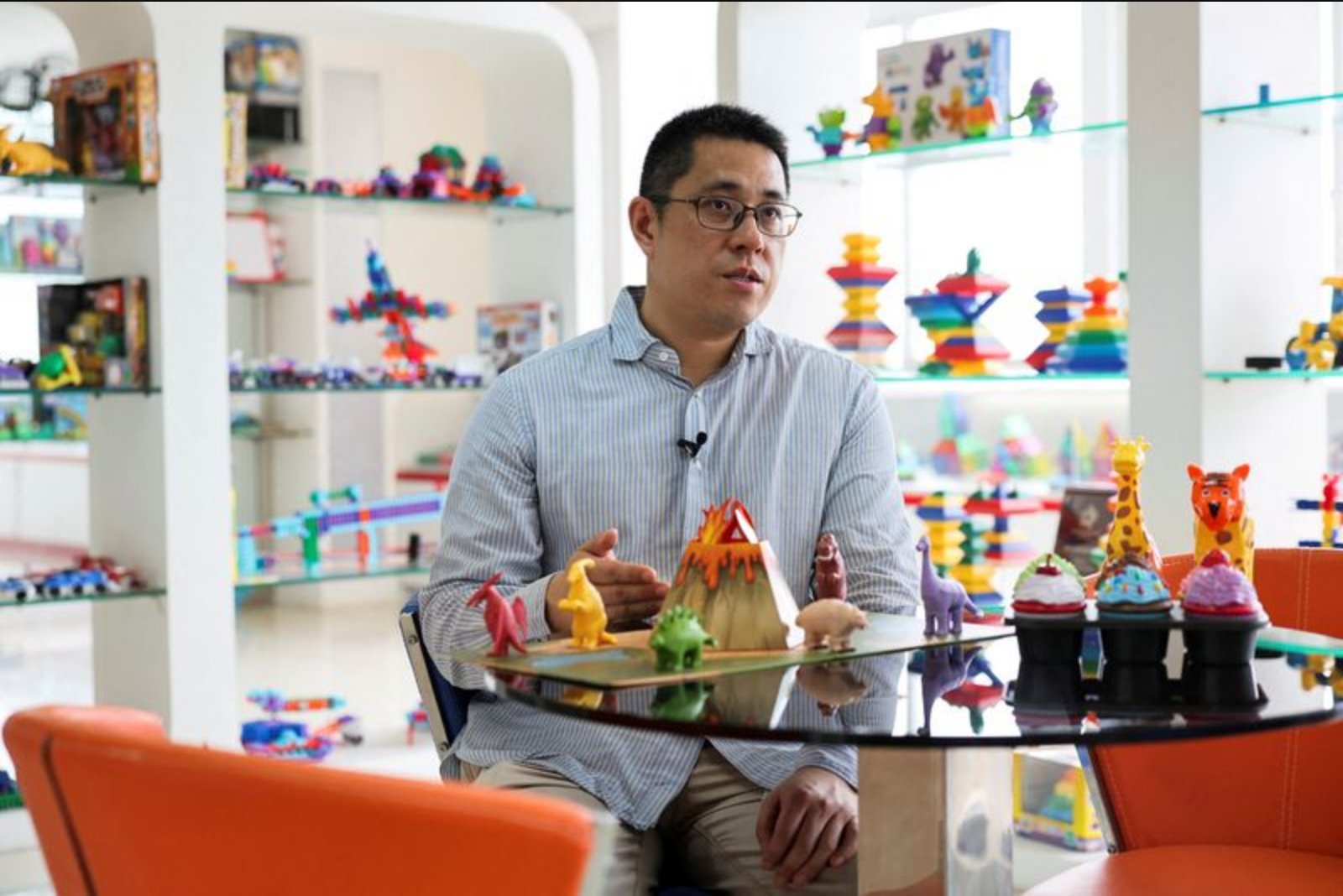
Huntar Company came within hours of insolvency after a period of extreme U.S. tariffs on Chinese imports. David Cheung, who operates the family-owned educational toy maker alongside his brother Jason, says that if Washington had maintained triple-digit levies for one more day last year, the firm would have failed.
The turnaround came when Washington and Beijing announced a trade truce in Geneva on May 12 last year, which included the rollback of the most severe duties. At that moment Huntar had production moulds on the verge of clearing Chinese customs as part of a last-ditch plan to transfer some manufacturing to Vietnam. The Cheungs immediately recalled the shipment on hearing the news, later realising that the decision likely saved the company.
Had the moulds been allowed to cross the border, Huntar would have faced the choice of installing the equipment in Vietnam or routing the tools back to China through lengthy customs procedures. Either option would have delayed output by roughly two production cycles, a disruption that would have deprived the firm of critical cash flow at a precarious moment.
"That one day would have changed everything," Cheung said. "We were very, very lucky."
The near-miss at Huntar illustrates the tangible harm inflicted by tit-for-tat tariffs and the wider potential disruption from decoupling between the two economies. Huntar employs between 400 and 500 workers in Shaoguan in southern China, producing educational toys destined for major U.S. retailers including Walmart and Target. The factory’s experience is emblematic of how policy swings transmit through manufacturing, retail sourcing and employment.
Most analysts cited in commentary surrounding recent diplomatic meetings expect the tariff truce to be extended. A widely noted factor in that view is Beijing’s control over rare earths production - materials important to U.S. industry, including defence firms - which China used as leverage during negotiations last year. "China’s export curbs were an important reminder that economic interdependence cuts both ways," said Neil Shearing, chief economist at Capital Economics. "President Trump discovered that the U.S. did not, in fact, 'hold all the cards.'"
Shearing added that attempts to stabilise ties did not resolve the root of tensions: China’s $1.2 trillion trade surplus with the United States and U.S. reliance on Chinese imports. Washington has accused Beijing of mercantilism - the practice of promoting exports and limiting imports to advance national wealth and power - while China has accused the U.S. of seeking to contain its rise. "It is a negative feedback loop: geopolitics worsen imbalances, and imbalances worsen geopolitical tensions," Shearing said.
Huntar’s origins are entwined with the migratory history of its founders. Cheung’s father fled mainland China by crossing a river into then British-controlled Hong Kong, subsequently moving to California in 1978. He worked as a cleaner in San Francisco and supplemented his income selling clothes and furniture at a flea market, eventually building a business that evolved into toy manufacturing and is now run by his two sons. The Cheungs’ family story reflects the cross-border economic links that underpin their business.
In Huntar’s sector, China supplies a dominant share of U.S. purchases. The Toy Association estimates that China accounts for 80% of toys bought by U.S. consumers in the industry. For Cheung, that concentration means U.S.-China tensions will continue to pressure supply chains no matter the outcome of diplomatic talks. Wholesale buyers in the United States have pushed for alternative production locations even as they generally acknowledge the need to "keep as much in China as possible because that’s where we have the infrastructure. That’s where everything is, frankly, better manufactured," Cheung said. He added that buyers remain wary of returning to the disruptions experienced the prior year.
Huntar does work with a Vietnamese partner for some product lines, but the economics of relocation are complicated. The company faces rising input costs: sourcing prices for plastics climbed by more than 40% after U.S.-Israeli military strikes on Iran disrupted supplies of oil and derivative products. Those commodity-price pressures make switching production bases difficult for manufacturers that rely on tightly calibrated cost structures.
For now, the relative stability of tariffs has allowed Huntar to continue operations. "I can’t hope for tariff rates to go down. That’s a fool’s dream," Cheung said. "I just hope they remain stable."
Summary
- Huntar Company narrowly avoided collapse when a one-day rollback of punitive U.S. tariffs on May 12 last year allowed the firm to retain production moulds in China rather than divert them to Vietnam.
- The episode highlights how sudden tariff changes, export curbs and commodity shocks can imperil manufacturers, affect major retailers' supply chains and complicate relocation plans.
Key points
- Manufacturing and retail sourcing are directly affected - Huntar makes educational toys for Walmart and Target and employs 400-500 workers in Shaoguan.
- Geopolitical leverage - China’s control of rare earths factored into negotiations and is seen as a bargaining point in talks to stabilise tariffs.
- Commodity-cost pressures - plastics prices rose by more than 40% after disruptions to oil and derivatives linked to geopolitical events, complicating relocation economics.
Risks and uncertainties
- Renewed tariff volatility could again disrupt production timing and cash flow for manufacturers, affecting employment and retail inventories.
- Export controls or resource-based leverage, such as rare earths restrictions, could constrain U.S. industrial supply chains, including defence-related sectors.
- Commodity-price shocks for inputs like plastics could raise production costs and deter or delay shifts in manufacturing locations, pressuring margins.