
Summary
President Donald Trump picked up Nvidia CEO Jensen Huang in Alaska while traveling to Beijing for talks with China’s leader Xi Jinping on May 13. The delegation includes executives from firms seeking resolution of commercial frictions with China, and Trump’s lead trade official began preparatory conversations with Chinese representatives in South Korea. The U.S. delegation’s public objectives include securing purchases of American agricultural products and airplanes and maintaining a fragile trade truce between the two largest economies, against a backdrop of wider geopolitical and domestic political pressures.
Delegation and logistics
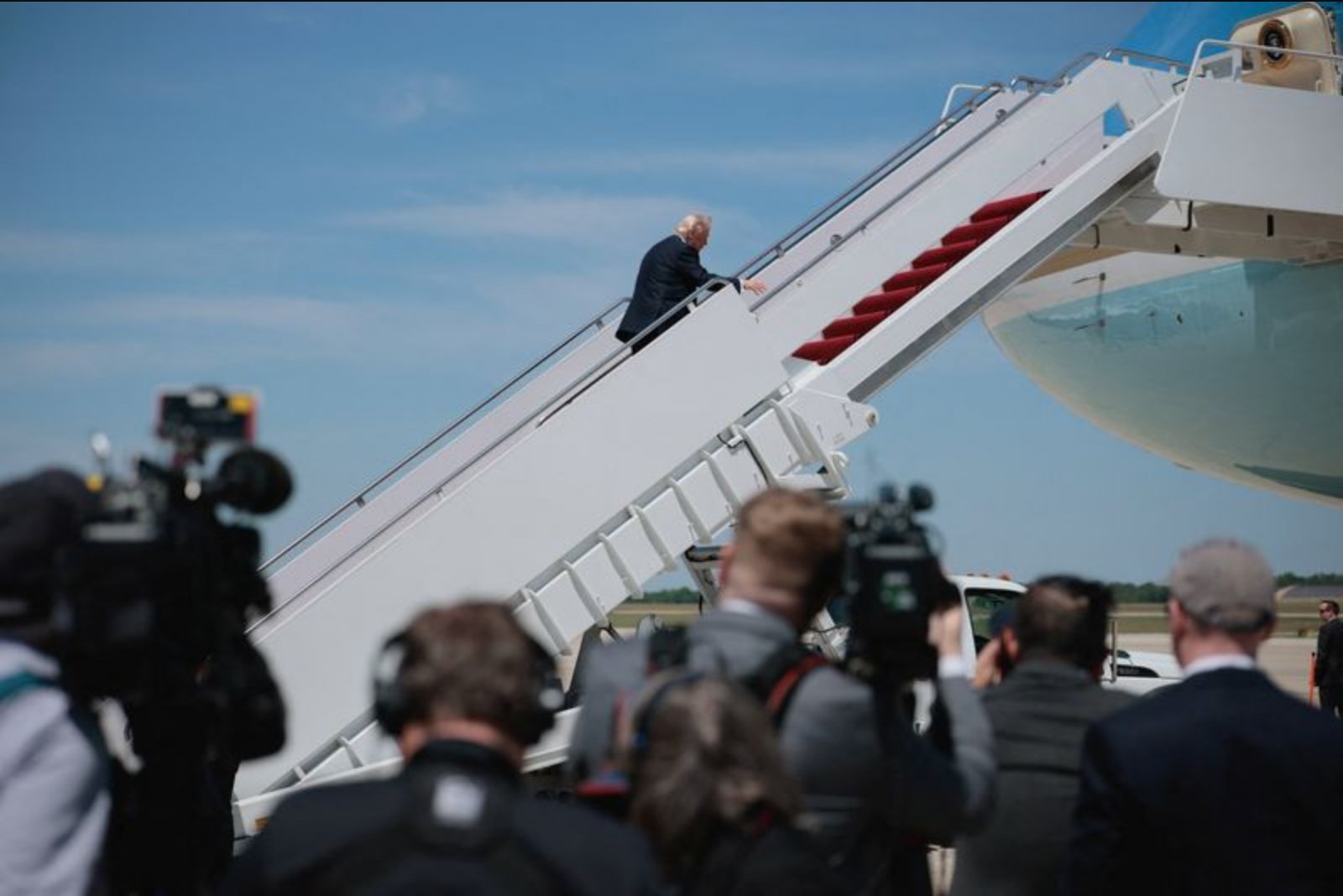
President Trump added Nvidia Chief Executive Jensen Huang to his traveling delegation at the last minute, according to a source familiar with the matter who spoke on condition of anonymity. Huang had not appeared on an initial list of corporate executives circulated by the White House earlier in the week. He was seen boarding Air Force One during a refueling stop in Alaska as the president proceeded toward Beijing, where he was expected to arrive late on Wednesday for meetings with Xi that will include a formal banquet and a visit to the Temple of Heaven, a UNESCO heritage site.
Trump posted on Truth Social that he would ask President Xi "a Leader of extraordinary distinction, to 'open up' China so that these brilliant people can work their magic," and said he would make that his first request. The executives accompanying Trump are reported to be largely from companies seeking to resolve business issues with China - cited specifically was Nvidia, which U.S. officials say has faced difficulties obtaining regulatory permission to sell its powerful H200 artificial intelligence chips in the Chinese market.
Diplomatic and trade preparations
While Trump prepared for the high-profile visit, his top trade negotiator, Scott Bessent, was engaged in preparatory talks with Chinese officials in South Korea. Bessent met with Chinese Vice Premier He Lifeng at Seoul’s Incheon airport on Wednesday, a source familiar with the talks said. These economic and trade discussions aim to preserve the truce struck the previous October in which President Trump suspended triple-digit tariffs on Chinese goods and President Xi stepped back from curbs on global supplies of rare earths.
Both sides have signaled interest in creating forums to ease mutual trade and investment frictions. Washington is reported to be keen to sell Boeing aircraft and a range of U.S. agricultural and energy products to China as part of efforts to reduce a bilateral trade deficit that has long been a central concern for the president. Beijing, in turn, is seeking relief from U.S. restrictions on exports of chipmaking equipment and advanced semiconductors.
Agenda beyond trade
The agenda for the meetings extends beyond trade. Officials said conversations will address the Iran war, nuclear weapons, and U.S. arms sales to Taiwan - the democratically governed island that China claims. Trump is widely expected to encourage China to use its influence on Tehran to help achieve a deal with Washington to end the conflict, though the president said on Tuesday he did not believe he would necessarily need Beijing’s assistance on that front.
Political context and constraints
Trump approaches the summit with domestic and legal constraints that limit his flexibility. Courts have restricted his capacity to unilaterally impose tariffs on imports, reducing the scope to reimpose previous measures without further legal authority. The president has nonetheless vowed to restore tariffs using remaining legal options. At the same time, the Iran war has intensified inflationary pressures within the United States and increased the perceived risk that Trump’s Republican Party could lose control of one or both chambers of Congress in November’s midterm elections.
By contrast, although the Chinese economy has shown signs of weakness, President Xi does not face comparable economic or political pressure from domestic constituencies, a dynamic noted by observers and business advisers.
Perspectives from business and the public
Analysts and business figures have characterized a continuation of the status quo as preferable to a renewed trade escalation. Liu Qian, founder and CEO of Wusawa Advisory, a Beijing-based geopolitical and business advisory firm, said that given last year’s trade war, maintaining the current situation rather than intensifying tensions is already a positive outcome. He added that the Trump administration has a strong incentive to produce visible deals to demonstrate to American voters that agreements are being reached and commerce is being stimulated ahead of the midterms.
The Chinese public greeted the visit with mixed feelings. Outside a Beijing metro station, a 23-year-old insurance professional, Han Huiming, said he believed the U.S. economy had been weakening and suggested that the visit reflected a desire to improve economic conditions. A 44-year-old oil trader, Lou Huilian, expressed uncertainty about Trump’s sincerity but said that as someone involved in trade he hoped the meetings would yield better policies.
What is at stake
The summit carries a mix of commercial and strategic stakes: resolving market access issues for technology companies such as Nvidia; potential sales for U.S. aerospace and agricultural exporters; and broader geopolitical discussions on Iran, arms sales, and nuclear matters. The meetings are also framed by domestic political calculations in Washington and by legal limits on tariff policy that constrain the president’s negotiating tools.
Reporting from Beijing and Seoul on May 13.