
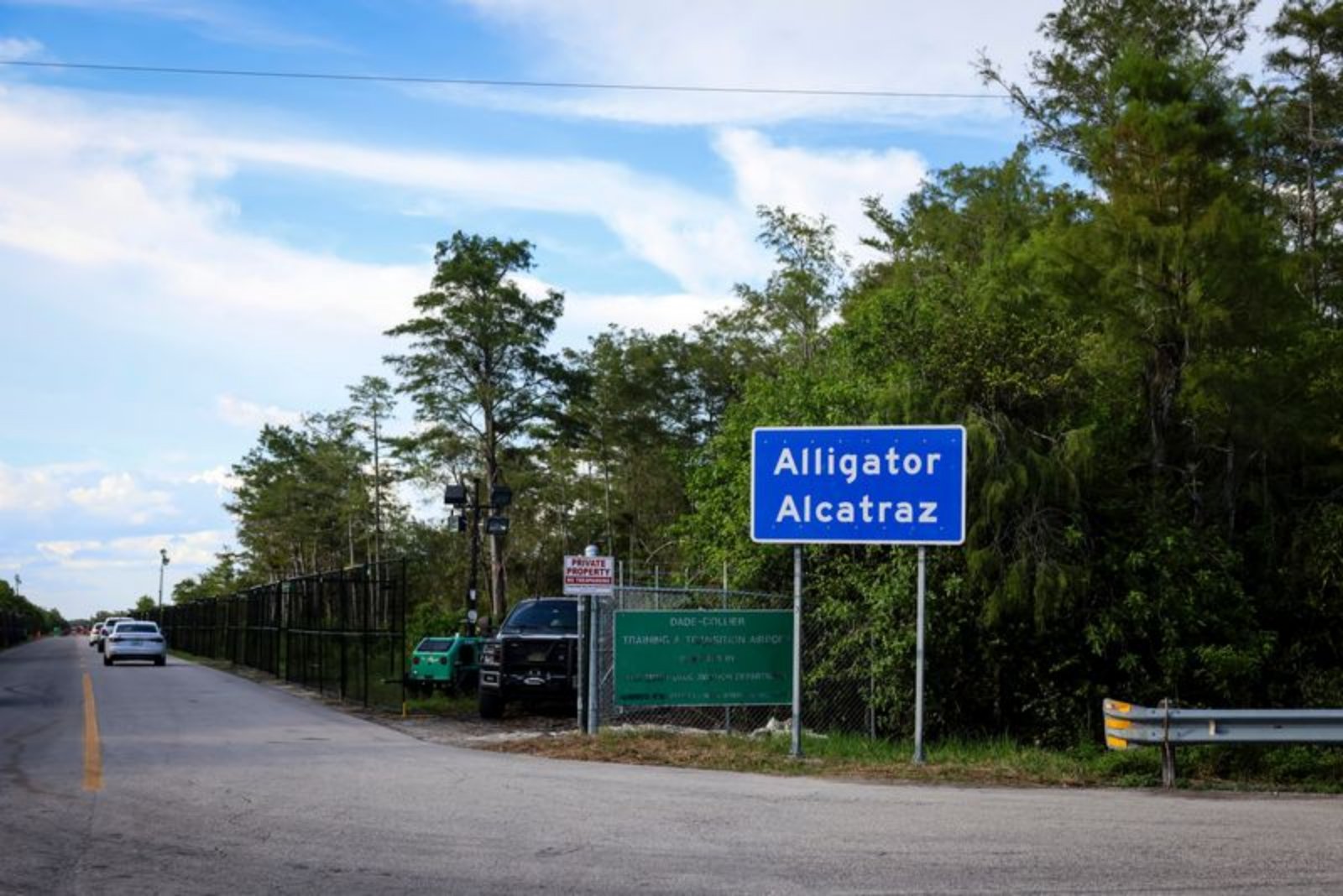
Florida officials have informed vendors that the federal migrant detention complex commonly referred to as "Alligator Alcatraz" will cease operations, and that those held there are expected to be moved by the start of June, according to people familiar with the matter. Sources said the facility, which cost approximately $250 million to construct, is slated to be dismantled over the ensuing weeks.
Requests for comment to the Florida governor's office were not immediately answered. A Department of Homeland Security spokesperson, when asked about reports of the planned closure, said the agency is continuing to assess detention needs and requirements to ensure they comply with current operational standards. The spokesperson also said, "Any reports that DHS is pressuring the state to cease operations at Alligator Alcatraz are false."
Immigration and Customs Enforcement statistics show the agency held an average of about 1,400 detainees at the facility from October 1, 2025 through early April of this year. Advocates have publicly criticized conditions inside the site, alleging that bright lights remained on around the clock, that detainees were denied access to necessary medication, and that the remote setting complicated efforts to secure legal representation.
The detention center opened during the tenure of former Homeland Security Secretary Kristi Noem. It sits roughly 37 miles (60 km) west of Miami in an extensive subtropical wetland that is habitat for alligators, crocodiles and pythons. That locale and its wildlife were used by the White House in imagery intended to underscore a firm stance on removing migrants.
Officials familiar with the closure discussions said vendors were told on a recent Tuesday afternoon that the facility would be closing and that preparations would begin to relocate detainees. The sources indicated the dismantling of the physical site would occur in the weeks following the transfers.
Beyond the immediate operational and humanitarian concerns cited by advocates, the reported decision raises questions about the financial and logistical implications tied to a facility built at significant cost and operated to house a sizable detainee population. Federal and state statements remain limited, with DHS reiterating its ongoing evaluations and denying that it is exerting pressure on state authorities to discontinue operations.