
World May 12, 2026 05:17 PM

Colombia Records Worst Civilian Harm from Conflict in a Decade, ICRC Report Finds

Rising hostilities and disregard for humanitarian law drive sharp increases in displacement, confinement and explosive-related casualties in 2025

By Ajmal Hussain

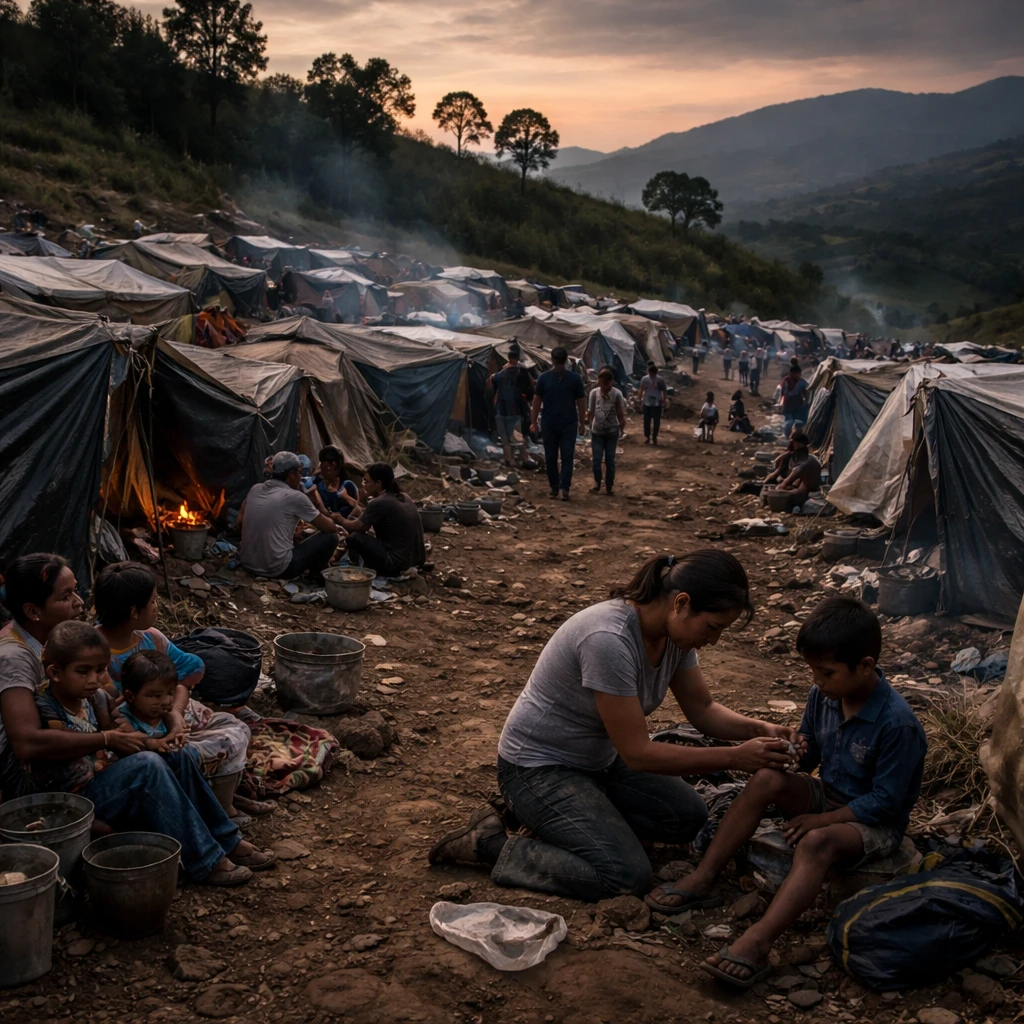
An International Committee of the Red Cross report says civilian suffering in Colombia reached its highest level in ten years in 2025, driven by intensified fighting and armed groups' violations of humanitarian norms. Official government data cited in the report show large rises in individual and mass displacement, confinement, explosive-related injuries and deaths, and disappearances. The ICRC highlights a multi-year deterioration it has been monitoring since 2018.

Colombia Records Worst Civilian Harm from Conflict in a Decade, ICRC Report Finds

Key Points

  • Sharp increases in displacement and confinement: individual displacement rose 100%, mass displacement 111%, and confinement 99% compared with 2024 - sectors affected include humanitarian aid and housing markets.
  • Rising explosive-related casualties and disappearances: 965 people were injured or killed by explosives in 2025 and 308 new disappearances were recorded - impacts on public safety and community stability.
  • Violence against health workers: 282 violent acts targeting health personnel were documented, raising risks for healthcare delivery in conflict zones and affecting the health sector.

BOGOTA, May 12 - A report released by the International Committee of the Red Cross (ICRC) on Tuesday concluded that the humanitarian toll on civilians from Colombia's long-running internal conflict climbed to its worst level in a decade in 2025. The organization attributes the deterioration to heightened hostilities and armed actors disregarding humanitarian law.

Colombia's internal conflict, stretching across six decades, involves state forces confronting leftist guerrillas and criminal groups vying for control of strategic drug trafficking corridors and areas linked to illicit gold extraction. The ICRC's annual review, which relies on official government figures for several metrics, documents steep increases across multiple measures of civilian harm in 2025.

  • At least 235,619 people experienced individual displacement.
  • 87,069 people were displaced during mass displacement events.
  • 176,730 people were confined - instances where armed groups impose curfews or limit civilian mobility.

Compared with 2024, the report records a 100% increase in individual displacement, a 111% rise in mass displacement events, and a 99% increase in confinement. The report also documents 965 people injured or killed by explosives in 2025 - most of them civilians - and records 308 new disappearances.

Explosive-related deaths or injuries, such as those caused by mines, rose 34% in 2025, while disappearances increased by 22% compared with the prior year. In addition, the ICRC logged 282 violent acts directed at health workers tied to the armed conflict.

"The humanitarian situation in 2025 results from progressive deterioration that the ICRC has warned about since 2018," said Olivier Dubois, the organization’s regional chief in Colombia’s capital Bogota.

Beyond displacement and explosive harm, the report says civilians were subject to homicides, disappearances, threats, sexual violence and the recruitment of children and adolescents. The ICRC frames the 2025 figures as the culmination of a downward trend it has been tracking for several years.

The findings underscore an intensifying humanitarian emergency with broad implications for civilian protection and the delivery of essential services in affected areas.

Risks

  • Continued deterioration of the humanitarian situation - sustained conflict could further strain humanitarian aid delivery and local economies.
  • Increasing use of explosives and incidents causing civilian casualties - present ongoing security risks that can disrupt transport, commerce, and public services.
  • Attacks on health workers and restricted mobility (confinement) - may undermine healthcare access and essential services in affected communities, affecting the health sector and humanitarian operations.

More from World

S&P moves Mexico outlook to negative, maintains BBB ratings amid fiscal strain May 12, 2026 U.S. Announces $22 Billion Plan to Rebuild Washington Dulles Airport May 12, 2026 Kyrgyz Authorities Charge Former Security Chief and Seven Others Over Alleged Coup Plot May 12, 2026 Trump Says Cuba Has Requested Help, Offers No Details on U.S. Plans May 12, 2026 Saudi Air Force Carried Out Covert Retaliatory Strikes on Iranian Soil, Sources Say May 12, 2026