
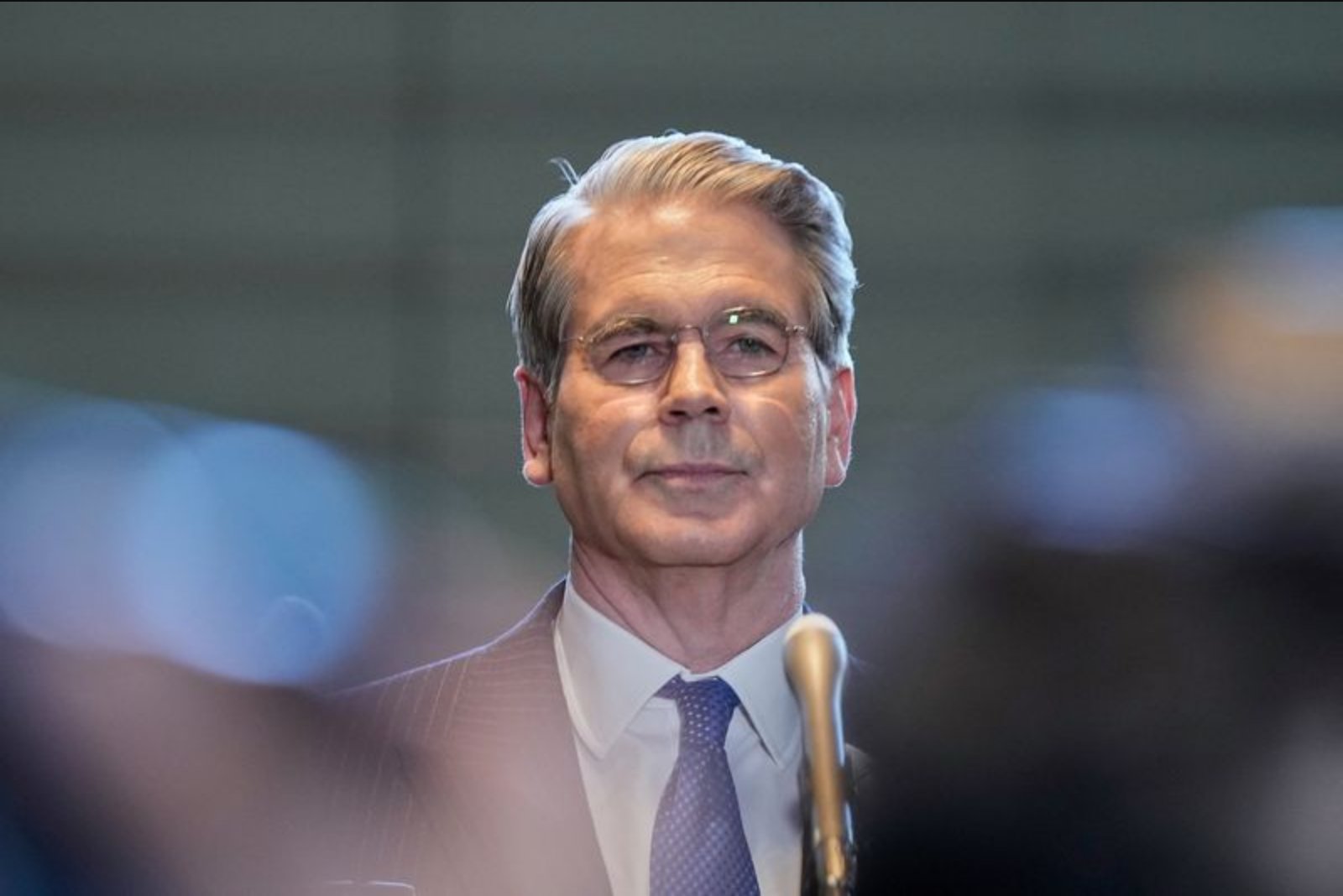
U.S. Treasury Secretary Scott Bessent arrived in South Korea on Wednesday to conduct trade discussions with Chinese Vice Premier He Lifeng prior to a planned summit between the leaders of the United States and China in Beijing later this week. The summit between U.S. President Donald Trump and Chinese President Xi Jinping is scheduled to run from Thursday to Friday.
At Incheon airport, Bessent declined to comment to reporters on his arrival. Officials said both Bessent and He will hold a separate meeting with South Korean President Lee Jae Myung at the presidential Blue House on Wednesday morning, according to a statement from Lee’s office.
Accompanying He at the Incheon meetings is China’s Vice Commerce Minister Li Chenggang, who serves as Beijing’s lead trade negotiator. News1 reported that the discussions between the U.S. and Chinese delegations are set to take place in a reception room at Incheon airport, citing an airport official.
U.S. and Chinese officials have indicated the forthcoming summit in Beijing is likely to produce agreements on establishing forums aimed at facilitating mutual trade and investment. In addition, China is expected to announce purchases related to Boeing aircraft, American agricultural products and energy supplies, according to U.S. officials.
Beijing has also signaled priorities it wants addressed at the summit, including requests that the United States ease restrictions on exports of advanced semiconductors. Chinese officials have raised concerns about pending U.S. legislation designed to keep critical chip-making equipment from reaching China.
The talks in Incheon are framed as preparatory engagements to smooth the way for the leaders’ discussions in Beijing. The agenda items reported by officials - trade and investment forums, China’s planned purchases of aerospace, agricultural and energy goods, and semiconductor export controls - reflect core economic and industrial issues that are expected to feature at the summit.
Key points
- Scott Bessent met Chinese Vice Premier He Lifeng in South Korea ahead of the U.S.-China leaders’ summit in Beijing - relevant to trade and diplomatic channels.
- Both officials will separately meet South Korean President Lee Jae Myung at the Blue House, indicating coordination with a key regional partner.
- Agreements at the Beijing summit are expected to include forums to facilitate trade and investment and Chinese purchases involving Boeing, U.S. agriculture and energy; semiconductor export curbs are a central point of dispute.
Risks and uncertainties
- Negotiations over semiconductor export restrictions could remain unresolved - this may affect the global semiconductor supply chain and technology sector.
- Announcements of purchases do not guarantee implementation - aerospace, agriculture and energy markets may face volatility if commitments are not firm.
- Preparatory talks do not ensure comprehensive agreements at the leaders’ summit - trade and investment forum formation remains contingent on leaders’ decisions.