
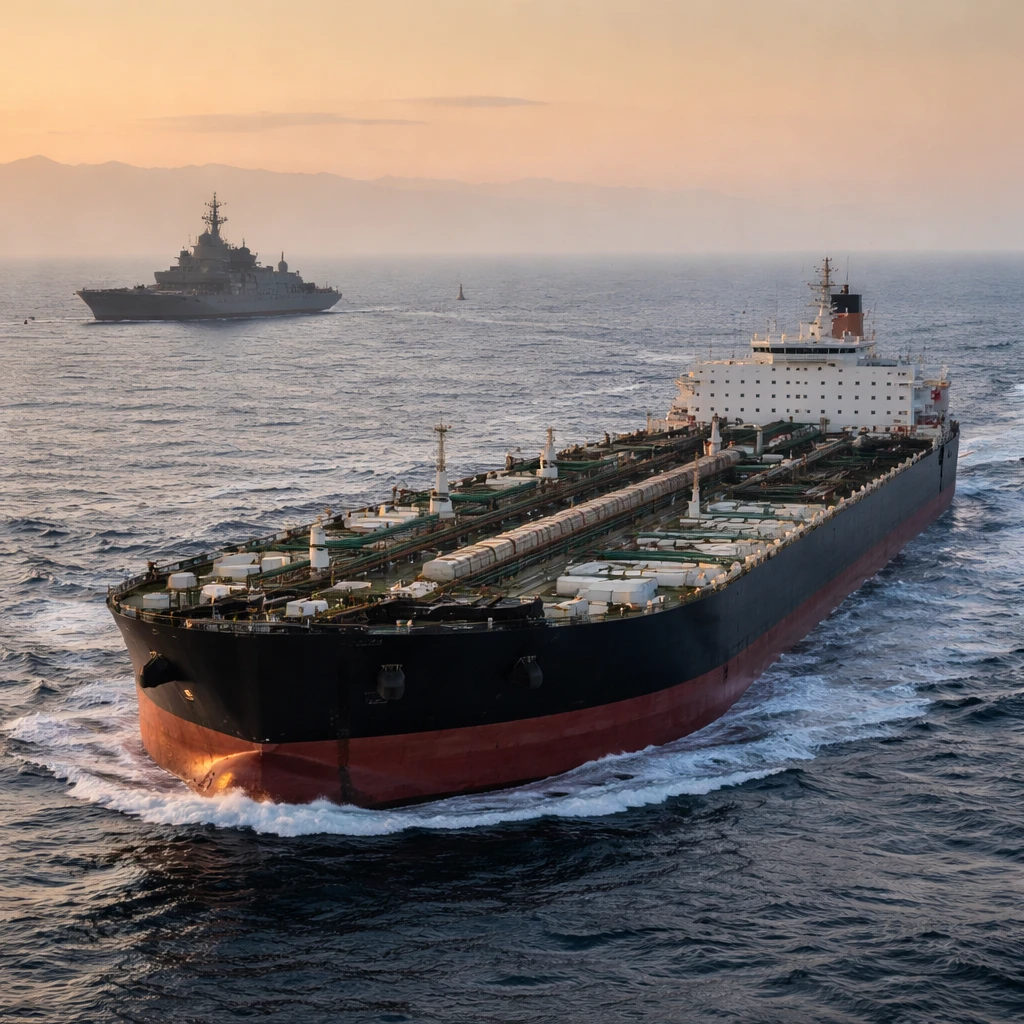
SINGAPORE - Vietnam’s state oil trading arm has formally requested that U.S. naval authorities allow a crude tanker bound for a Vietnamese refinery to pass through an expanded U.S. blockade in Gulf waters, according to a letter and ship tracking records.
The Maltese-flagged Agio Fanourios I, described in tracking data as a supertanker carrying 2 million barrels of crude oil, sailed out of the Strait of Hormuz on May 10 and was recorded in the Gulf of Oman before executing a U-turn on May 11, according to MarineTraffic ship movements data.
In a May 12 letter seen by Reuters, Petrovietnam Oil Corporation (PVOIL) Vice President Hoang Dinh Tung wrote to U.S. military and diplomatic missions that the cargo was essential to Nghi Son Refinery (NSRP) and to the Socialist Republic of Vietnam. The letter said in part: "This cargo is of extreme importance to Nghi Son Refinery (NSRP), to the Socialist Republic of Vietnam and to the Vietnamese people."
PVOIL warned that the refinery's feedstock inventories were at critically low levels and cautioned that any further delay could halt refinery throughput, producing "cascading consequences for millions of Vietnamese consumers, businesses, public services and industries."
The U.S. military has expanded its shipping blockade on Iran to include cargoes deemed contraband, while saying that other oil exports from the Gulf remain free to transit, according to official U.S. statements cited in reporting. In response to a Reuters query about the tanker, the U.S. military’s Central Command said: "U.S. forces redirected the vessel as part of ongoing enforcement of the blockade against Iran." The statement did not make clear whether the Navy would ultimately permit the vessel to proceed to Vietnam as requested.
PVOIL said it "unequivocally" confirmed the Agio Fanourios I loaded Iraqi Basra crude sold by Iraq’s state oil company SOMO after the tanker was loaded between April 10 and April 14.
Tracking information showed the Agio Fanourios I had sailed through the Strait of Hormuz on Sunday using the route designated by Iran for tankers, a detail reported by Iran's semi-official Tasnim news agency. The diversion by U.S. forces occurred after that transit.
The reporting notes a broader disruption tied to the conflict: the U.S.-Israeli war on Iran has prompted the closure of the Strait of Hormuz, leaving hundreds of ships stranded and disrupting global energy supplies that move through the waterway, which channels about 20% of the world’s energy supplies.
Logistics perspective: The redirected transit of a fully laden 2 million-barrel tanker highlights an acute intersection of naval enforcement, maritime routing and refinery feedstock planning. For the Nghi Son refinery, the immediate effect is a potential interruption to throughput if resupply is delayed. For shipping lines and charterers, the incident underscores navigational risk in the region and the operational consequences when military enforcement affects commercial voyages.