
Overview
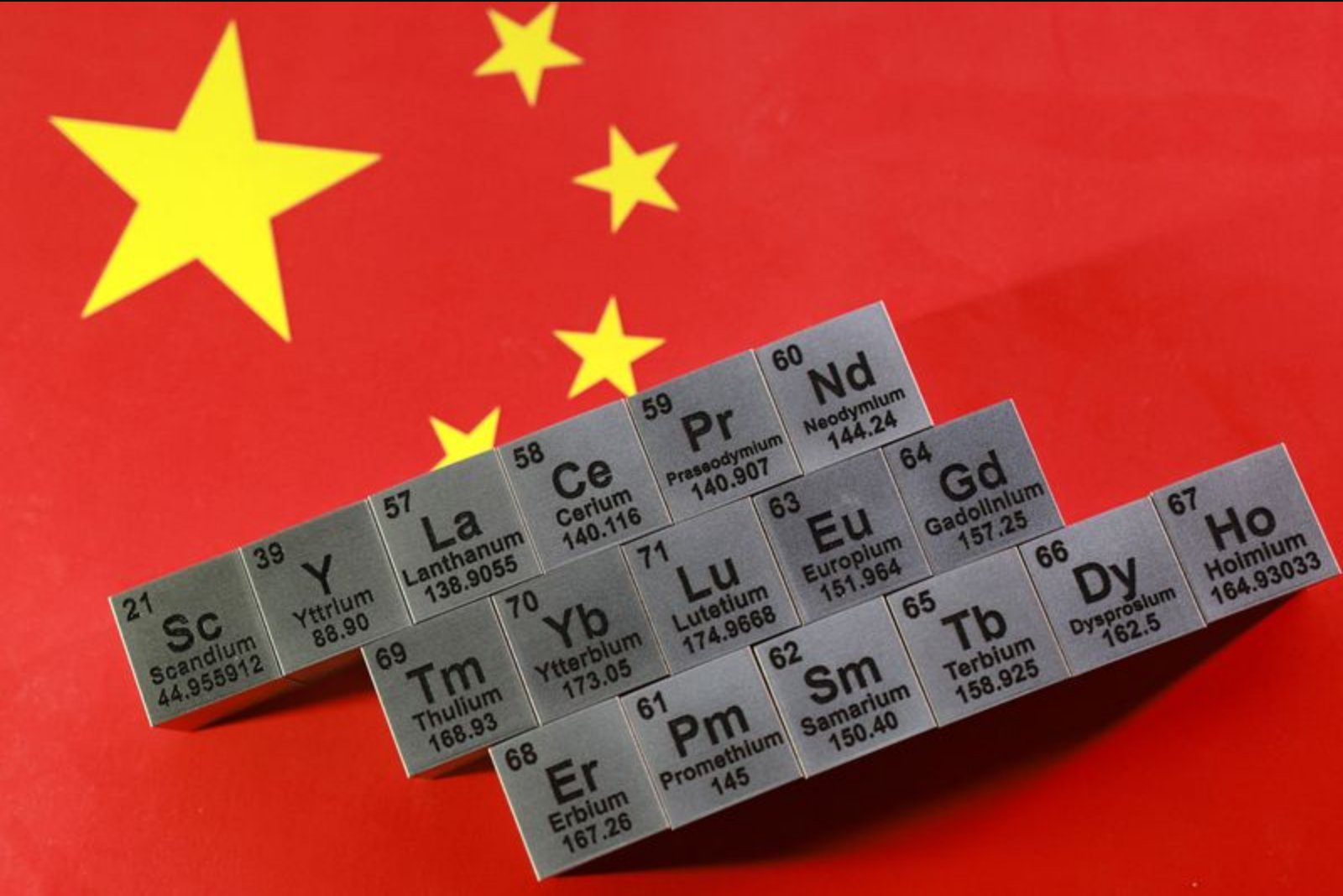
Senior officials from China and the United States are expected to discuss an extension of a temporary truce on Chinese export controls for rare earth materials at a leaders' summit this week. Official customs data from China, however, indicate that export volumes for certain specialty heavy rare earths remain sharply curtailed following controls introduced in April 2025.
What the data show
Chinese customs statistics reveal that exports of the heavy rare earths yttrium, dysprosium and terbium are approximately 50% lower relative to the 12 months before the April 2025 controls were imposed. The absolute volumes involved are frequently measured in the tens of tons, and while total rare earth export volumes have returned close to pre-control levels over the past year, these headline figures mask meaningful, targeted reductions in those materials seen as strategically sensitive.
"Headline export volumes can be misleading," said Ilya Epikhin, senior principal at consultancy Arthur D. Little. "China appears to be selectively licensing exports while preserving leverage over supply chains considered strategically sensitive, particularly where defense or advanced technology applications are involved."
Policy context and diplomatic engagement
Beijing introduced the controls in April 2025 as a response to President Donald Trump’s Liberation Day tariffs. At a summit in South Korea last October, the White House said China had agreed to "effectively eliminate China’s current and proposed controls on rare earth elements." Following that meeting, China rescinded a broader package of restrictions but left the April 2025 measures in place. China's Ministry of Commerce did not respond to requests for comment on the status of export approvals.
The disparity between Beijing’s continuing selective controls and the October agreement is expected to be part of the leaders' discussions this week, alongside other commercial topics such as potential Chinese purchases of Boeing aircraft and prospective deals for U.S. agricultural and energy products.
U.S. government actions and industry impact
U.S. officials report ongoing engagement with Chinese counterparts on rare earths. A senior U.S. official said talks continued and that both sides expressed a desire for stability, while another official, speaking anonymously, noted that shortages persist. In one notable intervention, the White House helped secure approvals for a large U.S. firm with both defence and civilian operations that had been losing hundreds of millions of dollars in revenue each month because it could not obtain an export license.
Supply disruptions have already affected manufacturers. Some U.S. aerospace companies temporarily paused production in February because of yttrium shortages; yttrium is used, for example, to protect turbine blades from heat.
Price moves and international exposure
Consultancy Argus reports dramatic price increases since April 2025: dysprosium and terbium have risen roughly four- to five-fold outside China, while yttrium has climbed by about 140-fold and continues to rise. These price spikes reflect not only reduced shipments to the United States but even sharper cutoffs to other major consumers such as Japan and Germany.
Japan, the largest rare earth magnet producer outside China, received just 4% of the dysprosium it imported in the 12 months after the controls compared with the 12 months prior. Germany received none. As a result, manufacturers are paying between 1.5 and 3 times more for magnets than before the controls, according to Neha Mukherjee, rare earth research manager at Benchmark Mineral Intelligence.
Efforts to diversify supply
Governments and industry in Germany, Japan, the United States and other countries are investing in projects to reduce dependence on China for rare earths, including participation in a recent G7 initiative focused on alternative supply chains. Nonetheless, consultancy Project Blue's research director David Merriman warned of a long transition timeline: "The situation looks set to get worse before getting any better," he said.
Analysts note that while investment and diversification efforts are under way, fully replacing China as the primary supplier of some specialty rare earths will take years.
Key takeaways
- China and the U.S. may negotiate an extension of a temporary truce on rare earth export controls at this week’s leaders' summit, but targeted Chinese curbs remain in place.
- Exports of yttrium, dysprosium and terbium are down about 50% since the April 2025 controls versus the prior 12 months, even as total rare earth exports have nearly recovered.
- Price spikes and shipment reductions are disrupting defence, aerospace, electronics and electric vehicle supply chains; diversification away from China is in progress but will take time.
Detailed implications
The persistent selective licensing approach appears designed to maintain Beijing’s leverage over supply chains tied to defence and advanced technology. This has direct implications for sectors reliant on specialty rare earths - notably aerospace and defence manufacturing, high-performance magnet production, semiconductors and electric vehicle components - as well as downstream industrial suppliers and equipment makers.
For corporate balance sheets, the immediate consequences include higher input costs for magnets and related components and potential production slowdowns for firms lacking secure alternative sources. For policy-makers, the situation raises complicated trade and industrial policy questions that will be central to diplomatic discussions this week.
Conclusion
While diplomatic engagement continues and both sides express interest in stability, customs data and industry reports indicate China still exerts significant control over a narrow set of heavy rare earth exports. Prices have surged and shortages are reported across allies and U.S. supply chains, prompting emergency government intervention in at least one large firm's licensing case and accelerating initiatives to diversify global supply. The degree to which a truce is extended, and whether that extension affects the April 2025 measures, will be a focal point of the leaders’ talks.