
Economy May 13, 2026 12:28 AM

Trump to Press Xi to 'Open Up' China During Three-Day State Visit

U.S. president travels with high-profile business delegation to discuss trade, AI and Taiwan amid strained ties

By Nina Shah

President Donald Trump said he will ask Chinese President Xi Jinping to open China to Western businesses as his first request during a three-day state visit. Traveling aboard Air Force One with a delegation of major U.S. corporate leaders, Trump signaled the trip will cover trade tariffs, artificial intelligence and Taiwan. The visit - the first by a U.S. leader in nearly a decade - was delayed from April to May because of the Iran war and takes place against a backdrop of recent tensions between the two economies.

Trump to Press Xi to 'Open Up' China During Three-Day State Visit

Key Points

  • President Trump will request that President Xi "open up" China to Western businesses as his first ask during the three-day state visit - impacts technology and finance sectors.
  • A large corporate delegation is accompanying the president, including leaders from Nvidia, Tesla, Apple, Blackstone, BlackRock, Boeing, Cargill, Citi, GE Aerospace, Goldman Sachs, Micron and Qualcomm - relevant to tech, finance, aerospace and agriculture.
  • Planned discussion topics include trade tariffs, artificial intelligence and Taiwan; the visit could also affect diplomatic deadlocks related to the Iran conflict.

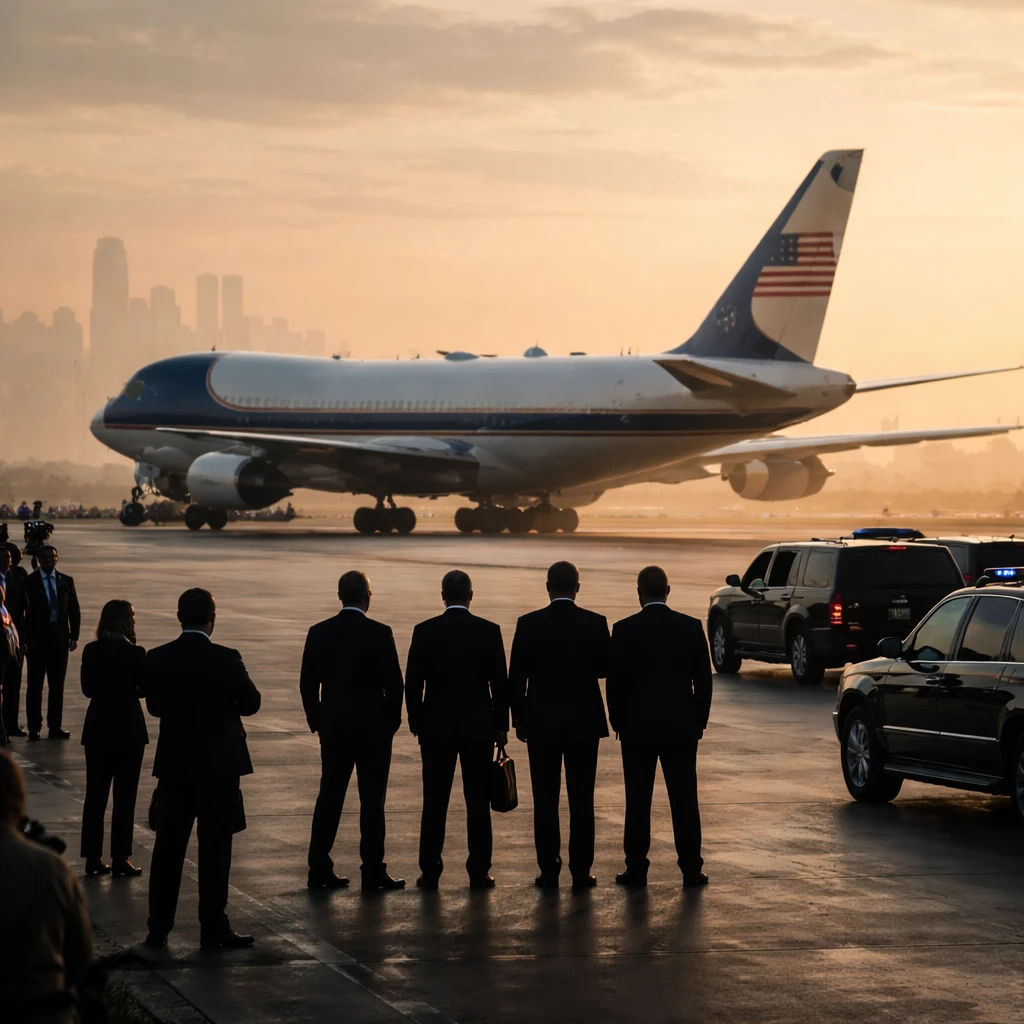
President Donald Trump announced on Wednesday that his opening appeal to Chinese President Xi Jinping will be a request that China "open up" its economy to western businesses. He made the comment while aboard Air Force One, en-route to a three-day state visit to China with a delegation of leading U.S. executives.

In a social media post, Trump described Xi as "a Leader of extraordinary distinction" and said, "I will be asking President Xi... to 'open up' China so that these brilliant people can work their magic... I will make that my very first request."

The president confirmed that Jensen Huang, CEO of Nvidia, is among the business leaders traveling with him. Other members of the delegation include Elon Musk of Tesla, Tim Cook of Apple - whom Trump referred to as "Tim Apple" - and executives from Blackstone, BlackRock, Boeing, Cargill, Citi, GE Aerospace, Goldman Sachs, Micron and Qualcomm.

Trump is expected to press a range of issues with President Xi, with trade tariffs, artificial intelligence and Taiwan identified as topics for discussion. Some observers noted that the Biden administration's predecessor's meeting with Xi could also play a role in easing a standoff over Iran.

This trip marks the first state visit to China by a U.S. leader in nearly ten years; the president last visited China during his first term in office. The visit occurs amid frayed relations between the world's largest economies following a bitter trade war in 2025 and ongoing disputes over AI chips and arms sales to Taiwan.

The state visit was originally scheduled for early April but was pushed back to May due to the war in Iran. Trump's itinerary in China includes a welcome ceremony, two bilateral meetings with President Xi, a state banquet and a number of recreational activities.


Contextual note - The delegation's composition highlights representation from major technology, financial, aerospace and agricultural companies, indicating the breadth of commercial interests at stake during the discussions.

Risks

  • Elevated bilateral tensions - the trip takes place after a bitter trade war in 2025 and ongoing disputes over AI chips and arms sales to Taiwan, which could limit progress on commercial and technological cooperation - affects technology and defense-related sectors.
  • Geopolitical uncertainty - the visit was delayed from early April to May because of the war in Iran, underscoring regional instability that could complicate diplomatic and economic outcomes - impacts energy and defense markets.
  • Stalemate potential - despite high-level meetings and a prominent business delegation, disagreements on tariffs, AI controls and Taiwan policy could leave negotiations unresolved - poses uncertainty for multinational corporate strategies.

More from Economy

Commonwealth Bank Shares Decline Amid Increased Provisions and Federal Housing Tax Reforms May 12, 2026 OECD Forecasts Japanese Interest Rates Reaching 2% by Late 2027 May 12, 2026 US Dollar Strengthens Amid Surging Inflation and Escalating Middle East Tensions May 12, 2026 Trump Organization Abandons Gold Coast Skyscraper Project Over Partner Defaults May 12, 2026 Brazil Reverses Import Tax on Low-Value E-commerce Goods Amid Election Cycle May 12, 2026