
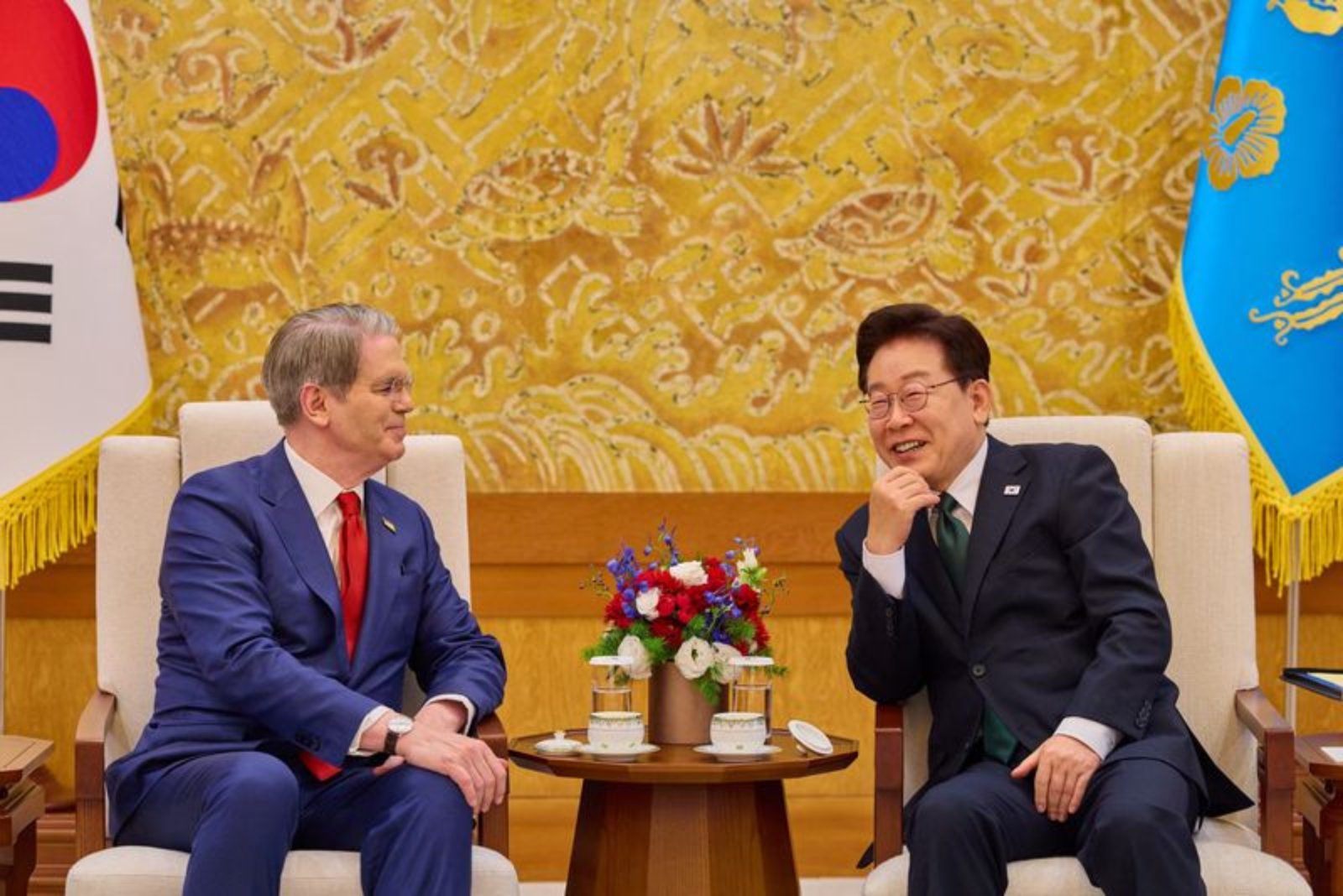
U.S. Treasury Secretary Scott Bessent and Chinese Vice Premier He Lifeng convened in Incheon, South Korea, on Wednesday for preliminary discussions designed to lay groundwork ahead of a leaders' summit in Beijing later this week.
Witnesses said the two officials initiated talks at Incheon airport following separate meetings with South Korean President Lee Jae Myung at the presidential Blue House. The conversations are intended to prepare for the summit between U.S. President Donald Trump and Chinese President Xi Jinping, scheduled to run from Thursday to Friday.
Officials expect the agenda to be wide-ranging as both sides seek to frame topics for the leaders' talks in Beijing. U.S. sources have indicated the summit could include agreements to set up forums intended to ease bilateral trade and investment. China is also expected to announce purchases tied to Boeing aircraft as well as agricultural and energy products from the United States, according to U.S. officials.
China's delegation accompanying Vice Premier He includes senior trade and finance officials: Vice Commerce Minister Li Chenggang and Vice Finance Minister Liao Min. Their presence underscores the economic and commercial focus of the discussions leading into the summit.
Observers described the meetings between Bessent and He as likely exploratory in nature, with few immediate deliverables. Kim Tae-hwang, a professor of international trade at Myongji University in Seoul, said the two sides were essentially in a holding pattern ahead of the summit, "sounding each other out, rather than seeking breakthroughs."
Key issues expected to feature in the summit-level talks include Beijing's requests that the United States relax restrictions on advanced semiconductors. China has also voiced concerns about U.S. legislation intended to keep critical chip-making equipment out of Chinese hands. At the same time, negotiators are considering whether to extend a truce on China's export curbs for rare earths, though Chinese customs data indicate that shipments of these materials vital to defence and manufacturing remain constrained.
Strategic and security matters may also be on the table. The Iran war could be discussed, given China's continued diplomatic ties with Tehran and its status as a major buyer of Iranian oil. President Trump said on Tuesday he did not expect to need China's assistance to end the conflict, even as prospects for a durable peace weakened and Iran tightened control over the Strait of Hormuz.
Analysts and participants noted that neither Washington nor Beijing has a strong incentive to make rapid concessions ahead of the leaders' meeting. Kim again highlighted that the United States is unlikely to loosen controls on critical technologies such as semiconductors. Meanwhile, China's relatively resilient growth and trade performance reduces pressure on Beijing to offer significant compromises, he added.
Logistics and tone
The informal nature of the talks in Incheon - beginning at the airport and following meetings with South Korea's president - suggested a pragmatic effort to clarify positions and identify possible pathways for negotiation once the summit convenes in Beijing. With senior trade and finance figures in attendance, the discussions looked set to focus tightly on the commercial and technology issues slated for leader-level consideration.
As the summit approaches, officials on both sides appear to be calibrating expectations: preparing for substantive exchanges while leaving room for the leaders themselves to seek momentum on contested topics.