
World August 21, 2026 02:01 PM

U.S. Education Department Seeks to Strip ABA of Federal Law School Accreditor Role

Move would end a decades-long federal recognition of the American Bar Association and could affect student loans and licensing

By Derek Hwang
Share
Twitter Reddit Facebook LinkedIn

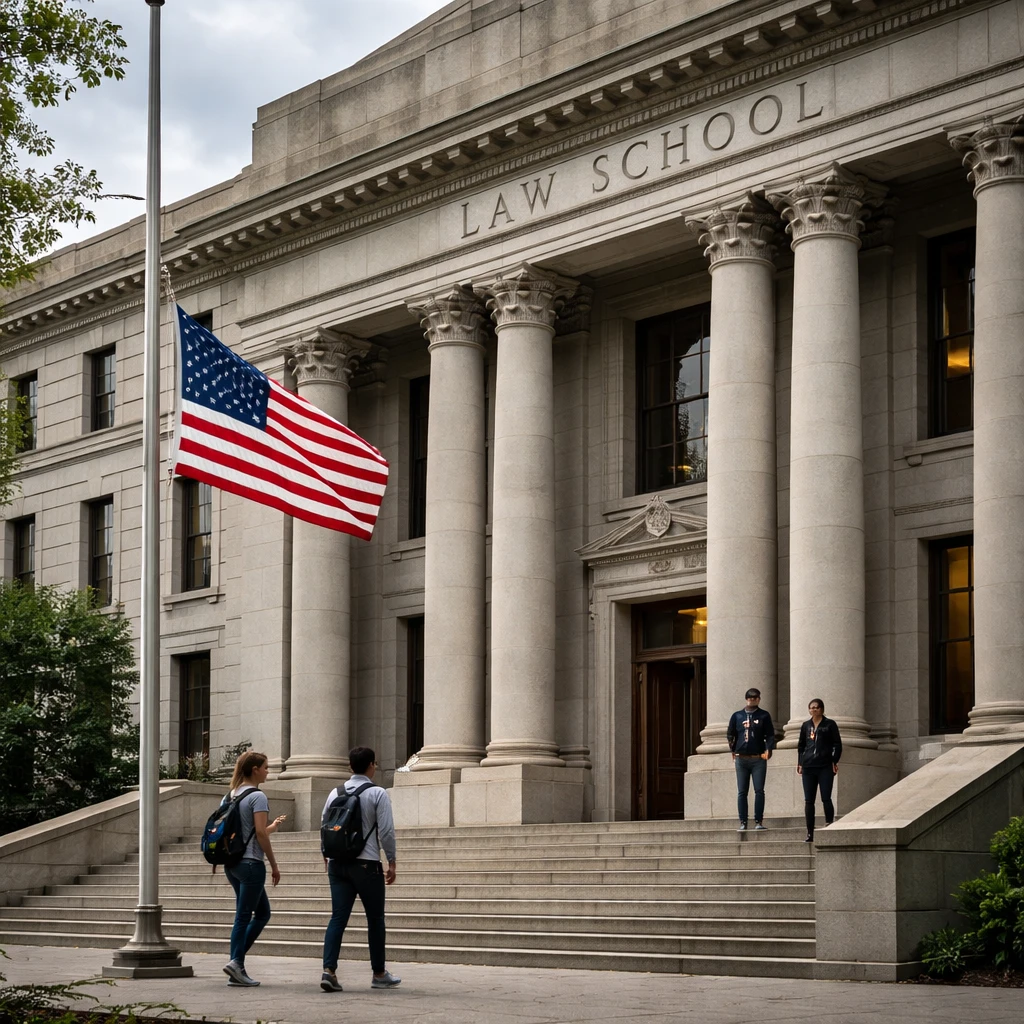
The U.S. Department of Education announced a move to remove the American Bar Association (ABA) as the federally recognized accreditor for U.S. law schools, citing governance and regulatory compliance concerns. The action challenges an oversight role the ABA has held since 1952 and raises potential disruptions for law students and institutions that depend on federal student aid and state licensing pathways. A bipartisan advisory committee will review the recommendation in September and a final determination is expected months later.

U.S. Education Department Seeks to Strip ABA of Federal Law School Accreditor Role
Summarize with
ChatGPT Perplexity Claude Grok Gemini

Key Points

  • The Education Department has moved to remove the American Bar Association as the federally recognized accreditor of U.S. law schools, a role it has held since 1952.
  • The department's report states the ABA’s Council of the Section of Legal Education and Admissions to the Bar "does not meet requirements for being 'separate and independent'" and criticizes delays in revising a diversity-related rule.
  • If the ABA loses recognition, sectors most directly affected include higher education (law schools) and markets tied to federal student loans and professional licensing for the legal sector.

On Friday, the U.S. Department of Education advanced a recommendation to revoke the American Bar Association's status as the federally recognized accreditor of law schools in the United States. The department said its review found defects in the ABA’s governance and in its accreditation rules.

The ABA has served as the recognized accreditor for U.S. law schools since 1952. The Education Department staff report released on Friday concluded that the ABA’s Council of the Section of Legal Education and Admissions to the Bar "does not meet requirements for being 'separate and independent' from the larger ABA." The report additionally faulted the ABA for delays in updating a rule that requires law schools to meet certain diversity standards.

An Education Department spokesperson said the review determined the ABA’s accreditation rules were "out of compliance with the agency’s accreditation regulations and recognition standards." The department’s actions follow earlier public criticism of the ABA by the administration, which in 2025 described the organization through a White House spokesperson as a group of "leftist lawyers."

Officials and stakeholders have warned that removal of the ABA’s accreditor status could create immediate practical problems. Some law schools might face interruptions in eligibility for federal student loans if the ABA is no longer the recognized accreditor. Students also could encounter obstacles in sitting for bar examinations or in securing state licenses to practice law across different jurisdictions.

The next step in the process is review by a bipartisan accreditation advisory committee, which is scheduled to examine the department’s recommendation in September. The department has indicated that a final decision on recognition of the ABA will come several months after that review.

As the process unfolds, law schools, current students, and prospective applicants will be watching for further guidance from both the Education Department and state bar authorities about how any change in accreditor recognition would affect access to federal aid and professional licensing. The department’s move marks a significant escalation in a dispute between the federal agency and a professional organization that has overseen legal education for more than seven decades.

Risks

  • Some law schools could face disruptions in access to federal student loan programs if ABA recognition is withdrawn - impacting higher education institutions and student finance markets.
  • Current and prospective law students may encounter difficulties taking bar examinations or obtaining licenses to practice in other states, affecting legal labor markets and licensing authorities.
  • Uncertainty remains until the bipartisan accreditation advisory committee reviews the recommendation in September and a final decision is rendered, creating interim compliance and planning risks for law schools.

More from World

U.S. Recasts Hezbollah Sanctions to Spotlight Direct Links with Iran Aug 20, 2026 Research Identifies Over 150 Polymarket Wallets That Likely Traded on U.S. Military Secrets Aug 20, 2026 China Urges Seoul to Avoid Choosing Sides, Pins Korean Tensions on U.S. Policy Aug 20, 2026 U.S. Labels Myanmar Scholar Min Zin as Wrongfully Detained After June Arrest in China Aug 20, 2026 U.S. Education Department Says Schools Must Not Alter Discipline Policies to Change Racial Disparities Aug 19, 2026