
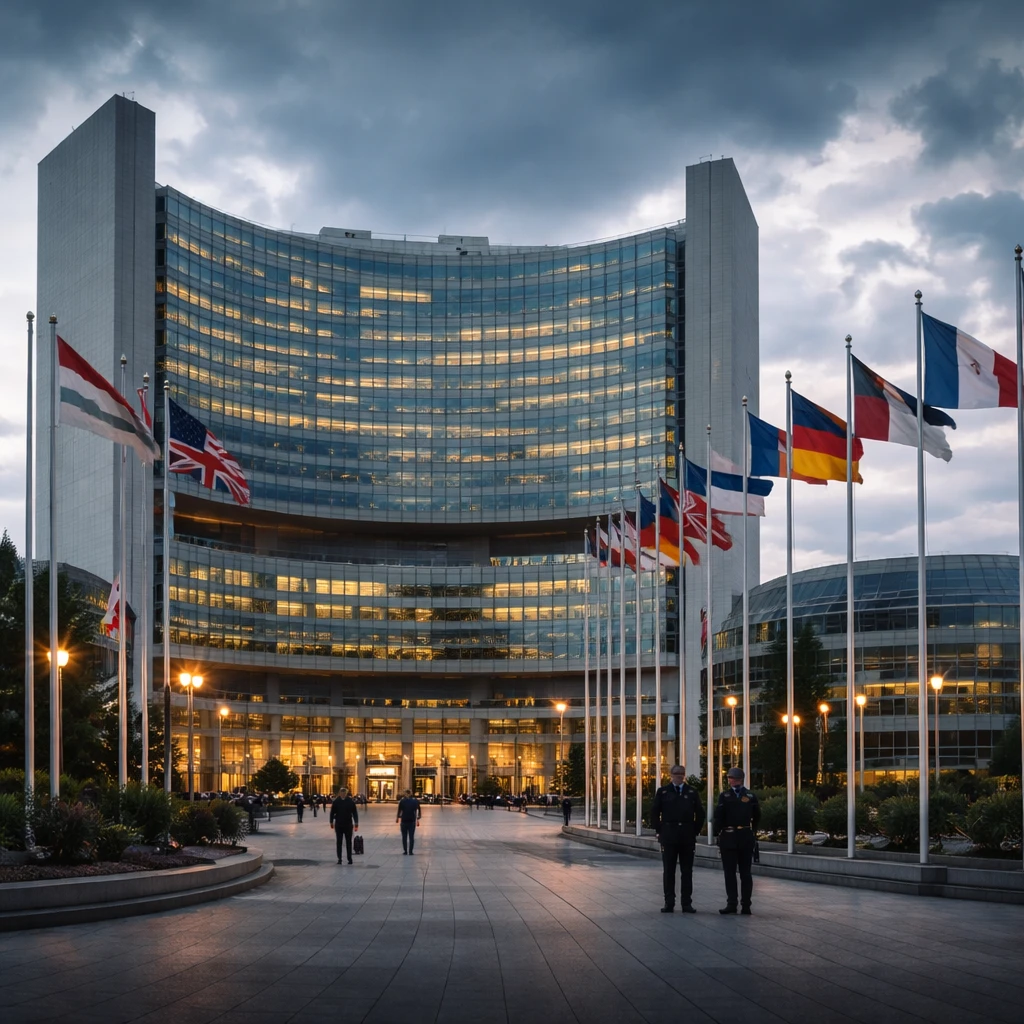
VIENNA, Nov 19 - The United States, Britain, France and Germany jointly confronted Iran at a quarterly session of the International Atomic Energy Agency’s 35-nation Board of Governors on Thursday, urging Tehran to allow inspectors back into nuclear sites hit by US and Israeli strikes last year.
In a coordinated statement to the board, the four Western powers said Iran has not provided the IAEA access to the facilities since the military strikes in June 2025. Those strikes, they noted, either destroyed or severely damaged the three uranium-enrichment plants that were known to be operational at the time.
The joint statement warned of a significant verification gap. "It should be of concern to all Members of this Board that for a year and a half, the Agency has lost continuity of knowledge regarding Iran’s previously verified stockpile of high-enriched uranium," the four countries told the governors.
Board members were informed by IAEA Director General Rafael Grossi that, during the most recent quarter, inspections took place only at the undamaged Bushehr nuclear power plant. The Western powers reiterated material from the director general, saying: "The DG has repeatedly made clear that there is no current technical reason preventing the Agency from accessing the affected nuclear facilities and that inspectors have been ready to return for a long time now."
Pressing Tehran to change course, the four countries added: "It is up to Iran to seize this opportunity, change course, and address the international community’s long-standing concerns regarding its nuclear program," and they referred in their statement to what they described as "Iran’s stonewalling strategy."
The whereabouts of Iran’s higher-grade enriched uranium remains an open question. Tehran has not disclosed the status of its stock of highly enriched uranium, which the Western countries say included material that was close to weapons grade and now remains unaccounted for.
Although the United States and Israel have not carried out further major strikes on Iranian nuclear sites since the 12-day campaign last year, the statement to the board came amid a broader context of sustained hostilities. The United States has been at war with Iran for nine months, and while there have been no large-scale follow-up attacks on the nuclear sites, speculation about renewed strikes persists as diplomatic talks toward a negotiated solution remain deadlocked.
Iran rebutted the charges directed at it in a statement circulated to board members on Wednesday, saying that the actions of the US and Israel were the cause of the current standoff over inspections. In its submission, Tehran argued that "The root causes of the impossibility of normal safeguards implementation in Iran are the acts of aggression and the continuing threats of renewed attacks at the highest political level of the United States and the Israeli regime against Iran."
Iran also pointed to a specific US action as a factor in its decision-making: the present US offer of a reward of up to $20 million for information on Iran’s nuclear programme. Tehran warned that there is no reliable safeguard against the misuse of inspection-derived information, saying: "There is no ... solid guarantee that acquired information (from inspections), that the US as a member of the Board will inevitably be informed of, would not be used for further attacks."
The exchange at the IAEA board highlights a standoff in which technical access for safeguard verifications and political concerns over security and intelligence intersect. With inspections limited to facilities the agency describes as undamaged and no clarity from Tehran about the disposition of key nuclear material, the agency and Western states say a continuity of knowledge that underpins verification has been broken. Iran attributes the breakdown to military action and the risk that inspection information could be leveraged in future attacks.