
Overview
A 12-page report from the Board of Peace - the body established and led by former U.S. President Donald Trump to oversee his plan to end the Gaza war - concludes that both Israel and Hamas have failed to fulfil commitments meant to bring a durable halt to hostilities. The report, the board's second submission to the United Nations Security Council since the US-backed ceasefire took effect 13 months ago, paints a grim picture of stalled political progress and severe civilian hardship across Gaza.
Ceasefire and the Risk of Backsliding
The report stresses that while large-scale combat has subsided, the broader framework of the plan - which envisions Hamas disarming, Israeli forces withdrawing and reconstruction starting - has largely stalled since it began. The document cautions that a fundamental mismatch persists between what parties agreed to and what is actually occurring on the ground, calling this gap "the principal risk to the process." It adds that "a ceasefire that delivers nothing visible cannot be sustained indefinitely."
According to the report, Hamas accepted a Board of Peace roadmap in July that would see it surrender weapons and transfer governance of Gaza to a civilian transitional authority. Israel, however, rejected that roadmap, maintaining that it will not withdraw until Hamas is dismantled. The resulting stalemate has prevented the broader plan from moving forward.
Continued Hostilities and Military Activity
Although major fighting has stopped, the Board notes continued military activity on both sides. Israeli forces have carried out near-daily strikes on Gaza, and Hamas fighters have continued attacks on Israeli troops. The report underscores this dynamic, saying: "Every day that Israel continues strikes against Hamas targets, it delays putting Hamas’ agreement to the roadmap to the test." It further states: "Meanwhile, Hamas militant activity continues, the commitment to cease all military activities has not been met in full by the parties, and the population faces another winter in tents and rubble."
Governance and Security Arrangements
The document criticizes Israel for an "absence of decisions" regarding the arrangements needed to train and deploy a civilian Palestinian police force to replace Hamas as Gaza's law enforcement authority. The lack of movement on this front is identified as a major impediment to implementing the plan in full. The report links this governance gap directly to the broader delay in transitioning Gaza from armed rule to civilian administration.
Humanitarian Conditions and Seasonal Vulnerabilities
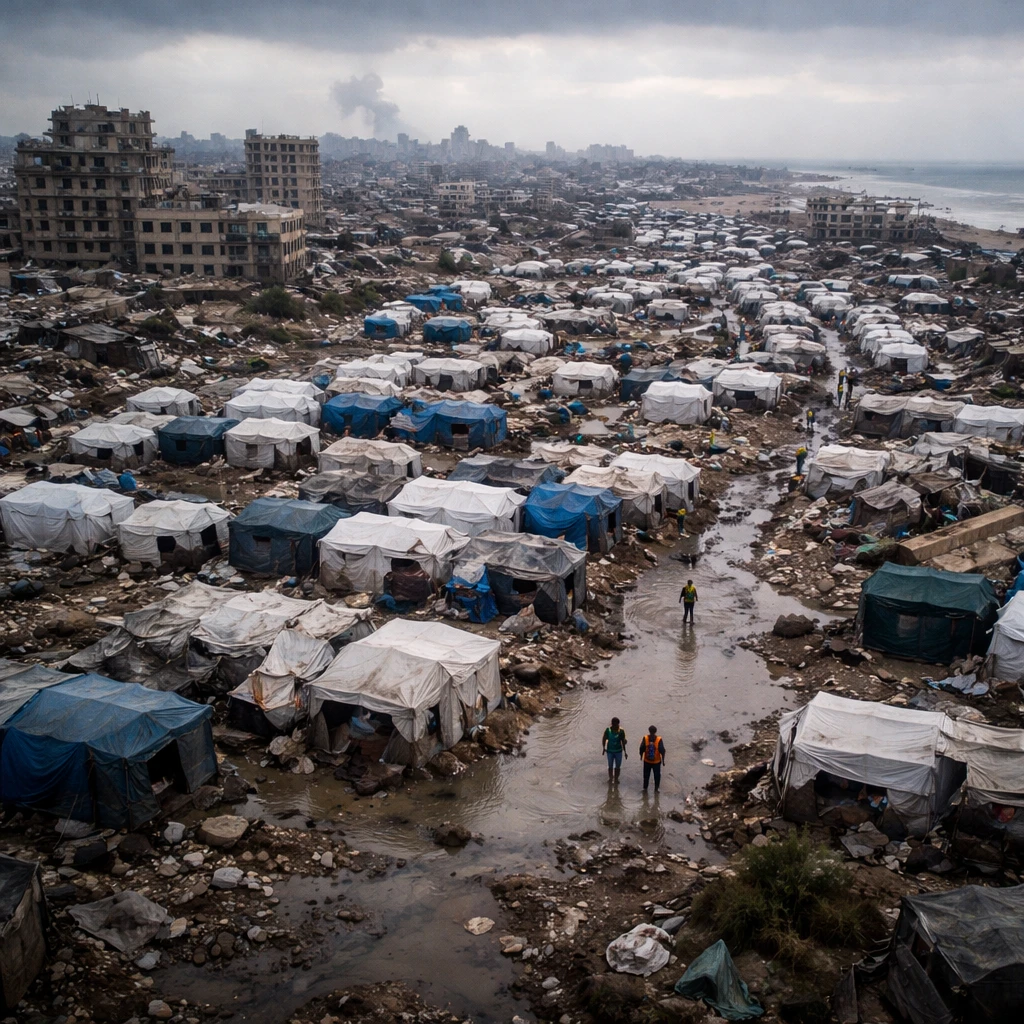
The Board of Peace highlights the dire humanitarian situation facing Gaza's population of more than 2 million people, most of whom are confined to roughly one-third of the coastal territory. Large numbers are sheltering in makeshift tents and in damaged buildings, under the control of Hamas fighters. The report notes that Israel occupies about two-thirds of Gaza, areas that have been largely razed and depopulated.
Restrictions imposed by Israel on supplies and equipment, together with funding shortfalls, are described as hindrances to Gazans' ability to prepare for and respond to seasonal flooding. The report notes that heavy rain inundated displacement camps last week across Gaza, and that additional rain is expected later in the month. It explicitly links those impediments to the population's heightened vulnerability.
Economic Controls and Commodity Availability
On the governance and economic side, the report states that Hamas has been collecting taxes on goods entering Gaza, a practice that is affecting the availability of basic commodities. The document identifies this as an obstacle to normalizing commerce and meeting daily needs for the civilian population.
Political Context and Positions
The Board of Peace was established to manage and oversee an ambitious plan to end the conflict initiated after Hamas-led attacks from Gaza in October 2023 and Israel’s subsequent military response. The plan has attracted strong international support, though the board itself has faced scepticism from many Western allies of Washington.
Within Israel, the right-wing coalition government led by Prime Minister Benjamin Netanyahu continues to operate in a caretaker capacity after an inconclusive election in which it lost its majority. The report notes the ongoing political constraints. Separately, Defence Minister Israel Katz stated that Israel would not withdraw from Gaza until Hamas was dismantled and Gaza was demilitarized.
Casualty Figures and Post-Ceasefire Toll
The report reiterates the heavy human cost of the conflict. It records that around 1,200 people were killed in Israel in the 2023 Hamas attacks. It states that the Israeli assault on Gaza has since killed 74,000 Palestinians. Since the US-mediated ceasefire was struck in October 2025, the report notes that more than 1,600 Palestinians, including many civilians, and five Israeli soldiers have been killed in Gaza.
Outlook and Next Steps
The Board of Peace is expected to present the report's findings to a United Nations Security Council meeting in New York at the end of November. The report serves as a warning that unless the practical steps outlined in the roadmap are tested on the ground - including the cessation of military activity, the transfer of governance responsibilities and clear decisions on security and policing - the ceasefire's durability remains in doubt.
This report focuses on the Board of Peace assessment and its findings regarding implementation, humanitarian conditions and political positions as contained in the Board's 12-page submission to the United Nations Security Council.