
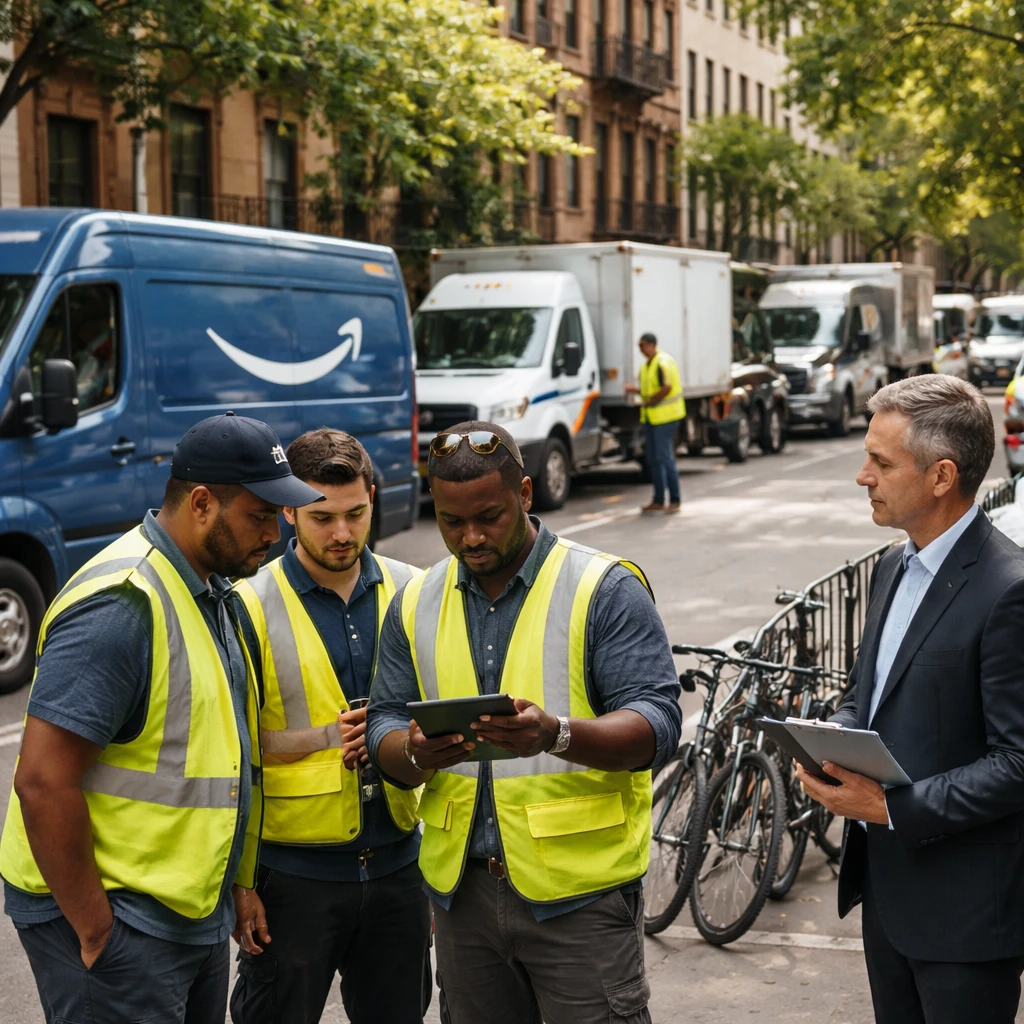
New York City policymakers are reportedly moving toward a substantially reworked proposal that would alter a prior effort to require Amazon.com Inc to put thousands of currently subcontracted delivery drivers on its own payroll. The emerging framework trades a single, strict direct-hire mandate for a set of alternative compliance routes aimed at balancing worker protections, jobs and street safety.
Under the potential revisions, the direct-employment clause in the Delivery Protection Act could be replaced by a tiered structure. Sources familiar with the discussions indicate Amazon could satisfy the rules in one of several ways: directly employ the drivers, rely on national carriers such as UPS or the U.S. Postal Service, or continue using a network of roughly 40 local third-party delivery service partners.
That last option would not be a simple continuation of current practice. To qualify as independent operators, the city would require contracted delivery firms to operate free from Amazon's operational control over daily delivery quotas, routing and decisions about hiring or discipline. At the same time, those partnerships would face increased municipal scrutiny to ensure the companies are not effectively controlled by Amazon.
The possible pivot follows a fracture within the coalition that had opposed the original bill. Small business delivery partners, who initially warned the direct-hire requirement would force their firms to close, reportedly began separate conversations with city officials. Those independent talks focused on gaining transparency into Amazon's routing algorithms and securing regulatory protections tied to their heavy economic reliance on the company.
Amazon had previously warned it might remove significant elements of its logistics footprint from New York City if obligated to absorb the contracted courier workforce. The company has indicated it is in active engagement with the City Council Speaker's office to try to reach a practicable resolution, and the speaker's office has said a range of options remains under consideration.
Even without mandating that Amazon put couriers on its payroll, the retooled measure would still create new compliance obligations for last-mile logistics providers. The proposal anticipates requiring Amazon and rival delivery networks to obtain licenses from the city's Department of Consumer and Worker Protection. That licensing would give the agency authority to investigate complaints and enforce safety standards as the City Council prepares for a possible vote in the coming weeks.
What this means for affected sectors
- E-commerce and retail platforms that rely on dense urban last-mile logistics would face a regulatory environment with multiple compliance pathways and heightened municipal oversight.
- Local third-party delivery firms could be required to reconfigure operational relationships with major platforms to establish genuine independence in routing and workforce management.
- National carriers may become an alternative channel for parcel delivery in New York City if platforms choose that compliance route.
Next steps
City lawmakers are still negotiating the final language of the proposal. City Hall and Amazon remain in discussions, and the revised bill would be subject to additional review and potential amendments before a council vote.