
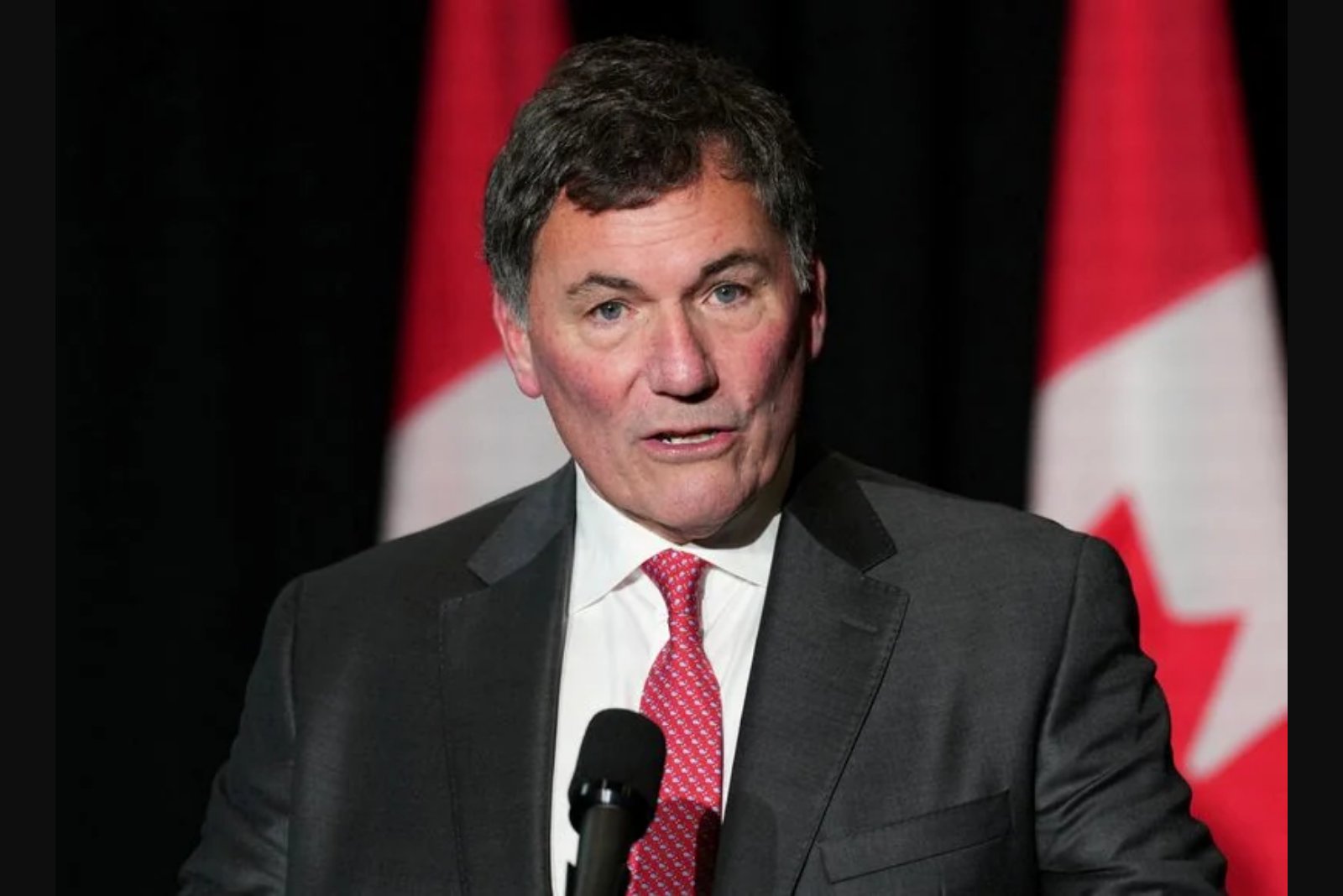
Canada is actively seeking a temporary arrangement with the United States that would relieve some of the tariffs imposed on its exports, but U.S. counterparts have, so far, shown little willingness to shift, the Canadian minister responsible for trade with the United States, Dominic LeBlanc, reported to an advisory committee on Thursday, according to two people who attended the briefing.
The tariffs in question - currently set at 25% - are scheduled to increase to 50% in January for Canadian steel, autos and lumber. Industry groups and companies have warned that such a jump could break supply chains that have been in place for decades and could lead to job losses and factory closures.
LeBlanc delivered the briefing to the Advisory Committee on Canada-US Economic Relations, a body made up of business leaders and politicians, said the people who spoke on condition of anonymity because the session was private. He told committee members that he maintains regular contact with U.S. counterparts, but that progress has been limited since negotiations collapsed in August.
"The US understands what our red lines are and our people are saying that if the US makes movement, then we can move quickly. But so far the US has made no movement," one of the attendees said, summarizing LeBlanc's account to the committee.
LeBlanc's office issued a statement confirming that he had briefed the committee on the state of trade talks and reiterated Canada's commitment to reach a mutually beneficial agreement with the United States. The office did not provide further detail in response to a request for comment.
According to one person familiar with the briefing, LeBlanc has been in conversation with U.S. Commerce Secretary Howard Lutnick, whose department plays a central role in administering and negotiating tariffs enacted under a U.S. law that allows the president to restrict imports deemed a national security threat - the same legal framework under which the tariffs on steel and autos were imposed.
The same attendee said LeBlanc has also been speaking with U.S. Trade Representative Jamieson Greer, who led a bulk of the talks in August before negotiations broke down.
Requests for comment to the Commerce Department and the Office of the U.S. Trade Representative did not receive immediate responses.
Committee members were also told that recent U.S. midterm election results - in which President Donald Trump's Republican Party lost control of both the House of Representatives and the Senate to the Democrats - have not altered the course of the trade negotiations, according to another person familiar with the briefing.
The advisory committee session underscored the narrow options available to Ottawa as January's tariff increase approaches. Canadian officials are pursuing a stopgap measure while formal negotiations remain at an impasse, and industry stakeholders are urging swift movement to prevent disruption.
At the same time, U.S. officials responsible for administering and negotiating the tariffs have not signaled any concessions, leaving the outcome of Canada's efforts uncertain as the deadline looms.