
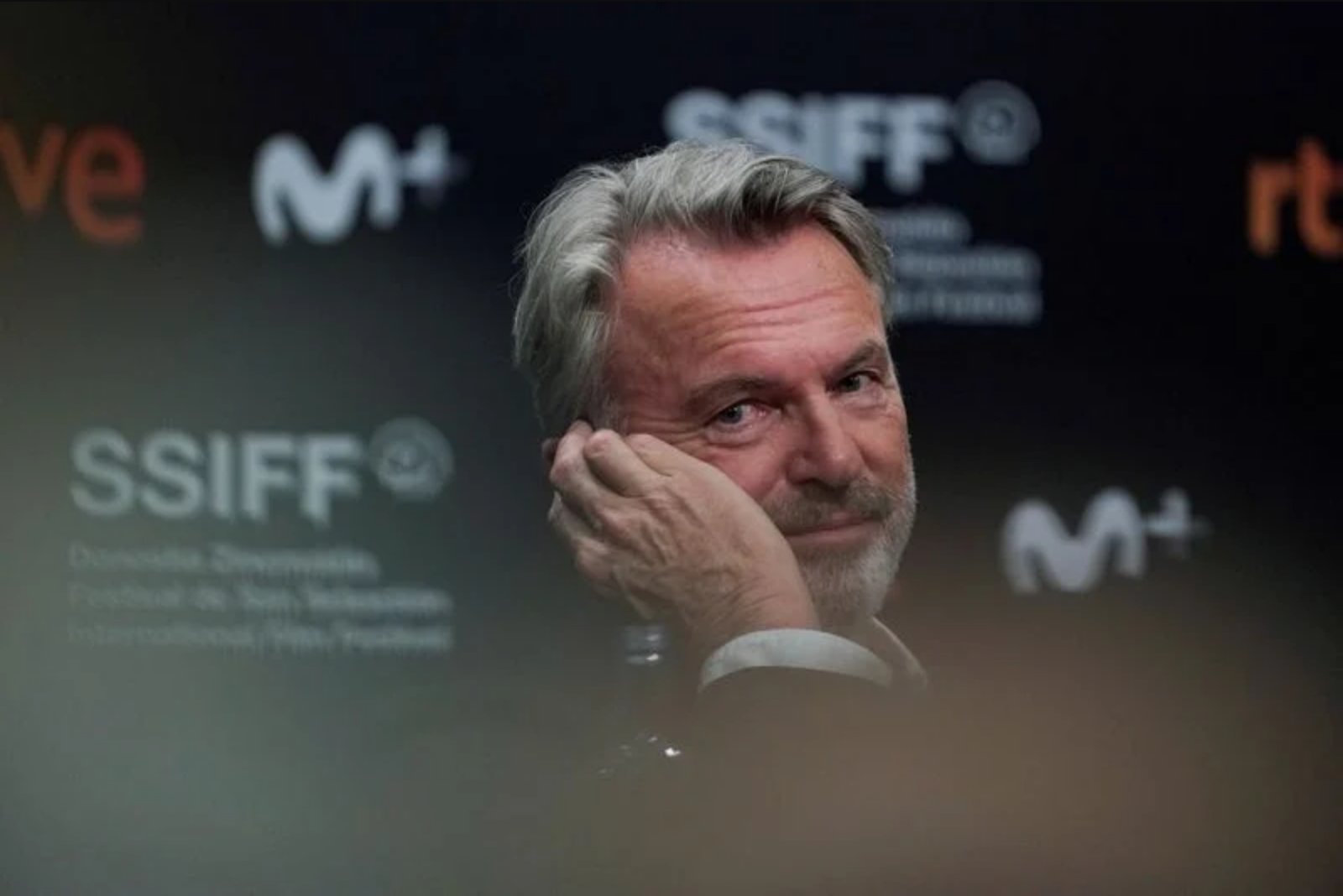
Sam Neill, the New Zealand actor widely recognized for portraying Dr Alan Grant in the blockbuster Jurassic Park and for a career that encompassed more than 50 films, has died at the age of 78. His family posted on social media that the death in Sydney "was sudden and unexpected but blessed by the fact that Sam remained cancer free." In April, Neill had publicly announced he was cancer free after a battle with blood cancer.
Critics often described Neill as "versatile" and "reliably excellent," a characterization reflected in the breadth of parts he took on over decades on screen. His roles included a submarine officer in the 1990 action-thriller The Hunt for Red October and the anti-Christ in Omen III (1981). He also portrayed anguished husbands in major dramas, acting opposite Holly Hunter in the Oscar-winning The Piano (1993) and opposite Meryl Streep in Evil Angels (1988), also released as A Cry in the Dark.
Born Nigel John Dermot Neill in Omagh, Northern Ireland, he moved with his family to New Zealand at the age of seven after his father, a New Zealander, retired from the army and returned home. At 11 he changed his name to Sam, explaining in his 2023 memoir Did I Ever Tell You This? that arriving in a primary school with "a plum in the voice and Nigel for a name was asking for trouble." He wrote that Sam "was easy to say, sounds friendly, sounds a bit blokey and has a touch of Labrador about it."
Neill recalled being a "wonky, nerdy, unsporty, stuttering boy" who found his first steps into acting at school, taking minor parts in school plays — including a bridesmaid in The Pirates of Penzance — because he enjoyed getting a laugh.
His breakthrough on film came with the New Zealand production Sleeping Dogs (1977), a low-budget picture that brought him sufficient attention to secure roles in larger Australian productions. Despite international work, Neill continued to return to New Zealand to perform, remaining a notable presence in the country’s cinematic life. At home he was particularly admired for playing the curmudgeonly Hector in the low-budget Hunt for the Wilderpeople (2016), directed by Taika Waititi.
In the mid-1980s Neill undertook a screen test for the role of James Bond. He later said his heart was not in the part and that during the daylong audition he felt awkward. "You never want to be the Bond that no one likes - that’s a fate worse than death," he told an Australian breakfast show.
Neill received industry recognition with nominations that included three Golden Globe awards and two Primetime Emmy nominations. He won three Australian television awards, including one in 2025 for The Twelve. After years of declining an honour, he accepted a knighthood in 2022 for outstanding contribution to film, saying at the time that acceptance was important so that "all the arts were recognised."
Reflecting on his craft, Neill observed, "Acting might look easy, but it’s actually very hard. In fact, if it looks like it’s easy, it means that the actor is doing something very hard, very well."
Outside acting, Neill spent much of his later life in Australia and on a vineyard in Central Otago, New Zealand. He established a wine label, Two Paddocks, in 1997, producing Pinot Noir from land he owned in the region. He described winemaking as enthralling and labour-intensive, and his wines received attention and praise. He also shared images of animals on his farm with fans, naming some after friends and colleagues, including a hen named Laura Dern and a bull named Graham Norton.
Neill married and divorced twice. He also took public positions on local matters in Central Otago, including opposition to plans for a new mine in the area.
The actor is survived by two sons and two daughters.
Key points
- Sam Neill, aged 78, died in Sydney; his family said the death "was sudden and unexpected" and that he had remained cancer free as of April following a public battle with blood cancer.
- Neill's career spanned more than 50 films across a wide range of roles, from Dr Alan Grant in Jurassic Park to performances in The Hunt for Red October, Omen III, The Piano and Evil Angels/A Cry in the Dark.
- Outside film, Neill developed a presence in New Zealand's wine industry with Two Paddocks Pinot Noir and was active in local issues, including opposing a proposed mine in Central Otago.
Risks and uncertainties
- The immediate cause of death beyond the family's statement is not provided in available information; this limitation leaves uncertainty about circumstances surrounding his sudden passing - relevant to public records and those tracking the actor's final activities.
- Neill's public opposition to a proposed mine in Central Otago highlights local contention over resource development; the article provides no further detail on the mine's status or outcomes, leaving uncertainty for regional stakeholders and the local economy.
- The article records awards and honours, including a 2025 television award and a 2022 knighthood acceptance, but does not elaborate on potential posthumous recognition or the future handling of his creative legacy.
Note: This report summarizes the details released by Neill's family and information about his life and career as presented in public statements and his memoir. No additional claims are made beyond those documented.