
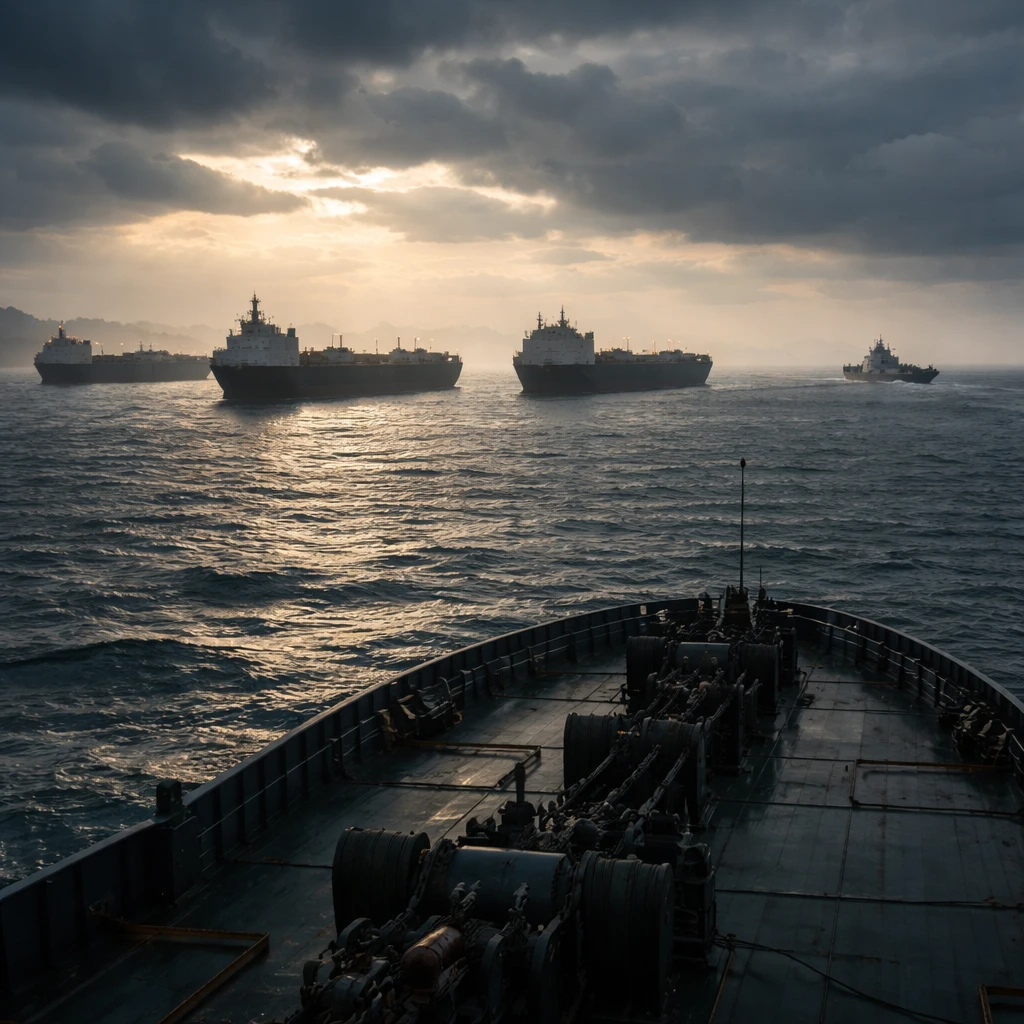
European stock markets edged lower on Monday as an escalation of fighting in the Middle East drove risk aversion among investors. The announcement from Iran’s Revolutionary Guards that the Strait of Hormuz was closed "until further notice" came after an attack on a commercial vessel and U.S. military strikes in response, prompting a move into energy assets and safer positions.
The benchmark pan-European STOXX 600 slipped 0.2% in early trade, mirroring losses across regional bourses. Germany’s DAX declined 0.3% and France’s CAC 40 fell 0.2%. By contrast, London’s FTSE 100 ticked up 0.2%.
Large European oil and gas producers outperformed the broader market amid the spike in crude prices. Shell rose about 1.8%, BP gained roughly 2.7%, and TotalEnergies advanced near 2.3% as energy names drew buying interest on the risk that supplies could be disrupted.
The market reaction followed the collapse of a fragile truce over the weekend. Iran’s Revolutionary Guards said they had closed the Strait of Hormuz "until further notice" after an assault on a commercial vessel and then U.S. military retaliatory strikes. The U.S. Central Command, however, said the waterway remained open to lawful transit. Still, the prospect of a blockade along a corridor responsible for a substantial share of global seaborne oil sent energy markets sharply higher.
Global crude benchmarks responded with sizeable moves. Both Brent crude and West Texas Intermediate jumped by more than 4.4%.
The downturn in European shares reversed late-week gains from the previous week, when technology stocks and chipmakers helped power a rally as markets briefly entertained hopes of diplomatic progress and steady demand for artificial intelligence infrastructure. Those earlier advances were at risk of being erased should the selloff extend.
Investors are also set to focus on remarks from European Central Bank Executive Board member Isabel Schnabel later in the day. Schnabel is regarded as one of the ECB’s more hawkish policymakers and has frequently advocated a cautious stance on cutting borrowing costs; market participants will be parsing her comments for any fresh signals on the future trajectory of interest rates.
On the corporate front, Akzo Nobel climbed about 3% after Nippon Paint made an offer for the paint maker’s decorative paints business, drawing investor attention to the takeover development.
Bottom line - Renewed conflict in the Middle East and Iran’s declaration regarding the Strait of Hormuz pushed oil prices sharply higher and prompted a modest pullback in European equity benchmarks, even as major energy producers climbed.