
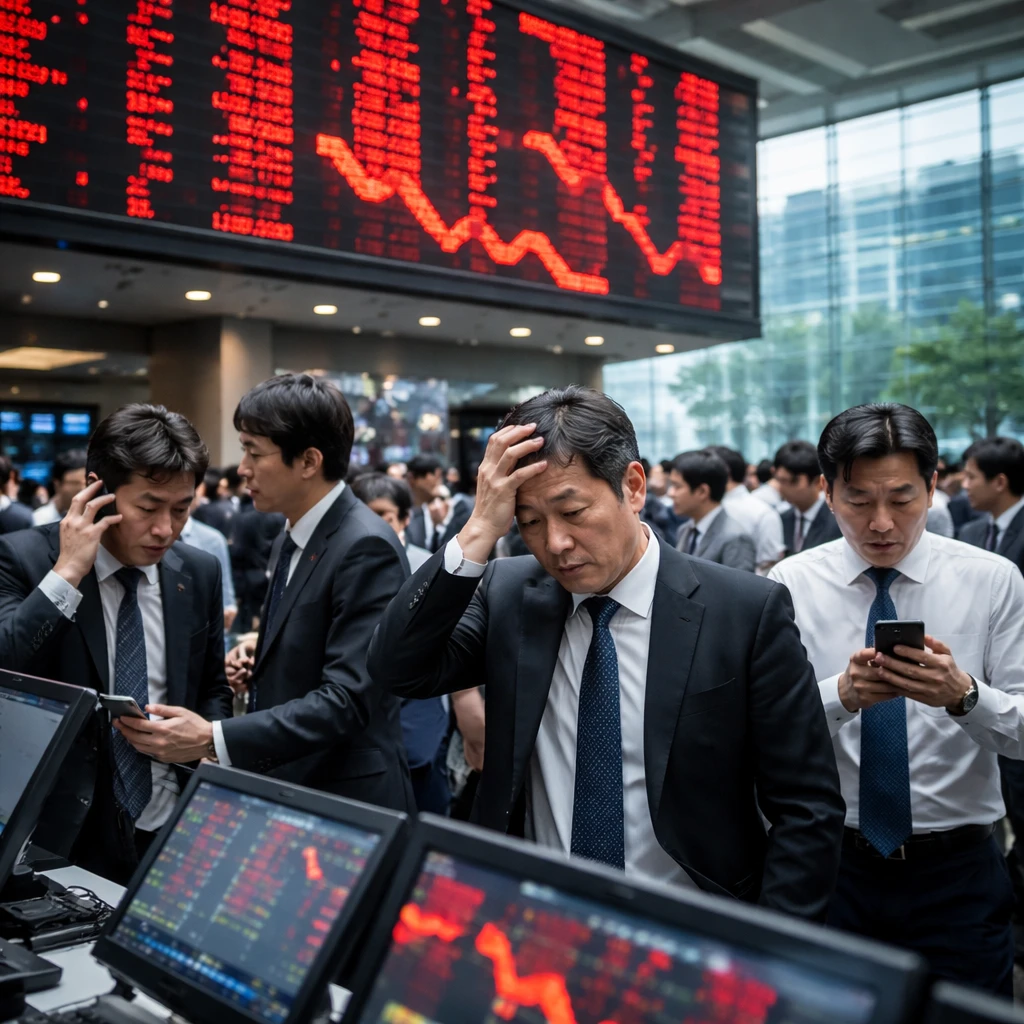
SK Hynix experienced a dramatic selloff, with its shares tumbling 15.4% to close at ₩1,845,000 - the biggest one-day fall in the company's history. The drop came as investors cashed in on gains following the chipmaker's strong Nasdaq American depositary receipt (ADR) debut the prior week.
The retreat in Seoul followed heightened investor activity around the ADR listing, which marked a high-profile U.S. market appearance for the memory-chip specialist. Market participants have been weighing whether the surge in demand for artificial intelligence-related memory products justifies the steep run-up in the stock. Analysts have noted that the ADR debut has effectively set a fresh valuation reference point for SK Hynix.
Daniel Yoo, global strategist at Yuanta Securities, highlighted a notable price discrepancy between the company's U.S. and Korean shares, saying the move has produced a discount rate of more than 20% between the two listings. Yoo also emphasized mechanics tied to the offering itself, calling it "additional share issuance" that raised the volume of stock available to investors, and described the situation as a "correctional period for SK Hynix domestically."
Analysts at Korea Investment & Securities added pressure on sentiment with a dimmer near-term earnings outlook. The firm forecast SK Hynix's second-quarter operating profit below the broader market consensus, pointing to lower-than-expected average selling prices for high-bandwidth memory (HBM). That assessment contributed to concern that the semiconductor cycle may be approaching a near-term peak, a dynamic that weighed on chip-sector names during the session.
Sentiment toward the broader Korean market deteriorated sharply when Korea's bourse operator activated a circuit breaker for the KOSPI after stocks plunged amid renewed tensions in the Middle East. The Korea Exchange triggered the halt after the index fell more than 8% from the previous session's close, as investors reacted cautiously to fresh U.S.-Iran strikes related to the status of the Strait of Hormuz. The KRX move represented the seventh time this year that the circuit breaker has been invoked.
Market flows showed foreign investors and institutions were net sellers of hundreds of billions of won during the turmoil, while individual investors were the sole net buyers, absorbing available supply. That pattern reflected a wholesale reduction in institutional holdings even as retail participants took on incremental shares.
Some market strategists cautioned against reading the price moves as a fundamental collapse in the semiconductor story. Phillip Wool, chief research officer at Rayliant Global Advisors, described the weakness as a portfolio rebalancing exercise rather than evidence of a deterioration in the industry outlook, saying the selling "doesn't really speak to any sort of reduction in the excitement about AI hardware."
Nonetheless, the session illustrated how a trio of forces - ADR-driven arbitrage and increased share availability from the U.S. listing, semiconductor earnings worries prompted by softer-than-expected HBM prices, and a geopolitical shock large enough to halt the Korean market - combined to produce one of SK Hynix's steepest single-session declines of the year.
Summary
- SK Hynix fell 15.4% to ₩1,845,000, its largest one-day decline on record, as investors took profits after a strong Nasdaq ADR debut.
- Analysts cited a greater-than-20% pricing gap between U.S. and Korean listings, increased share supply from the offering, and forecasts for Q2 operating profit below consensus due to weaker HBM prices.
- Broader market disruption from renewed Middle East tensions led to a KOSPI circuit breaker after the index dropped over 8%, exacerbating selling pressure.
Key points
- Semiconductor sector - SK Hynix's share plunge reflects investor recalibration around AI memory demand and recent valuation moves tied to the ADR listing.
- Korean equities - The KOSPI suffered a sharp fall and a circuit-breaker halt amid geopolitical escalation, affecting market liquidity and investor flows.
- Market mechanics - ADR arbitrage and additional share issuance increased supply and created cross-listing price differentials that pressured the Korean listing.
Risks and uncertainties
- Semiconductor peak risk - Lower-than-expected HBM average selling prices raise the possibility that the semiconductor cycle is approaching a near-term peak, which could weigh on earnings and sector valuations.
- Cross-listing arbitrage pressure - The price gap and added share availability from the ADR offering could sustain selling pressure on the domestic listing while markets rebalance.
- Geopolitical shocks - Renewed tensions in the Middle East and related military actions contributed to market-wide instability, as evidenced by a KOSPI circuit breaker trigger, creating short-term market risk for Korean equities.