
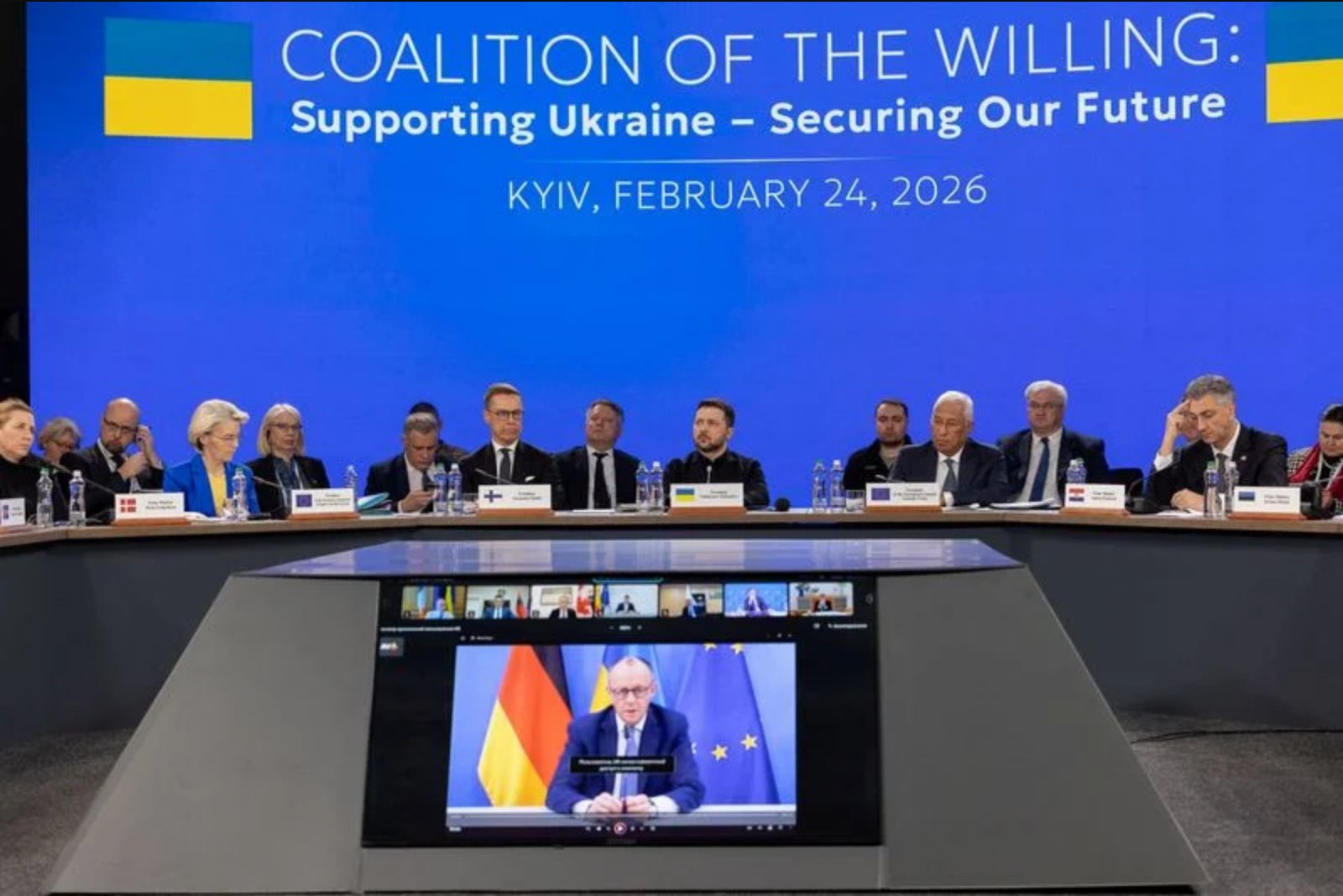
Western partners meeting in Paris on Monday intend to press for increased air-defence assistance for Ukraine, responding to shortages that have left Kyiv vulnerable to Russian ballistic missile strikes even as battlefield dynamics have recently shifted in Ukraine's favor. Ukrainian President Volodymyr Zelenskiy will attend the gathering alongside at least 25 other leaders convened under the Coalition of the Willing, officials said, as part of an effort to agree common positions for dealings with Russia and to outline security guarantees that could underpin any future peace arrangement.
The Paris meeting follows a NATO summit earlier in the week that sought to demonstrate transatlantic unity and a commitment to long-term support for Ukraine. The renewed diplomatic push coincides with fresh Russian missile and drone attacks that struck Ukrainian territory on Saturday, killing eight people and wounding dozens, according to officials. In public comments, President Zelenskiy urged partners to accelerate weapons deliveries to Kyiv.
French officials described anti-ballistic-missile cooperation as a central focus of the session. A French presidency official briefing reporters said discussions would range from arranging additional U.S. Patriot interceptors to speeding up the deployment of the Franco-Italian SAMP-T air-defence system, and exploring how European and Ukrainian defence industries might develop alternative solutions.
One specific option under consideration would see multiple European countries collaborate on a system intended to complement SAMP-T and Patriot batteries, while giving Ukraine a meaningful role in production. The official framed this as a way to increase availability of capable systems without relying solely on transfers of existing stocks.
"The ballistic missiles launched by (Russian President) Vladimir Putin are deliberately targeting civilian zones and June was one of the most murderous (months) since the start of the war," Foreign Minister Jean-Noel Barrot said in an interview published on Sunday.
Russia maintains that its strikes target military objectives and denies deliberately attacking civilians. Briefing details highlighted a pressing shortfall in Ukraine's stocks of munitions for its air-defence systems. Over the past month, Kyiv has been largely unable to intercept ballistic missiles, which travel at several times the speed of sound, and has repeatedly asked allies for additional supplies while proposing joint European efforts to develop an indigenous anti-ballistic air-defence capability.
Confronted by increases in Russian strikes, Kyiv has stepped up cross-border drone operations into Russia, with attacks on oil processing sites and weapons production facilities described by officials as efforts to blunt Moscow's capacity to sustain its campaign.
Delegations in Paris will also consider measures aimed at reducing Moscow's revenue streams, with particular attention to the so-called "shadow fleet" - tankers with opaque ownership arrangements that have been used to move Russian oil in ways that can obscure oversight. The European Union is expected to approve its 21st sanctions package against Russia next week, complementing the coalition discussions.
French President Emmanuel Macron indicated that Paris would make announcements on Monday, some of which could be bilateral and focus on joint arms production. Macron also signalled the coalition may announce coordinated military exercises as a step toward making a proposed multinational force in Ukraine - the MNFU - more operationally credible.
"What must be remembered is that the MNFU consists of land, air, sea and training. All of these pillars are intended to be tested continuously, to varying degrees, with all participants in order to guarantee their credibility," the French presidency official said. "It's not a question of conducting exercises in Ukraine."
The gathering in Paris is intended to translate political commitment into practical measures across procurement, joint production and operational interoperability while addressing urgent force-protection needs on the battlefield. Officials framed the talks as a next step in coordinating Western support across military, industrial and economic levers as Kyiv seeks the capacity to preserve lives and sustain defense operations amid intensifying strikes.