
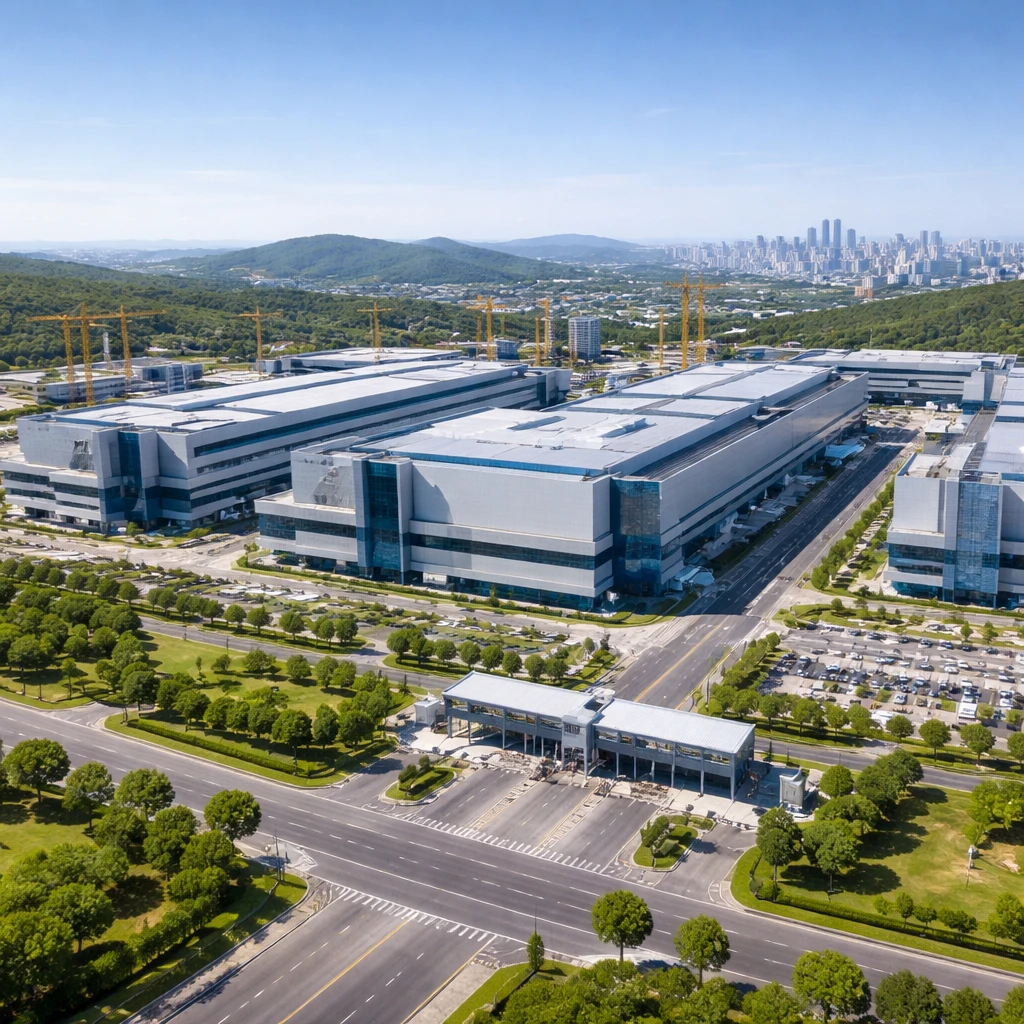
Samsung Electronics intends to bring its first semiconductor fabrication facility in the Yongin chip cluster online in 2029, according to industry sources cited by Yonhap. That projected start represents an acceleration of between one and two years compared with the company’s prior schedule.
The earlier opening is linked to a governmental decision to expedite development of the Yongin National Industrial Complex - a national strategic project described as the next-generation semiconductor manufacturing hub for the country. The decision to speed the complex’s development appears to have allowed Samsung to move its internal timeline forward.
The Yongin facility will be the initial installment in a broader buildout at the industrial complex, and it is slated to be the first of six semiconductor plants scheduled for construction there. The Yongin industrial complex is located just south of Seoul.
In a related announcement last month, Samsung revealed plans to invest 2,030 trillion won in its Pyeongtaek and Yongin semiconductor clusters. Separately, the company said it would allocate 400 trillion won to construct two new chip plants in Gwangju, which lies 270 kilometers south of Seoul.
From a product and industrial economics perspective, the compressed timeline suggests Samsung is aligning capacity scaling with the government’s strategic acceleration of infrastructure. The move concentrates significant capital commitment into the Pyeongtaek and Yongin clusters while maintaining parallel investment in Gwangju.
Context and immediate implications
- The Yongin plant’s start in 2029 shortens Samsung’s previous operational timetable by one to two years.
- The government’s decision to speed the Yongin National Industrial Complex is the proximate factor linked to the earlier start date.
- These developments form part of Samsung’s larger announced capital deployment: 2,030 trillion won for Pyeongtaek and Yongin, and 400 trillion won for two Gwangju plants.
Geographic and sector focus
The announcement centers on facilities south of Seoul - Yongin and Gwangju - and highlights the semiconductor sector and related industrial policy as the primary affected areas.
Reporting limitations
The sources cited for the revised 2029 start date are industry contacts reported by Yonhap. The article does not provide additional operational detail such as production capacity, node technology, or contractor timelines; those specifics remain unspecified.