
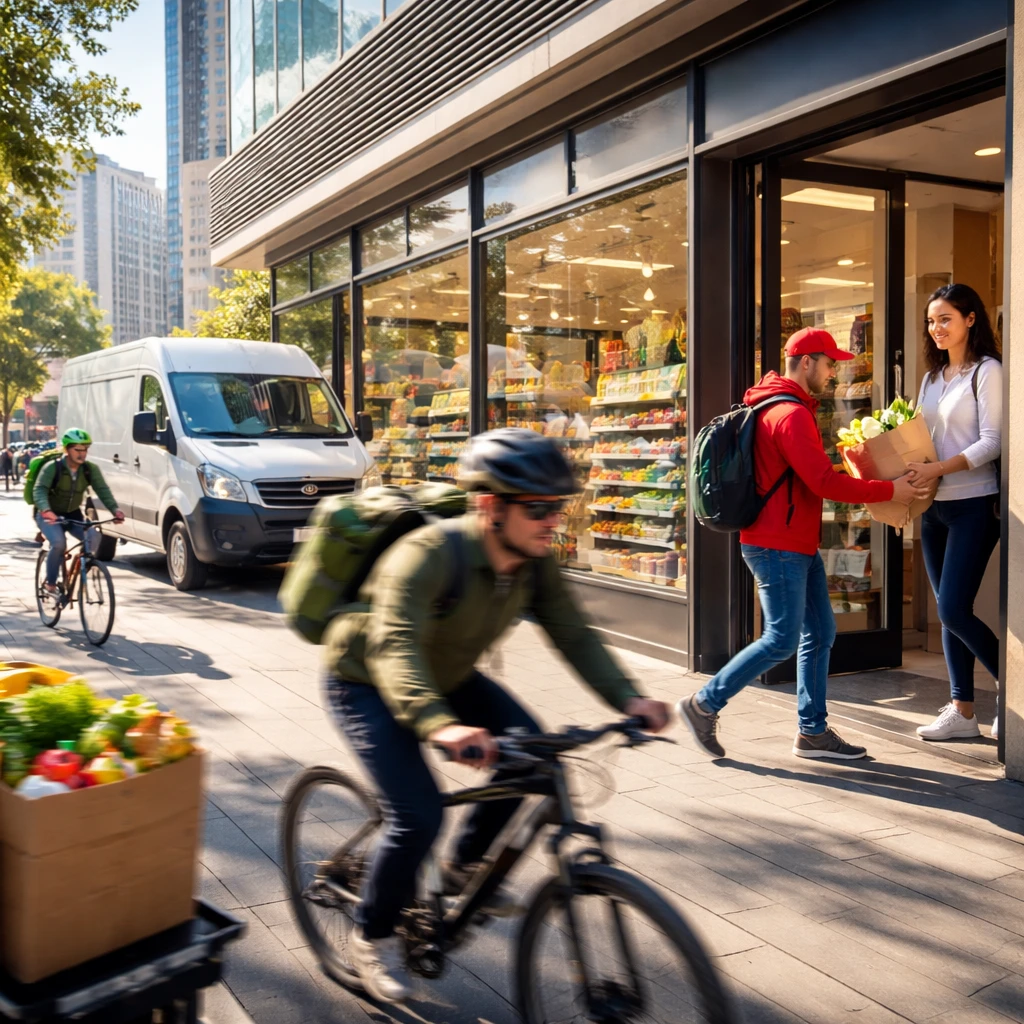
Delivery speed is rising to the forefront of retail competition as shoppers and emerging AI shopping agents place increasing weight on convenience. A recent Morgan Stanley analysis evaluated a cross-section of retailers on their ability to fulfill orders quickly and found meaningful variation depending on business model and geography.
Raw speed leader
Amazon Now came out on top for pure delivery velocity, averaging about 25 minutes per order. The service is tuned for immediate-need purchases, though that speed advantage comes with a narrower assortment and limited availability restricted to selected urban markets.
Most complete fulfillment platform
Walmart was identified as the most comprehensive delivery platform in the study, combining relatively rapid fulfillment with broad product selection across groceries and general merchandise. Walmart's ability to lean on a nationwide store footprint - more than 3,500 locations used as local fulfillment hubs - supports average delivery times of roughly 48 minutes across much of the U.S.
Grocery and mass-market peers
Among traditional grocery chains, Kroger and Albertsons were noted as strong performers, delivering in the range of about 40 to 50 minutes in their core markets. Dollar General's collaboration with DoorDash yielded a dependable 60-minute delivery offering, though the analysis points out variability in product availability across different markets.
Target ranked slower than the leading grocery and mass merchants, averaging about 126 minutes. While not as fast as the top grocery and mass players, that pace remains competitive for many same-day shopping situations. Amazon Prime's same-day option averaged roughly three hours, reflecting a trade-off that favors a broader product selection instead of immediate fulfillment.
Specialty retailers and the next phase of competition
Specialty retailers typically trailed the larger mass merchants, with delivery times spanning several hours to multiple days depending on category and inventory. The report concludes that the next phase of retail competition will likely center on striking the right balance among delivery speed, assortment breadth, and pricing as AI-assisted shopping becomes more widely used.
Implications for shoppers and market participants
The findings highlight how different fulfillment strategies produce distinct trade-offs. Services optimized for immediacy tend to offer faster delivery windows but narrower selections and limited geographic reach. Retailers leveraging dense store networks can provide both speed and assortment, while partnerships with delivery platforms can offer consistent, if not best-in-class, one-hour options.