
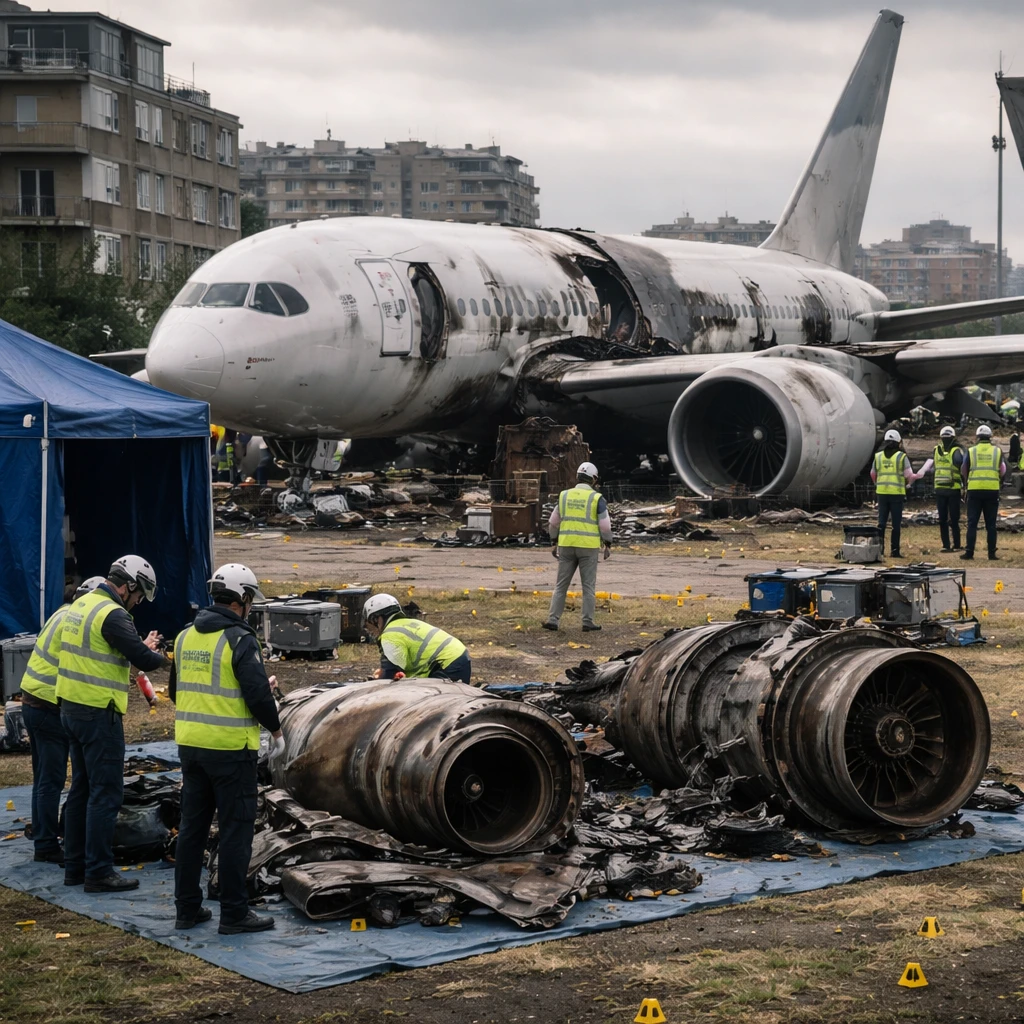
The Aircraft Accident Investigation Bureau (AAIB) in India said Friday that it will not publish the final report into last year’s Air India 787 accident on the previously expected schedule, explaining that investigators require more time to complete technical and specialist work.
The agency said investigators have spent the past year carrying out a comprehensive review of the technical, operational, organizational and human factors related to the accident. The AAIB added that supplementary technical assessments and specialist examinations will continue so that every conclusion is backed by verified evidence and robust scientific analysis.
A factor contributing to the postponement is the continuing examination of the aircraft’s engines - produced by GE Aerospace - which is taking place in the United States. People familiar with the matter told reporters that the final report could be issued within three months, but the AAIB emphasized the need to complete the outstanding analyses before finalizing conclusions.
The accident occurred on June 12, 2025, when Flight AI 171 crashed 32 seconds after departing Ahmedabad bound for London. The crash resulted in the deaths of 241 passengers and crew and 19 people on the ground after the aircraft struck a densely populated urban area beyond the airport perimeter. One passenger survived.
The AAIB published preliminary findings on July 12, 2025, disclosing that both engines had shut down after two fuel control switches in the cockpit were moved from the "run" to the "cut-off" position in rapid succession. That interim report did not determine why the switches were moved or who operated them.
Cockpit voice recordings captured one pilot asking the other why the switches had been flipped, while the other pilot denied doing so. The preliminary release did not attribute the statements to specific individuals. The AAIB also noted that the crash was the first accident involving a Boeing 787 Dreamliner.
A pilots' association has called for an expanded inquiry into the aircraft's computer and operating systems, urging the AAIB to examine those elements in greater depth. The AAIB, for its part, appealed to the public to avoid speculation or premature conclusions while the investigation continues.
Authorities said the additional time will allow for completion of specialist technical work and ensure the final report stands on verified and scientifically sound evidence. The AAIB did not provide a firm new publication date beyond the suggestion that the report may be ready within three months.
Summary
The AAIB has postponed the final report on the June 12, 2025, Air India 787 crash to permit further technical examinations, including continued engine analysis in the United States. Preliminary findings showed both engines had shut down after cockpit fuel control switches were moved to the cut-off position, but the preliminary report did not determine who moved the switches or why.
Key points
- Investigators are extending the probe to complete additional specialist and technical evaluations across multiple domains - technical, operational, organizational and human factors.
- Engine examinations conducted in the United States by specialists remain ongoing and are a cited reason for the delay.
- Preliminary findings indicated both engines shut down after two fuel control switches were moved from run to cut-off, but the cause and operator of those actions remain undetermined.
Risks and uncertainties
- Continued uncertainty about the cause of the engine shutdowns and switch movements creates ongoing safety and regulatory uncertainty for the aviation sector, including aircraft manufacturers and engine suppliers.
- The extended investigation timeline leaves operational and reputational risks unresolved for parties connected to the aircraft and its systems until the final report is published.