
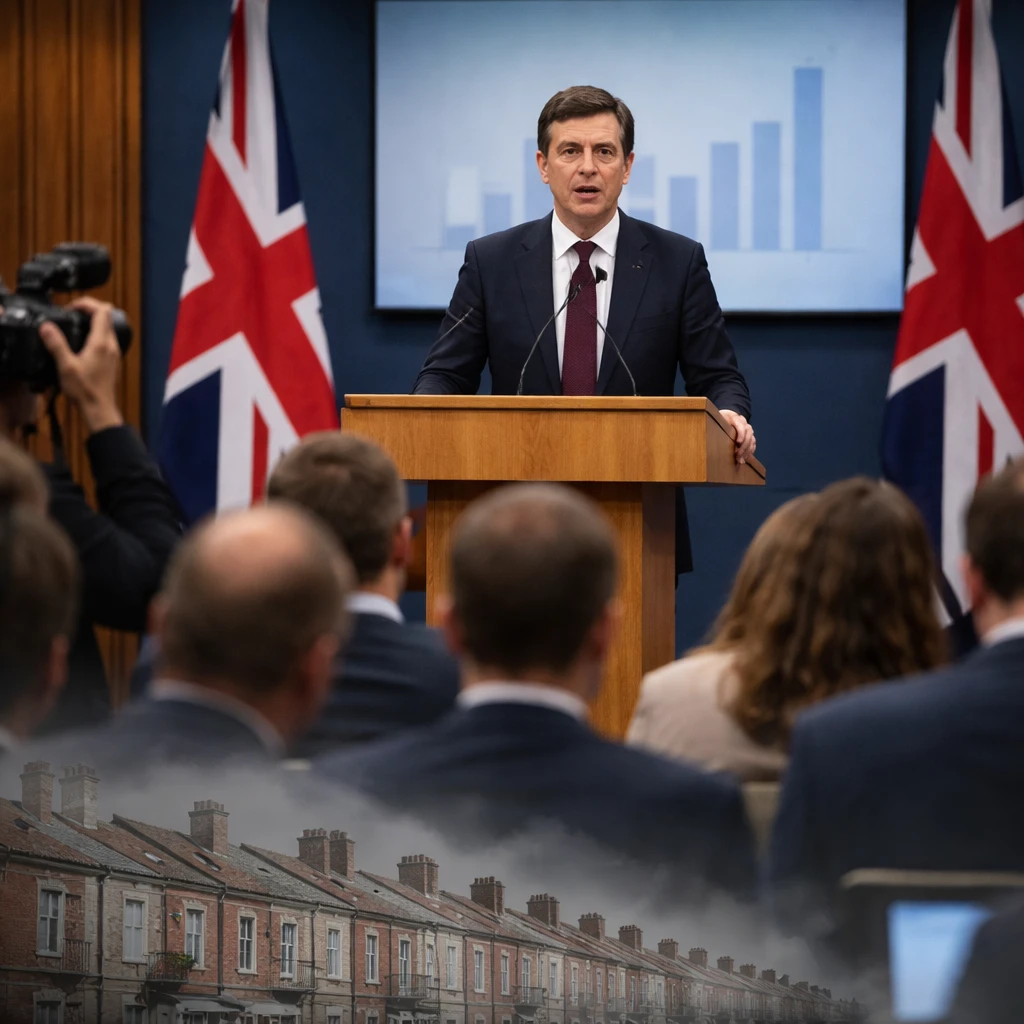
Prime Minister Andy Burnham told reporters today that the government will not alter stamp duty in the budget planned for later this year. When directly asked whether the tax on home sales would be changed or abolished, Burnham said such measures are not on the table for the forthcoming fiscal package.
Stamp duty on land and property produced £16.6 billion ($22.1 billion) in revenue for the government in the last financial year. Economists frequently argue that the levy discourages household moves for work or downsizing, contributing to suboptimal use of the existing housing stock, though the Prime Minister’s statement confirms no immediate policy change.
Addressing gathered journalists, Burnham said: "It’s just not the case that we are bringing forward plans on that scale at this moment in time...What we’re trying to do though is to make taxation fairer." The remark came amid wider commentary from the Prime Minister about the fiscal choices facing the government.
Burnham, who took office on July 20, has previously suggested that citizens might be asked to pay "a little more" in tax. He has framed such comments in the context of significant spending needs: demographics that place pressure on public finances, the requirement to rebuild the armed forces, and other investment priorities the government wishes to pursue.
The Labour Party’s 2024 manifesto did not include proposals to raise income tax, national insurance, or value-added tax rates. Collectively, those three revenue streams account for nearly two thirds of total tax receipts, a fact the government will weigh as it assesses funding options to meet the demands mentioned by Burnham.
Summary
The Prime Minister has confirmed no change to stamp duty in the next budget, while indicating a broader focus on making taxation fairer and acknowledging fiscal pressures tied to an aging population, defence rebuilding and investment needs.
Key points
- Stamp duty raised £16.6 billion in the last financial year, underpinning its significance to public revenue - sectors affected include housing and public finances.
- Burnham stated there will be no large-scale plans to alter stamp duty in the upcoming budget, signalling stability for property transaction taxes - this impacts the housing market and mortgage-related sectors.
- The government is balancing fiscal choices against spending demands from demographics, defence and investment commitments, which could influence broader tax policy debates - relevant to government finance and defence procurement sectors.
Risks and uncertainties
- Ongoing spending pressures tied to an aging population and rebuilding the armed forces create fiscal uncertainty, potentially affecting public spending priorities and markets tied to government contracts.
- While the manifesto excluded increases to income tax, national insurance, and VAT, the need to fund investment objectives may lead to future policy choices that are not detailed at this time, leaving revenue strategy uncertain for businesses and households.