
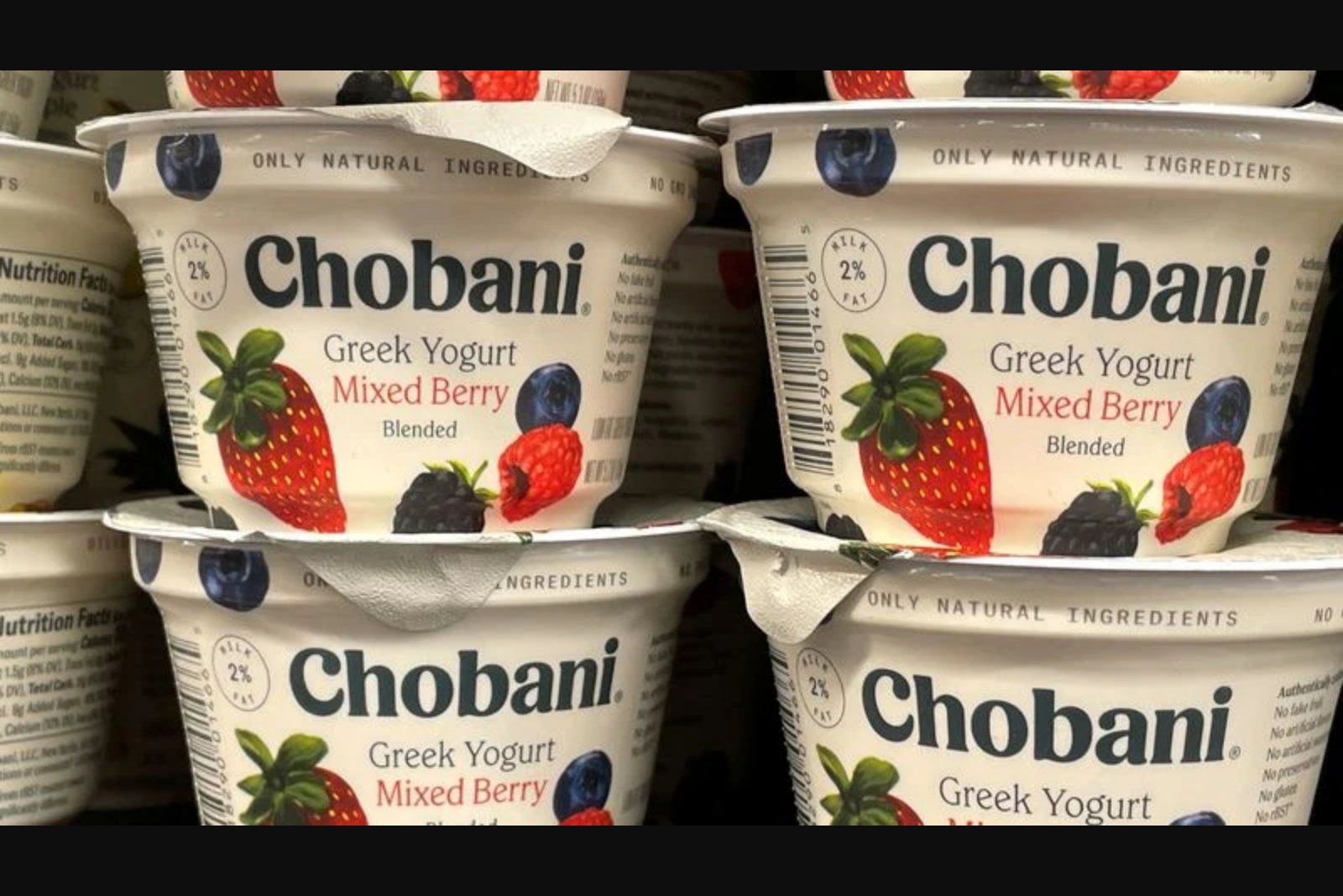
Danone, the parent company behind U.S. yogurt brand Dannon, filed a lawsuit on Monday in Manhattan federal court accusing Chobani of deceptive labeling for a multi-serve yogurt product marketed as Chobani 20G Protein.
In its complaint, Danone alleges that Chobani presents the product as a direct competitor to Danone’s Oikos Pro within the ultra-high-protein yogurt segment, while overstating how much protein each serving actually contains. "This conduct is particularly insidious when Chobani knows that healthcare providers and the federal government are directing the public to choose foods that offer higher concentrations of protein to maintain their health," Danone said in the filing.
The suit asserts that Oikos Pro delivers 20 grams of protein per 5.3-ounce serving, which Danone describes as a standard industry portion. Danone contends that producing dairy products with that level of protein per standard serving is "difficult and costly," and that Chobani took a different route: rather than increasing the amount of yogurt to reach true parity, Chobani is accused of inflating the listed serving sizes on its tubs.
According to the complaint, if Chobani had applied U.S. Food and Drug Administration serving-size rules to its labeling, the company’s servings would contain fewer than 18 grams of protein. Danone argues that, as a result, Chobani 20G Protein is closer in protein content to Oikos Triple Zero, a lower-priced offering from Danone that lists 15 to 18 grams of protein per serving.
Danone further claims that,"If consumers knew the truth, instead of choosing the Chobani product, they would choose either Oikos Pro for a true ultra-high-protein option, or Oikos Triple Zero for a better price," according to the complaint.
The lawsuit asks the court for unspecified monetary damages and seeks changes to Chobani’s labeling. It is at least the fourth legal action between Danone and Chobani since 2016; both companies are prominent sellers of Greek-style yogurt.
Chobani, which is based in New York, has previously asked a Manhattan federal judge to dismiss a separate Danone lawsuit alleging copying of packaging and the "Bright & Mellow" slogan for a cold brew coffee line. Danone is headquartered in Paris, with its U.S. subsidiary based in White Plains, New York.
Danone said Chobani and attorneys representing the company in other false advertising litigation did not immediately respond to requests for comment.
Background and legal posture
The complaint centers on labeling and serving-size practices rather than on new product formulations. Danone frames the case as protecting consumers who rely on protein claims for dietary choices, noting that public health guidance encourages higher-protein options for maintaining health.
The litigation asks the court to address how serving sizes are presented and whether those presentations mislead buyers comparing high-protein products on a per-serving basis.
Potential market relevance
While the filing focuses on label disclosures and alleged misrepresentation, it underscores ongoing competitive friction between two major players in the U.S. Greek-style yogurt market and raises questions about transparency in nutritional claims for multi-serve refrigerated products.