
Economy July 30, 2026 12:00 PM

China Voices Objections to U.S. Trade Measures in Video Call Between He Lifeng and U.S. Officials

Beijing raises concerns after recent U.S. tariffs and import bans; both sides agree to use consultation channels to boost communication and cooperation

By Hana Yamamoto
Share
Twitter Reddit Facebook LinkedIn

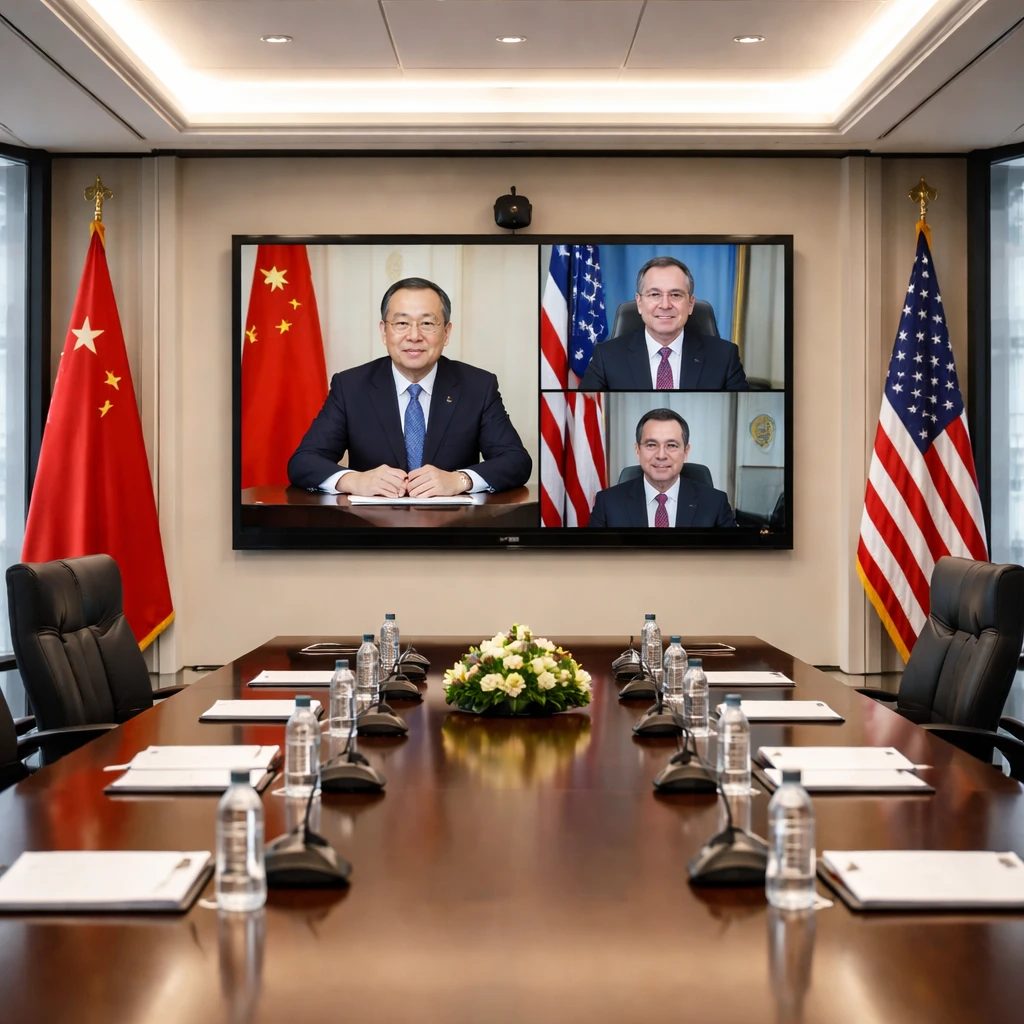
China's Vice Premier He Lifeng held a video meeting with U.S. Treasury Secretary Scott Bessent and U.S. Trade Representative Jamieson Greer in which he expressed objections to recent U.S. trade and economic restrictions, according to Chinese state media. The participants described their exchanges as "candid, in-depth, and constructive" and agreed to employ the China-U.S. economic and trade consultation mechanism to enhance dialogue, mutual trust and cooperation. The meeting comes amid new U.S. tariffs on a wide range of trading partners and targeted U.S. bans on certain Chinese imports.

China Voices Objections to U.S. Trade Measures in Video Call Between He Lifeng and U.S. Officials
Summarize with
ChatGPT Perplexity Claude Grok Gemini

Key Points

  • High-level video call: Vice Premier He Lifeng spoke with U.S. Treasury Secretary Scott Bessent and U.S. Trade Representative Jamieson Greer; both sides described the exchange as "candid, in-depth, and constructive" and agreed to use the China-U.S. economic and trade consultation mechanism to improve communication and cooperation.
  • Recent U.S. measures: The U.S. announced tariffs of 10% and 12.5% on goods from 60 trading partners over alleged lax enforcement of forced labour bans, with China assigned the 12.5% rate; the U.S. also unveiled bans on imports of new Chinese robots and power inverters.
  • Ongoing trade framework: After a late-year truce that halted a tariff war, the two countries agreed this year to set up a Board of Trade to explore cutting duties on roughly $30 billion of goods; China said it was seeking input last week on the planned tariff reductions.

BEIJING, July 30 - China’s Vice Premier He Lifeng conducted a video conference on Thursday with U.S. Treasury Secretary Scott Bessent and U.S. Trade Representative Jamieson Greer, during which He raised concerns about recent U.S. trade measures, Chinese state media reported.

According to the report, both sides described their discussions as "candid, in-depth, and constructive." They agreed to rely on the China-U.S. economic and trade consultation mechanism to strengthen communication, build mutual trust and expand cooperation.

The Chinese account noted that Beijing voiced "serious concerns" over recent U.S. trade and economic restrictions imposed on China. Those comments arrive against the backdrop of several recent U.S. policy moves. Last week, the United States announced new tariffs of 10% and 12.5% on goods from 60 trading partners in response to alleged lax enforcement of forced labour bans; China was assigned the 12.5% tariff rate.

Separately, on Tuesday the U.S. administration unveiled bans that specifically target imports of new Chinese robots and power inverters, a step that prompted a warning from Beijing about potential retaliation.

Relations between the two countries had been comparatively steady after a trade truce late last year that halted their tariff war. Earlier this year, Beijing and Washington agreed to establish a Board of Trade to identify areas where they could reduce duties on goods valued at about $30 billion. China also said last week it was soliciting public comments on the planned tariff cuts.

The reported video call emphasized the use of existing bilateral consultation mechanisms as the preferred path for addressing trade frictions. The exchange underlines both sides' stated intent to keep channels open while also highlighting persistent points of contention over recent U.S. actions and targeted measures.


Context and immediate developments

The meeting linked high-level officials from both sides and occurred as new U.S. tariffs and import restrictions have been announced. In parallel, bilateral initiatives such as the Board of Trade and planned tariff-cut consultations continue to move forward, according to the Chinese report.

While both parties signalled a willingness to engage through formal mechanisms, Beijing's expression of "serious concerns" signals ongoing tensions tied to the recent wave of U.S. measures.

Risks

  • Escalation risk: Beijing's warning and expression of "serious concerns" over recent U.S. trade and economic restrictions could increase the potential for retaliatory measures, impacting sectors targeted by bans such as automation equipment and power inverters.
  • Policy uncertainty: Newly announced tariffs and import bans create uncertainty for exporters and manufacturers that trade with both countries, particularly in manufacturing and technology-related supply chains.
  • Stalled liberalization: Even as both sides agree to use consultation mechanisms and pursue tariff-cut discussions via the Board of Trade, persistent objections and fresh restrictions could complicate efforts to reduce duties and stabilize trade relations.

More from Economy

OpenAI CEO to Meet White House and Commerce Officials After Security Test Breach Jul 30, 2026 U.S. 30-Year Mortgage Hits One-Year High at 6.66% as Rates Tick Up Jul 30, 2026 Treasury Yields Climb After Fed Keeps Rates Steady; Inflation Concerns Rise Jul 30, 2026 Italy’s Unemployment Rate Rises to 5.7% in June as Jobseekers Re-enter Labor Market Jul 30, 2026 Statistics Canada: 35.9% of Canadian Workers Used Generative AI in Past Year Jul 30, 2026