
Diplomatic momentum in the Gulf faltered as a regional meeting aimed at presenting an Iran-Oman arrangement for governing shipping through the Strait of Hormuz was postponed, and a separate attack on a key Saudi export artery left a major pipeline closed. Both moves heightened market worries about global energy flows and prompted a sharp jump in oil prices when markets reopened.
Oman’s foreign minister, Sayyid Badr Albusaidi, announced late on Sunday that a meeting scheduled for Monday had been postponed "in the interests of consensus." Iranian officials had indicated they would attend that session with Gulf Arab states to set out an agreement reached with Oman on management of shipping routes through the Strait of Hormuz.
An Iranian foreign ministry official quoted by Iran’s Fars news agency said the postponement occurred at the request of some regional countries and was a decision jointly taken by Tehran and Muscat. The official added that Iran would coordinate with Oman to set a new suitable date for the gathering.
The delay came as Saudi Arabia kept a major 1,200-km (745-mile) east-west pipeline shut throughout the weekend after drone strikes on Friday caused damage. That pipeline has been the principal route for Middle East oil that bypasses the Strait of Hormuz.
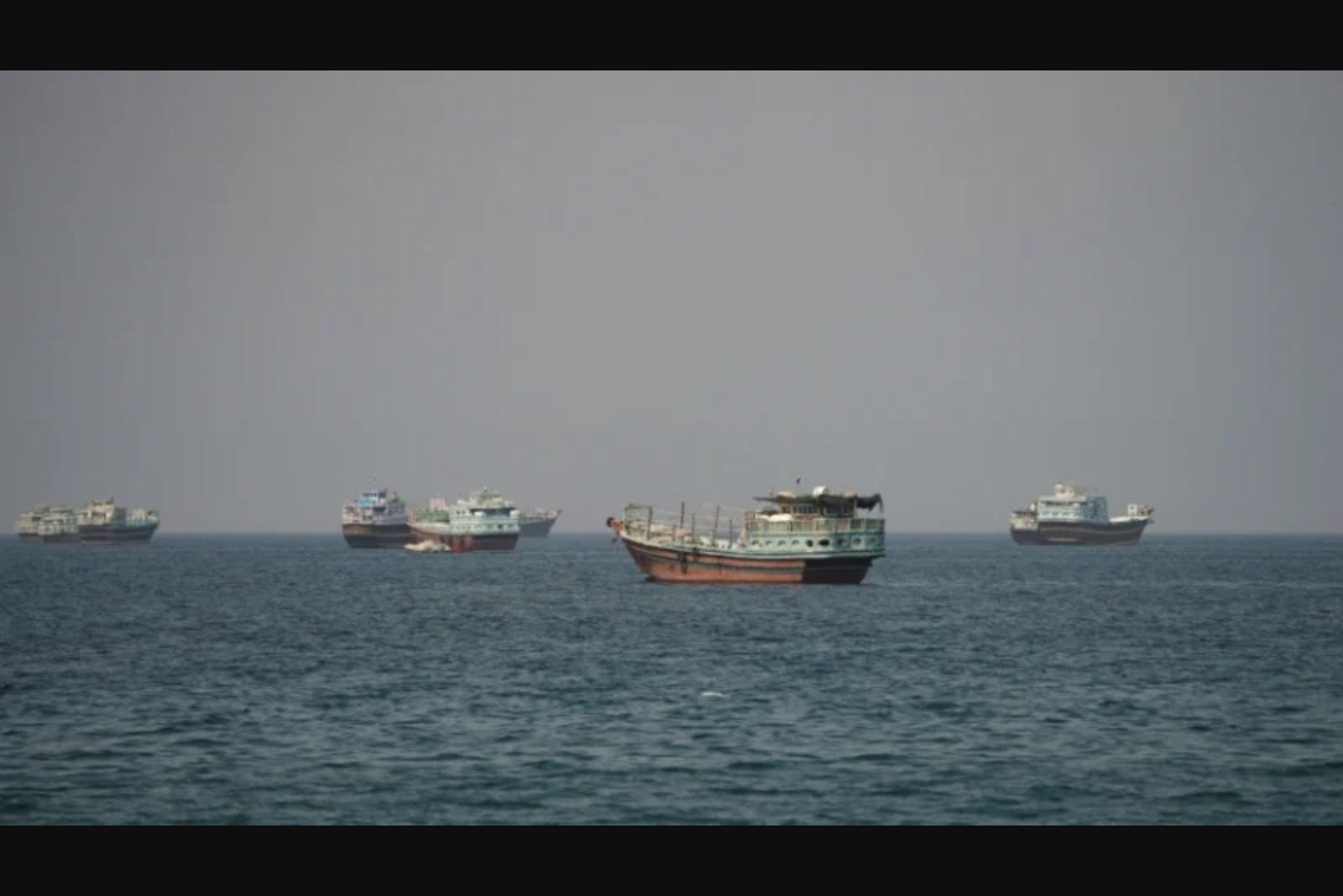
Meanwhile, the Strait itself continued to register security incidents. The British maritime security agency UKMTO reported that a vessel transiting the strait was struck by a projectile, igniting a fire and forcing the evacuation of the crew. Iran reported separately that an Iranian commercial vessel had been struck off its coast, resulting in one fatality and four crew members wounded.
These events compounded supply concerns in global oil markets. Traders and Saudi buyers said Riyadh currently has stocks at its Red Sea port of Yanbu sufficient to sustain exports for only five to seven days if the pipeline remains closed. Beyond that window, up to 4% of global oil supply could be at risk, on top of the reductions already caused by disruptions to traffic through the Strait of Hormuz.
Saudi authorities have not published a full assessment of the damage to the pipeline or provided a timeline for repairs. Accounts from sources differ on how long restoration will take, with estimates ranging from days to weeks. Satellite imagery has shown large columns of smoke rising from locations along the pipeline.
The disruptions coincide with a spike in other region-linked violence. The recent uptick in attacks has been tied to the war that the United States and Israel launched six months ago and follows a quieter August when Middle East flows had begun to recover slowly.
In an interview with the London-based pan-Arab outlet Al-Arabi Al-Jadeed, Iran’s foreign minister Abbas Araqchi said that, irrespective of any accord with Oman, Iran would not reopen the strait until the United States meets Tehran’s demands.
The article’s reporting noted that the United States has so far not achieved the objectives President Donald Trump set out when he launched "Operation Epic Fury" in February - to end Iran’s nuclear programme, prevent it from being able to attack its neighbours and create conditions for its people to topple their rulers. During a weekend trip to Ireland that included attendance at the Irish Open golf tournament, President Trump reiterated his expectation that the Iran war would end this year, possibly soon after U.S. midterm elections in November, and said then gasoline prices would "drop like a rock."
Retail fuel prices have already moved higher in the United States. The politically sensitive retail price of diesel rose on Sunday to another record above $6.20 a gallon.
On the Red Sea front, Saudi state media released footage showing damage to homes and a mosque in Jazan province following what officials described as a cross-border attack by Yemen’s Iran-aligned Houthi rebels. The Houthis also claimed a strike on a Saudi military base in a neighboring province and said they had captured Perim Island in the Bab El-Mandeb strait, which controls the Red Sea’s southern entrance.
The Houthi advance along the Red Sea coast has been described as part of the most intense fighting in Yemen in years. Their operations along the coast and the attacks on Saudi targets present Washington with a dilemma: support Saudi security and shield shipping, while avoiding escalation by opening another front.
The United States conducted bombing against Houthi targets for two months in 2025, but that campaign was halted after an announcement that the group had lifted a threat to attack Red Sea shipping. On the diplomatic-military assistance front, three sources said Crown Prince Mohammed bin Salman contacted President Trump by phone on Thursday seeking military aid to counter the Houthis, but was offered intelligence support only. President Trump confirmed speaking with the crown prince and said the Houthis had also contacted the U.S. administration, asking Washington to refrain from involvement in the Yemen conflict.
For transport and logistics professionals, the convergence of maritime attacks and the pipeline outage creates immediate routing and inventory challenges. Tanker operators face heightened risk transiting the Strait of Hormuz and the Bab El-Mandeb, and shippers adjusting to lost pipeline capacity will need to reallocate cargoes and potentially rely on alternate ports or routes.
Commercial and policy decisions over the coming days will be shaped by the pace of repair to the Saudi pipeline, the timing of any rescheduled Gulf meeting on the Strait, and the evolving security picture both at sea and along littoral coasts. With markets already responding, energy traders, refiners and logistics planners remain on alert for further disruptions that could constrain supply and keep price volatility elevated.
Context note: Where the article refers to statements by named officials and outcomes of meetings or decisions, those accounts reflect the positions and claims as reported by the parties involved.