
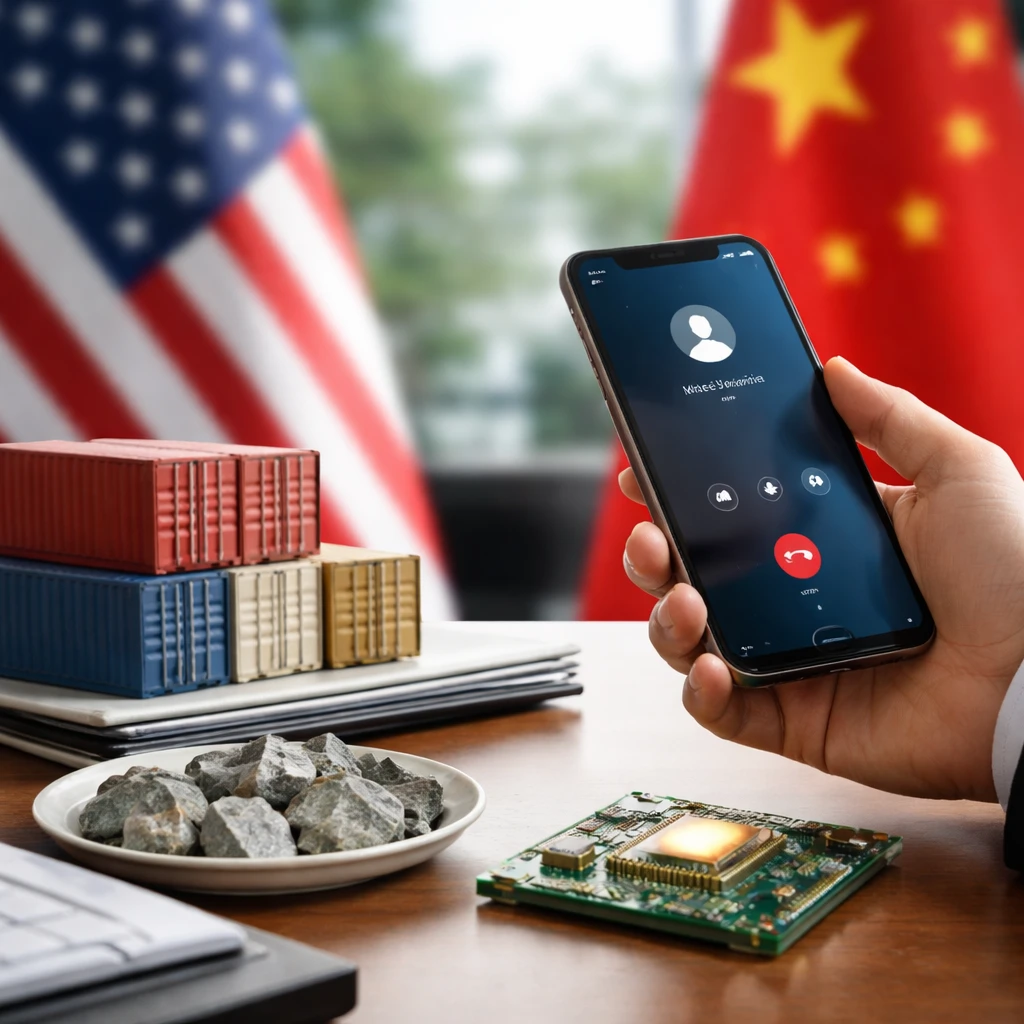
Chinese Vice Premier He Lifeng conveyed sharp worries about recent actions taken by the United States in a telephone conversation on Thursday with U.S. Treasury Secretary Scott Bessent and U.S. Trade Representative Jamieson Greer, according to a statement from China's state news agency.
The Xinhua News Agency release said He expressed "serious concern" about the measures. The statement added that both sides had agreed to "enhance communication, build mutual trust and dispel doubt," language intended to signal a willingness to keep lines of dialogue open even as disputes persist.
Bessent and He have met regularly over the past year and a half to confront a range of sensitive U.S.-China issues, the statement noted. Those exchanges have touched on tariffs, access to rare earth minerals and the social media platform TikTok. The talks contributed to what was described as a fragile detente that made President Donald Trump's state visit to Beijing possible in May.
The two largest economies remain under a trade truce in which some tariffs and export restrictions were suspended, but recent actions have strained that agreement. The statement pointed to several sources of renewed tension: a fresh round of import duties introduced as the U.S. rebuilds tariff barriers; disputes over access to rare earths; concerns about potential shipments of Chinese weaponry to Tehran during the U.S.-Iran war; and the emergence of new Chinese artificial intelligence models.
Chinese open-weight AI models were highlighted in the statement as having the potential to rival some advanced models developed by U.S. firms. In recent remarks, Bessent proposed that U.S. sanctions could be used to confront what he described as potential intellectual property theft by Chinese AI companies.
The United States has also implemented restrictions on certain foreign-made robotics and inverters, framing those moves as responses to supply-chain vulnerabilities. The Federal Communications Commission's restrictions did not explicitly name Beijing, though much of the production of the affected items occurs in China, the release said.
Looking ahead, the statement referenced a planned meeting between the two countries' leaders: President Trump is scheduled to host Chinese President Xi Jinping in the United States this September. The call and the accompanying joint language on communication and trust underscore ongoing efforts to manage tensions while multiple policy differences remain unresolved.
Key points
- He Lifeng informed U.S. officials that China has "serious concern" about recent U.S. measures; both sides agreed to step up communication.
- Regular meetings between Bessent and He over the past 18 months have covered tariffs, rare earths and TikTok, and helped produce a fragile detente enabling President Trump's May visit to Beijing.
- Tensions persist over new import duties, rare earths access, potential arms shipments to Tehran, and Chinese open-weight AI models; U.S. restrictions on foreign-made robots and inverters were cited as responses to supply-chain vulnerabilities.
Risks and uncertainties
- Escalation of trade measures - Renewed import duties and other restrictions could undermine the existing trade truce, affecting cross-border commerce and sectors tied to international trade.
- Technology and intellectual property disputes - The emergence of competitive Chinese AI models and U.S. talk of using sanctions to address alleged IP concerns create uncertainty for technology firms on both sides.
- Supply-chain vulnerabilities - Restrictions on foreign-made robots and inverters signal potential disruptions for manufacturers and supply chains that rely on these components.