
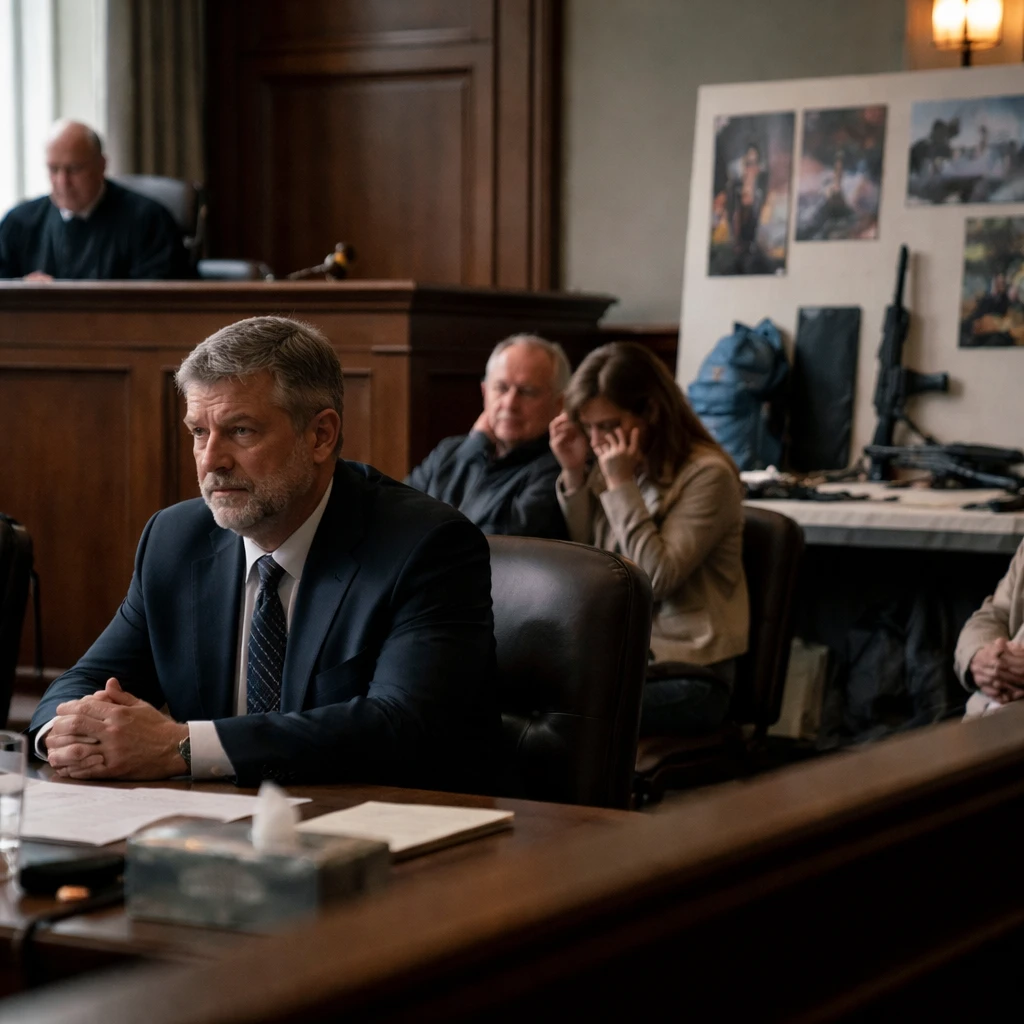
Summary: A Barrow County Superior Court judge on Thursday imposed a 15-year prison term on a 55-year-old man who supplied the rifle used by his son in a 2024 high school shooting that killed four people. The sentencing followed a separate ruling earlier in the week in which the shooter, his 16-year-old son, received life in prison without the possibility of parole.
In handing down the sentence, Judge Nicholas Primm noted that none of the offenses that led to the father's conviction carried mandatory prison terms, while acknowledging the profound harm his negligence had caused. "The loss here is profound," Primm said after several relatives of the victims offered tearful testimony.
The father, identified in court as 55 years old, was sentenced two days after his son, 16, received life without parole from the same judge for the 2024 shooting. Prosecutors had sought a much longer term for the father - requesting 80 years - but the judge imposed a significantly shorter sentence.
Defense counsel urged the court to impose a combination of prison and probation, requesting a sentence of 10 years behind bars followed by 10 years of probation. Attorney Hobbs argued that the Michigan case in which parents were sentenced after their child killed classmates involved more advance warning, and stressed that this was the first case of its kind in the state. "We would ask the court not to make Georgia the national outlier in this first case of its kind, against a defendant whose warnings came with less and whose efforts were more," Hobbs said.
Barrow County District Attorney Brad Smith countered the defense argument, telling the judge that warning signs were visible. Smith presented a replica of the shooter's bedroom wall on which the youth had created a shrine to the perpetrator of a 2018 high school mass shooting. The replica was presented to underscore the argument that the risk was evident to the father. "Staring him in the face every day," Smith told the judge.
The father's conviction marks the state's first instance of a parent found guilty of second-degree murder tied to a mass shooting carried out by a child. It also places him among a small but growing number of U.S. parents prosecuted for their role in shootings committed by their children - a legal approach prosecutors are increasingly using as they attempt to address gun violence in schools.
Months before this case, the parents of a Michigan teenager who killed four classmates were convicted of manslaughter and received prison terms ranging from 10 to 15 years. In that Michigan trial, a jury found the parents guilty of not securely storing firearms at home and ignoring clear signs that their son was mentally disturbed. Prosecutors and defense attorneys in the Georgia case referenced that precedent during arguments over appropriate punishment and the extent to which parents should be held criminally accountable.
During sentencing in the Georgia case, relatives of the victims provided emotional testimony about the impact of the killings. Judge Primm recognized the "immeasurable heartache" stemming from the events while also distinguishing the father's conduct from the separate, more severe actions carried out by his son.
As prosecutors pursue similar legal theories in other jurisdictions, the outcome in this case will likely be viewed as part of a broader trend in how the legal system addresses parental liability when children commit mass violence, though this sentence reflects the judge's assessment of the specific legal standards and penalties applicable under state law.