
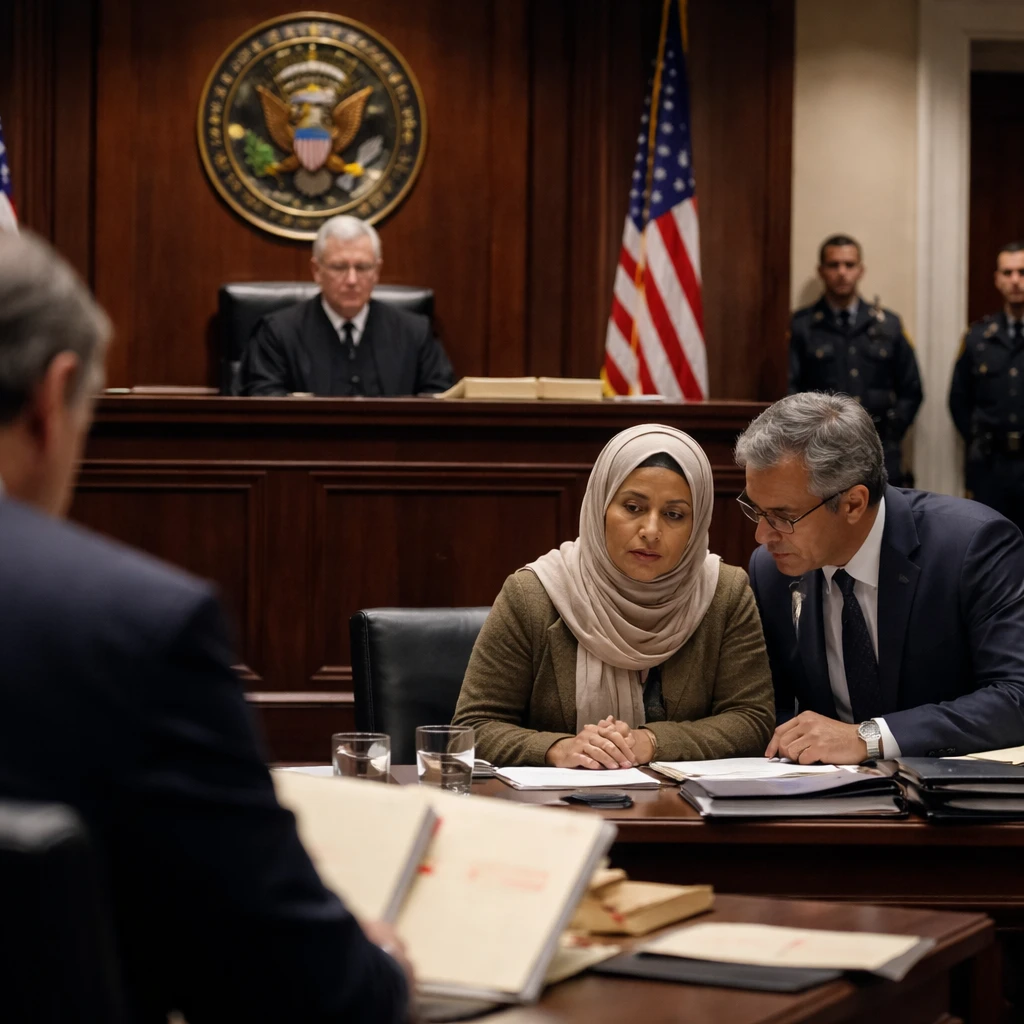
WASHINGTON, July 30 - A U.S. tribunal established three decades ago to adjudicate deportation proceedings that involve sensitive intelligence met publicly for the first time on Thursday. The hearing, held before the Alien Terrorist Removal Court, focused on the proposed removal of 47-year-old lawful permanent resident Nazira Haji Zada, who prosecutors allege provided support to Islamic State sympathizers and took steps to conceal a failed plot to carry out a mass shooting on Election Day 2024.
The unusual proceeding unfolded in a federal courtroom in Washington. Prosecutors told the court that much of the material on which they rely is classified and therefore not suitable for general public disclosure. Defense counsel countered that reliance on secret evidence in a deportation context violates constitutional due process protections.
Haji Zada was present at the hearing. Court filings show she has not been criminally charged in connection with the allegations, although prosecutors note that her son and son-in-law entered guilty pleas on related charges last year. The FBI arrested Haji Zada at her Fort Worth residence on Tuesday.
Legal arguments and court response
During the hearing, defense attorney Matthew Farley argued forcefully that the use of classified information in this procedure amounts to "a runaround to bringing a criminal case," asserting that the mechanism infringes fundamental due process rights. Farley asked Chief Judge Joan Ericksen to dismiss the removal proceedings and to order Haji Zada freed immediately. Judge Ericksen, who is a federal district judge appointed to oversee this specialized court, denied the request.
"This entire scheme is in violation of due process and unconstitutional," Farley said in court.
Acting Attorney General Todd Blanche issued a statement prior to the hearing characterizing the allegations as demonstrating "the matriarch of an ISIS-sympathizing family aiding in a plot to launch a mass casualty attack on American voters on Election Day." Prosecutors indicated that much of the evidence supporting their position is classified and cannot be made public.
Nature of the court and evidence handling
Congress created the Alien Terrorist Removal Court in 1996 to permit the government to pursue deportation cases that require consideration of classified national security information. Until this week the court had not been used. The Justice Department revived the mechanism to seek Haji Zada's removal, setting the stage for the first test of the court's procedures in practice.
Officials presented a short unclassified summary of the case that alleges Haji Zada indoctrinated her children with ISIS ideology and concealed both her family's radicalization and a planned movement to ISIS-controlled territory from her husband. In a July 15 memo, the FBI explained that the underlying information is classified because disclosure could allow terrorists or terrorist organizations to evade preventive or detection measures or could reveal sources within the FBI or the broader U.S. intelligence community.
Procedural difficulties and next steps
The court's unfamiliarity with practical application became apparent during the hearing. Judges, prosecutors and defense lawyers spent a portion of the session addressing foundational procedural matters - including how classified documents would be handled within the courtroom and which individuals would be granted access to sensitive evidence. The session did not establish a date for further hearings, and it remains unclear when the matter will be next heard.
Beyond the immediate legal dispute over Haji Zada's status, the hearing marks the opening of a new legal front in the current administration's efforts to pursue removal of non-citizens the government regards as national security threats. The proceedings also highlight tensions between national security imperatives and traditional due process protections when classified information is central to a case.
What was established in court
- The Alien Terrorist Removal Court convened publicly for the first time to consider deportation using classified evidence.
- Nazira Haji Zada, 47, is a lawful permanent resident accused by prosecutors of supporting Islamic State sympathizers and concealing a failed Election Day 2024 mass shooting plot; she was arrested in Fort Worth on Tuesday.
- Haji Zada has not been criminally charged; her son and son-in-law pleaded guilty last year to related charges.
The hearing underscored how the presence of classified material complicates both transparency and routine procedural questions in a removal case. It also left open questions about timing and access that the court will need to resolve if it is to handle classified deportation cases in the future.