
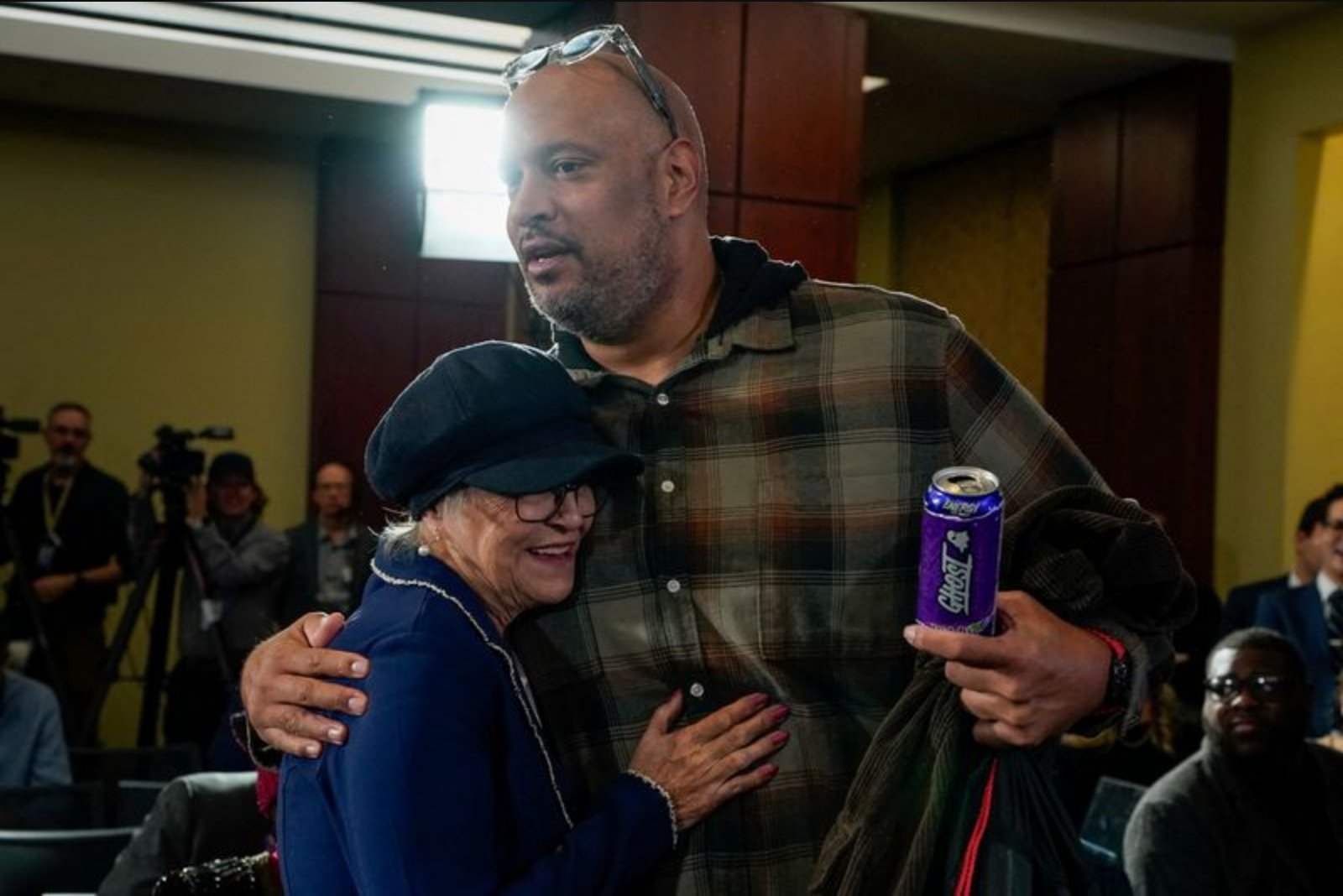
Two police officers who were on duty during the January 6, 2021 attack on the U.S. Capitol filed a federal lawsuit on Wednesday seeking to block distribution of nearly $1.8 billion the Justice Department set aside as part of a settlement involving former President Donald Trump.
In a complaint lodged in federal court in Washington, former U.S. Capitol Police officer Harry Dunn and Metropolitan Police Department officer Daniel Hodges contend that the settlement funded a $1.776 billion "taxpayer-funded slush fund to finance the insurrectionists and paramilitary groups that commit violence in his name." The suit asks the court to stop payments from the fund and characterizes the arrangement as "the most brazen act of presidential corruption this century."
How the fund was created
The fund was established by the Justice Department as part of a settlement reached following a separate dispute between Trump and the Internal Revenue Service. Under that settlement, Trump agreed to drop a $10 billion lawsuit he had filed over the leak of his tax returns during his first term. The Justice Department then set up the compensation fund to make payments to those who qualify under the broad standard of having experienced "weaponization."
Acting Attorney General Todd Blanche faced repeated questioning about that fund during congressional testimony on Tuesday. Blanche told lawmakers the money could be disbursed to individuals from any political party and that eligibility will hinge on a broad definition of those who experienced "weaponization."
Claims and plaintiffs' backgrounds
Harry Dunn, a Black officer with 15 years on the force protecting U.S. lawmakers, has publicly described both physical assaults and racist abuse he suffered during the January 6 attack, when supporters of the former president sought to disrupt Congress's certification of the 2020 election. Dunn has testified about his experience before a bipartisan House panel that investigated the riot and has said he developed post-traumatic stress disorder as a result of the events of that day.
Daniel Hodges, who remains an active member of Washington's police department, was filmed being pinned inside a revolving door by a rioter wielding a police shield, a moment that circulated widely online. Hodges has also testified before Congress about what he endured during the violent breach of the Capitol.
Relief sought
The lawsuit demands that a court bar payments from the fund, saying the creation and intended use of the money amount to corruption and improperly finance violent actors. The plaintiffs' filing frames the issue as a challenge to the legality and propriety of using federal resources in the manner described in their complaint.
At this stage, the complaint sets in motion a legal review in federal court. The acting attorney general's prior testimony indicates that eligibility for the fund will be determined under a broad standard centered on "weaponization," but the plaintiffs contend that the fund's creation and scope raise fundamental legal and ethical concerns.
The complaint and subsequent proceedings will determine whether payments can move forward while the court resolves the plaintiffs' challenge.