
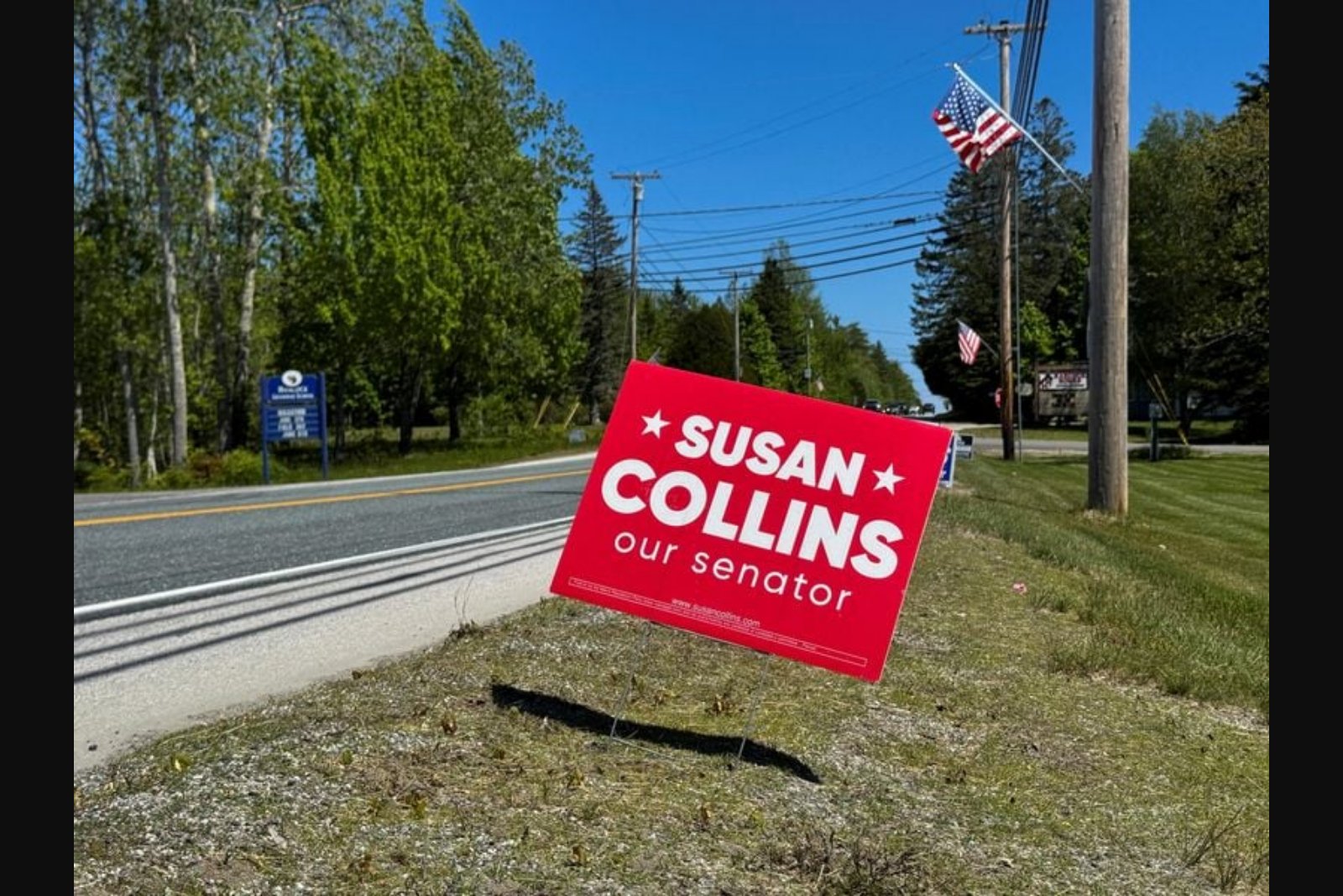
PORTLAND, Maine, July 16 - Republican U.S. Senator Susan Collins entered a politically favorable position when her Democratic opponent, Graham Platner, withdrew from the race, plunging the Maine Democratic Party into disarray. That fragile advantage evaporated after Immigration and Customs Enforcement officers fatally shot a man during a traffic stop in the coastal town of Biddeford, an event that provoked public anger and placed Collins in a difficult political posture.
Collins has cultivated a long-standing relationship with Maine voters in part by emphasizing an independence from the policies of President Donald Trump. In the days after the fatal traffic stop, she called on Homeland Security Secretary Markwayne Mullin to "cease all non-urgent" ICE traffic stops. According to reporting, Mullin initially agreed to pause such stops, but the next morning President Trump posted on Truth Social urging ICE not to abandon traffic stops, calling them one of its "most important and effective Crime Fighting tools, THE TRAFFIC STOP!" and warning that halting them would be playing "right into the criminal's hands," adding that the "Radical Left Dumocrats would like to see this done, but it won't happen on my watch."
A spokesperson for Collins did not respond to a request for comment on the matter, according to reporting. Collins publicly reiterated her call for a pause during a Wednesday appearance for reporters on Capitol Hill, saying the stops "should be halted" while an investigation into the Biddeford shooting is under way.
Political consequences
Political analysts and scholars in Maine described the episode as damaging to Collins, tying her to a stance on immigration enforcement that is unpopular with many voters in the state. Ron Schmidt, a political science professor at the University of Southern Maine, said the president's public intervention complicated Collins' ability to claim influence within her party and to reassure constituents that she can defend their interests.
The stakes are high. Republicans currently hold a 53-47 majority in the Senate, and winning back seats like Maine's is central to Democrats' strategy for regaining control in the midterm elections. Until recently, momentum appeared to favor Republicans in this race, a trend that shifted suddenly as events unfolded.
From Platner's withdrawal to a crowded Democratic field
The Republican advantage followed the collapse of Platner's campaign. Last week his campaign unraveled after sexual assault allegations surfaced, which Platner denies. He formally withdrew on Friday, leaving the Maine Democratic Party with roughly two weeks to pick a replacement nominee from a field of 13 candidates.
Those seeking the vacancy reflect a range of progressive and establishment figures who had competed in the June 9 primary for other offices, including secretary of state and congressional seats. Among those now in contention to succeed Platner are Secretary of State Shenna Bellows; former Maine Senate President Troy Jackson; Nirav Shah, the former director of the Maine Center for Disease Control and Prevention; Jordan Wood, a former congressional aide; and social worker Paige Loud.
Mark Brewer, a political science professor at the University of Maine, said the Senate contest's narrative has shifted more than once, first centering on Platner and the fallout from his withdrawal and then pivoting to the ICE shooting. Brewer described the change as abrupt: "It was all Platner and Platner fallout. None of that was good for the Democrats," he said, noting that Collins initially appeared to keep a low profile while the Democrats struggled, only to be confronted with the ICE story.
Electoral dynamics and resources
Observers said Democrats still have a path to dislodge Collins despite the Republican incumbent's long tenure and fundraising advantage. Collins' campaign reported raising more than $4 million between April and June, and she entered July with an $11 million campaign cash balance, according to a filing disclosed on Wednesday.
Collins has represented Maine in the Senate since 1997. In her most recent reelection, in 2020, she prevailed by nearly nine percentage points while Democrat Joe Biden carried the state by almost the same margin, underscoring the state's history of ticket splitting and Collins' personal electoral strength.
Jim Melcher, a political science professor at the University of Maine at Farmington, said the race remains competitive. He noted that Trump’s most ardent supporters view Collins as insufficiently supportive of the president, while Democrats regard her as selectively independent - a stance they believe she adopts mainly when her vote is not essential to advancing her party's agenda.
Democratic reactions and organizing
Voices from the progressive wing of the state expressed both disappointment over Platner's exit and continued belief in the Democratic opportunity to win the seat. Jenna Valente, a social justice advocate and former volunteer photographer for Platner's campaign, described herself as heartbroken by the circumstances affecting Platner and his movement but argued the seat remains contestable for Democrats. Valente said she expects that once a new nominee is named, party activists and voters will coalesce behind that candidate and concentrate on prevailing in what she called a vital election.
What remains uncertain
The political fallout from the Biddeford shooting and the timing of the new Democratic nominee selection leaves multiple variables in play. Analysts cited the president's public statements as having undercut Collins' efforts to portray herself as a check on national party positions. The full implications for voter attitudes and campaign dynamics will depend in part on the outcomes of ongoing investigations and the Democratic Party's ability to unite around a replacement nominee in a condensed timeline.