
PORTLAND, Maine, July 15 - The broadcaster set to host Thursday’s Democratic U.S. Senate debate in Maine has amended its invitation list to include eight declared candidates, responding to demands from campaigns for a more inclusive forum after it originally limited participation.
“News Center Maine reached out to my team to let us know that all announced candidates will now be invited to participate in Thursday’s debate,” candidate Dan Kleban, co-founder of Maine Beer Company, said in a social media post late on Tuesday. “I have accepted the invitation and am looking forward to having an exchange of ideas with the other candidates.”
The station’s decision is a notable win for former Maine Senate president Troy Jackson, who had publicly urged News Center Maine to allow every declared candidate to appear during the 90-minute event. Jackson’s campaign had argued the original criteria were too restrictive, and the campaign said the host had initially invited only those who received at least 20% of the vote in last month’s primary.
Nine Democrats are competing for the party’s nomination to replace Graham Platner as the challenger to Republican Senator Susan Collins in November. Under the original threshold, only four candidates qualified: Jackson, Secretary of State Shenna Bellows, former Maine Center for Disease Control and Prevention Director Nirav Shah, and former congressional aide Jordan Wood.
Senator Collins is the only Republican incumbent standing for reelection in a state that the Democratic presidential nominee carried in 2024. Republicans currently hold a 53-47 majority in the U.S. Senate, a margin that makes flipping Maine part of Democrats’ strategy to regain control of the chamber.
Among those who fell short of the 20% primary threshold were social worker Paige Loud and longtime political aide David Costello. Other declared candidates were not on the primary ballot last month: Kleban, former state Representative Elizabeth Dickerson and Ashley Webb, who is transgender and intersex. News Center Maine said it invited all candidates who had filed to run by close of business on Tuesday, a cutoff that means Webb will not take part in Thursday’s debate.
Kleban said the fact that some candidates had been running for different offices last month should not exclude them from debate participation. “The fact that some candidates in this race weren’t running for completely different offices last month shouldn’t prevent us from taking the debate stage,” he said.
Representatives for Loud’s campaign had initially told reporters that every candidate who filed paperwork should be invited. In a social media post late on Tuesday, Loud credited “conversations with the station and pressure” from campaigns for the expanded debate field.
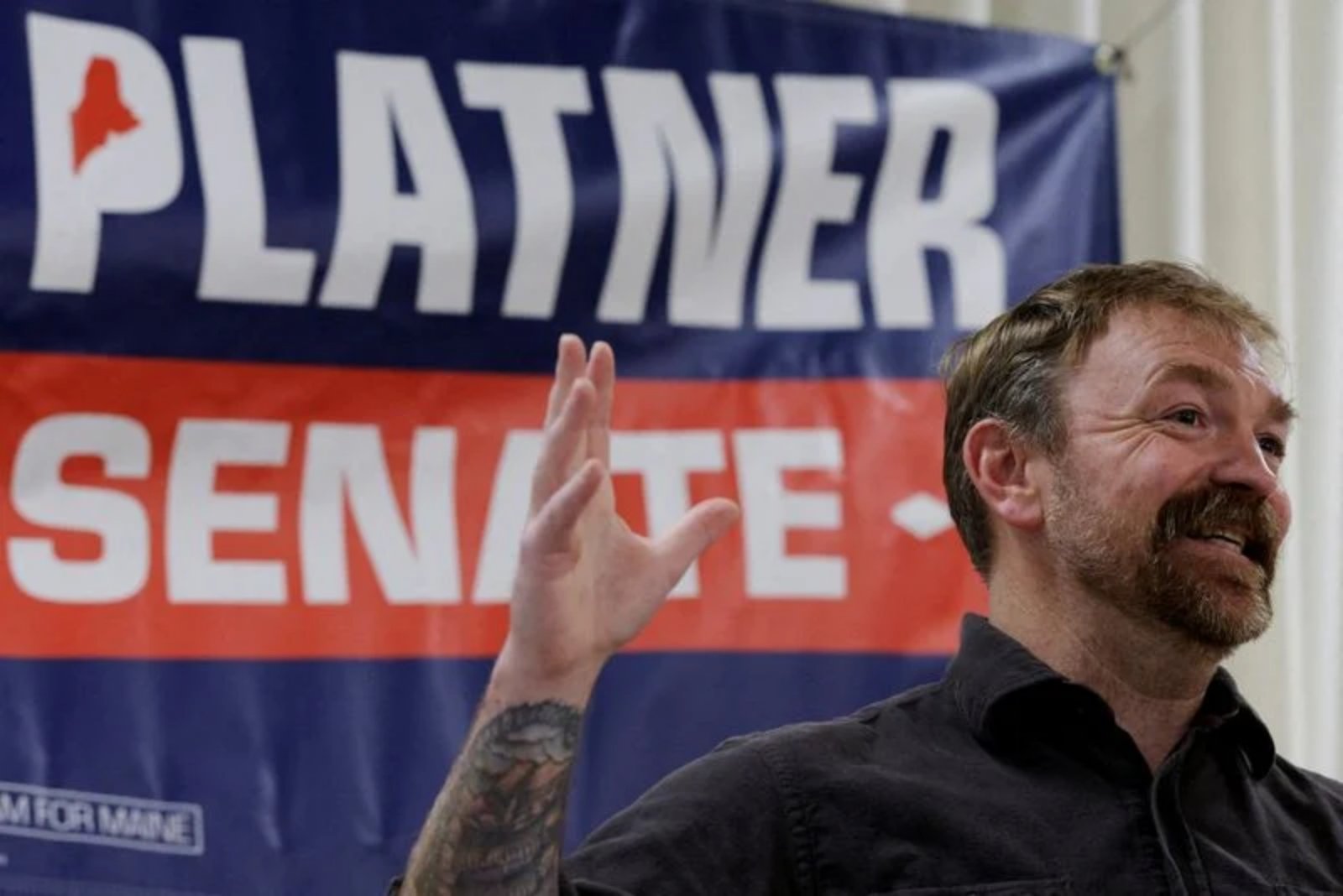
Platner’s campaign collapsed last week amid sexual assault allegations, which he denies, prompting an expedited process within the Maine Democratic Party to select a replacement nominee. As Platner was weighing whether to suspend his campaign last week, prospective contenders called for an open and transparent method for picking the new standard-bearer.
The party said it will name its nominee at a July 25 convention in Bangor. Hundreds of delegates will participate in a multi-round voting process at the convention, continuing until one candidate secures a majority. Under the party’s rules for the convention, the top five vote-getters in an initial round will advance to the second round, and the lowest vote recipient will be eliminated in each subsequent round.
Jackson said in a statement on Tuesday that he is prepared for Thursday’s debate. “I’m ready to take the stage Thursday and make my case to Mainers,” he said. “Every other candidate who has registered for the party’s nominating process should have the same opportunity to make their case to delegates and voters.”
Prospective candidates face a tight filing timeline. Those seeking the nomination must submit their intent to run by 5 p.m. on Wednesday and collect 500 signatures by Monday, including at least 50 signatures from each of eight counties.
The unfolding debate participation dispute and the compressed timeline for filing and signature collection underscore the accelerated and contested process now underway within Maine’s Democratic ranks as they seek a nominee to challenge an entrenched Republican incumbent in a Senate where control is narrowly divided.