
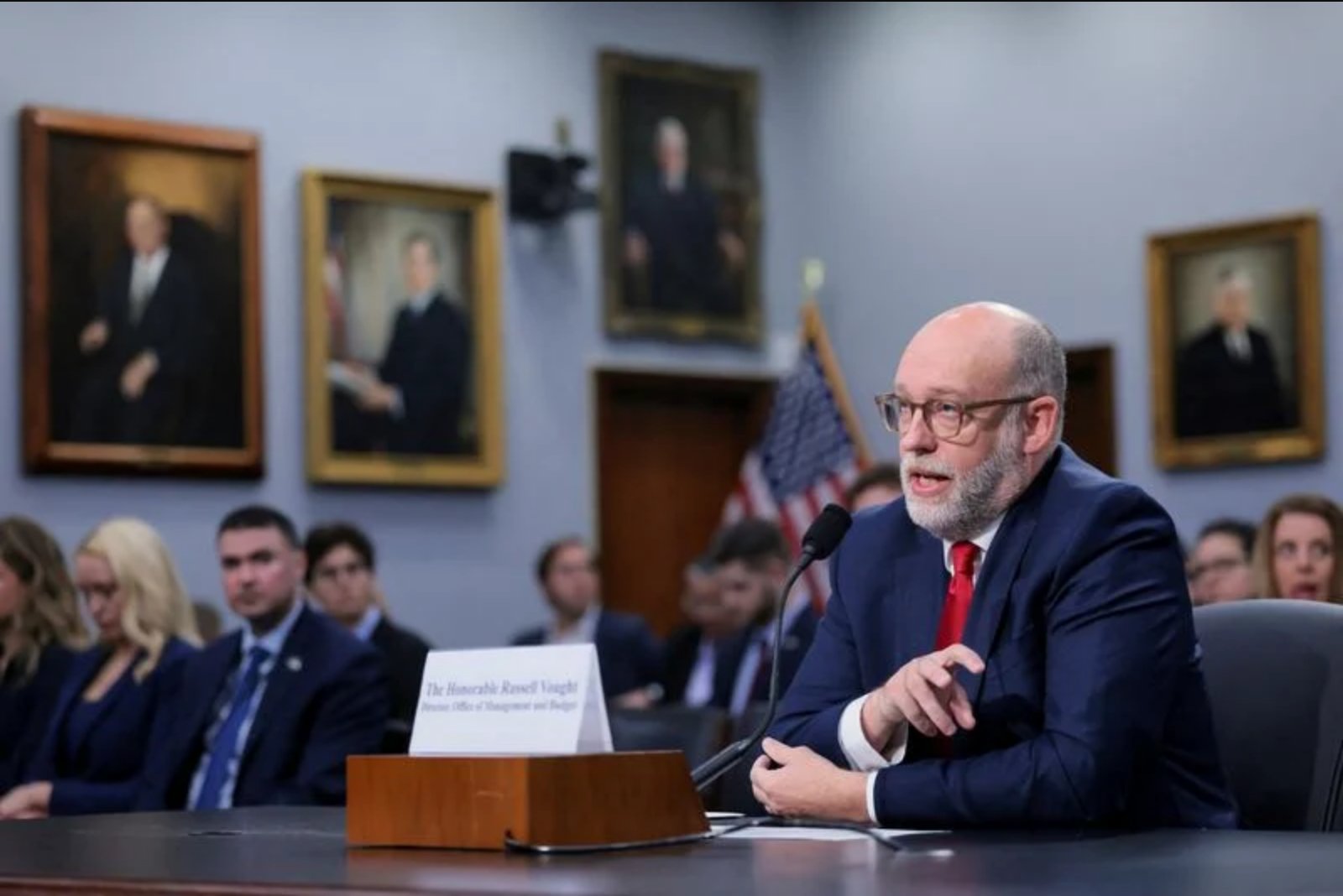
WASHINGTON, July 15 - Russell Vought, who has been serving as the interim director of the Consumer Financial Protection Bureau (CFPB) while also holding the White House budget director post, sparred with Democratic members of the House Financial Services Committee on Wednesday over the Trump administration's management of the consumer finance regulator.
Testifying at a hearing that at times grew raucous, Vought maintained that moves by his office to sharply pare back the bureau's scope and activities actually removed economic burdens on consumers. The exchange came two weeks before Vought is due to step down after a year and a half in an acting capacity during which he has sought to dismiss most agency staff, rescind regulations in bulk and suspend much of the CFPB's ordinary functions.
Republican committee members largely backed Vought, arguing his changes were warranted for an agency they characterized as politically motivated in its enforcement and as imposing constraints on free enterprise. Representative Andy Barr, the top Republican on the subcommittee for financial institutions, accused CFPB enforcement practices of using what he called "Gestapo tactics," and said such approaches had bankrupted companies that were in compliance with the law.
In a statement after the hearing, a spokesperson for Representative Barr did not address the Gestapo reference directly but asserted that the CFPB had "crushed consumers - the very people it was supposedly created to protect - by waging war" on industries that extend consumer credit.
Democrats on the committee were forceful in their criticism. New York Representative Gregory Meeks told Vought, "Sir, I am glad you are leaving," accusing him of operating outside the laws that established the bureau. Committee ranking member Maxine Waters cautioned Vought that congressional oversight was not finished, saying, "Let me be clear, we are not done with you." Waters and other Democrats noted that should their party regain the House majority in the November midterm elections, they would have the authority to pursue formal investigations into his actions at the agency.
The CFPB was established by Congress in the aftermath of the 2008 financial crisis with the stated purpose of curbing predatory lending and policing financial products that had been implicated in the global turmoil. Vought, who also serves as White House budget director, pointed to research published this year by the White House Council of Economic Advisers which concluded that the CFPB's regulatory activities had imposed hundreds of billions of dollars in costs on consumers by increasing costs and reducing access to credit. Consumer advocates and other experts have strongly disputed the methodology and conclusions of that report.
During his testimony, Vought characterized the bureau as invasive and insufficiently accountable to Congress. He cautioned against a regulator that sees itself as simultaneously "a prosecutor, an advocate," equipped with tools such as the civil investigative demand, arguing that such a combination "creates great opportunities for mischief."
Vought's appearance at the committee comes amid a leadership transition at the CFPB. Last month, President Trump nominated Brian Johnson, a current executive at Capital One and a former senior CFPB official, to be the bureau's director. Vought is scheduled to depart in two weeks.
Context note: The hearing underscored the partisan divide over the CFPB's mission and methods, with Republicans applauding the acting director's efforts to rein in the agency and Democrats warning of potential overreach and future inquiries.