
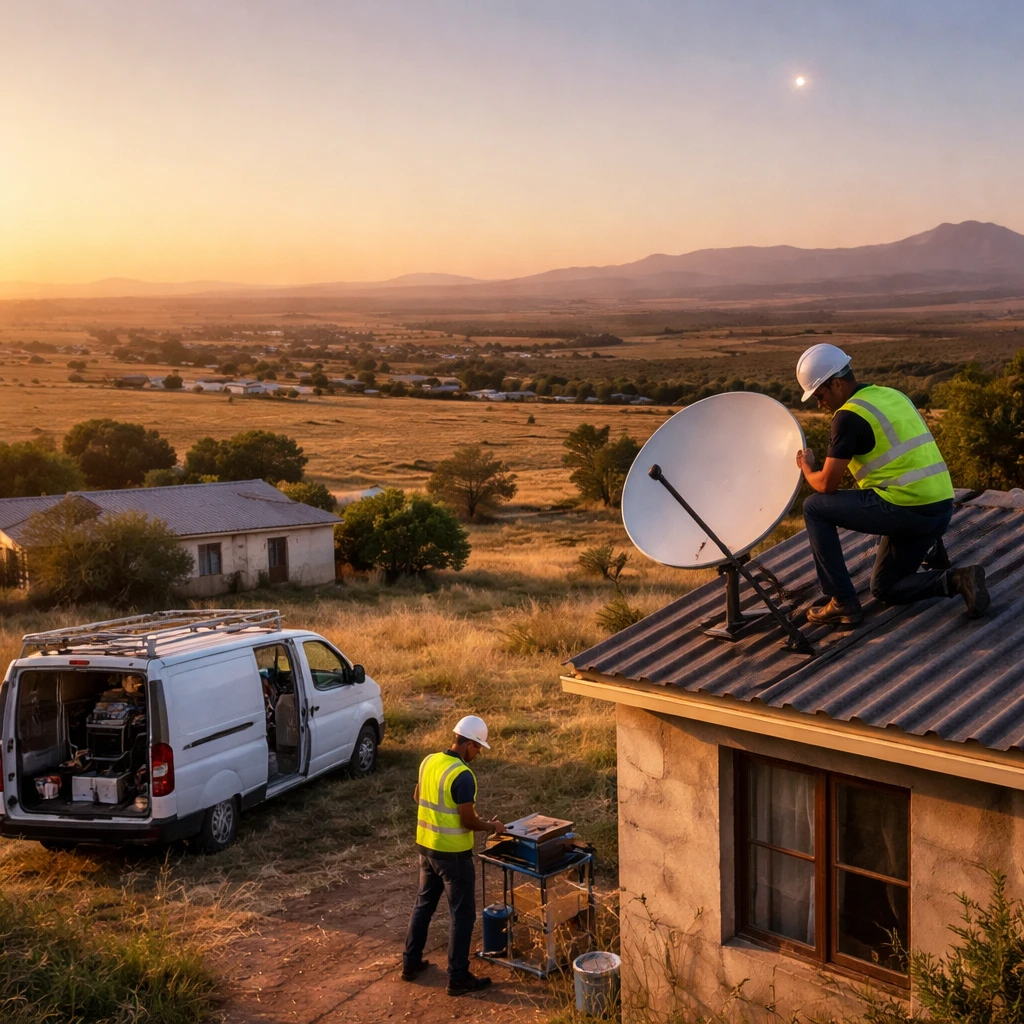
Amazon Leo, the company's low-earth orbit satellite internet initiative, has entered into an agreement with Herotel to introduce a residential broadband product across underserved parts of South Africa. The offering, to be marketed as evry, will rely on Amazon Leo's satellite infrastructure to reach customers in locations where traditional network builds are often not commercially viable.
Under the deal announced on Wednesday, Herotel - which is owned by Maziv and is the country’s largest fixed internet service provider - will leverage its existing footprint to deliver the satellite service. The provider said it currently serves more than 350,000 customers across over 550 towns through a mix of fibre and fixed wireless networks and maintains 120 offices nationwide. Herotel will be responsible for installation, customer service and field operations when the satellite service launches.
The partners have set a target to begin commercial availability of evry for residential users in 2027. The collaboration is explicitly oriented toward closing a connectivity gap affecting millions of people who live on farms, in small towns and in other rural communities and who lack reliable internet access for work, education and basic services. The announcement notes that deploying conventional fibre or wireless infrastructure in these areas is often uneconomical, which the satellite approach is intended to address.
"This collaboration is about breaking down barriers and unlocking opportunity for millions of people who don’t yet have reliable access for work, education, or the services they depend on," said David Zapolsky, Amazon’s chief global affairs and legal officer.
The agreement follows other Amazon Leo initiatives on the continent: earlier this year the unit signed with Vodafone to connect Vodafone’s network to remote base stations in Africa through Vodacom, again using satellite links to reach hard-to-serve locations.
The entry of satellite providers into South Africa is occurring alongside regulatory discussions. The article notes that Starlink, run by SpaceX, has also sought entry into the South African market but is waiting on proposed licensing changes. Those changes could enable foreign satellite operators to satisfy local ownership and empowerment requirements through mechanisms other than direct equity stakes. The reporting also records that Elon Musk has been publicly critical of the country's rules.
The agreement between Amazon Leo and Herotel combines satellite capacity with a local operator's installation, support and customer-facing capabilities, aiming to reduce the commercial barriers to serving sparsely populated areas while leveraging established field operations at launch.
Economic and market sectors affected: telecommunications, internet service providers, rural services, and network infrastructure investment.