
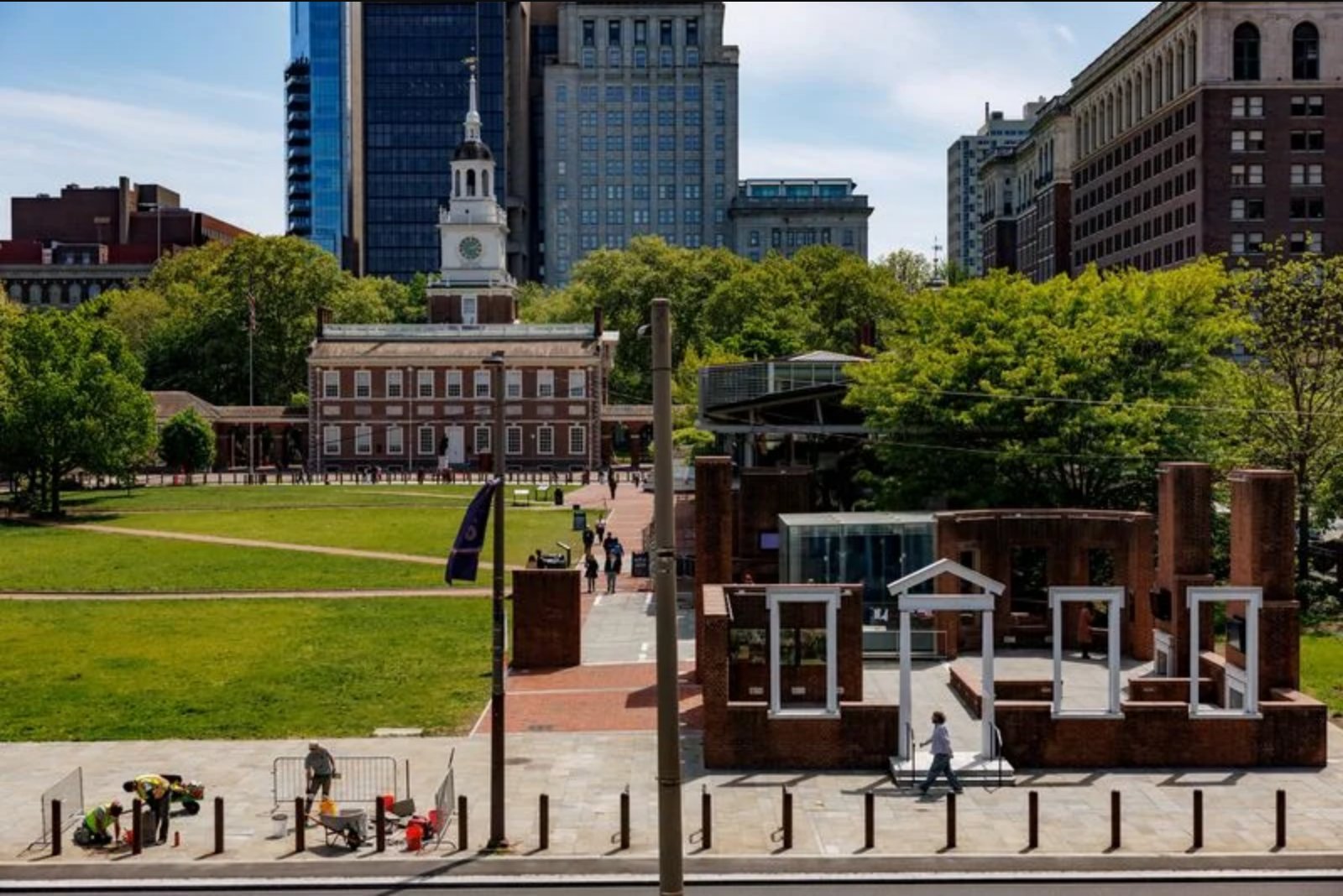
On July 15, new interpretive panels about slavery were put up at George Washington’s Philadelphia residence, the federal government said, after an appeals court ruling cleared the way for changes in how the national historical site portrays that history.
The Department of the Interior described the revised panels as providing historical context and as highlighting the "momentous events" that occurred at the President’s House and other locations within Independence National Historical Park. The department said the new panels "acknowledge the evils of slavery."
Philadelphia Mayor Cherelle Parker criticized the move, saying in a statement: "Overnight, under the cover of darkness, the federal government removed panels at the President’s House that told a thorough history of Philadelphia." She said the Democratic-led city intends to seek a rehearing of legal issues in the case.
The action follows a federal appeals court decision last month that overturned a judge’s earlier ruling which had blocked the Trump administration from replacing a slavery exhibit within Independence National Historical Park in Philadelphia. That appellate decision opened the way for the federal government to revise interpretive materials at the site.
The newly installed panels retain references to slavery and to people enslaved by George Washington, but they omit some of the language and imagery present in the previous installation. Headlines that appeared on earlier panels, including one titled "The Dirty Business of Slavery," were removed. In their place, some panels now display wording such as "Celebrating Independence Throughout the Years." The revised displays also exclude a map that had shown slave trade routes.
Alan Spears, senior director for cultural resources at the National Parks Conservation Association, expressed concern about the changes. "This appears to be an effort to soften or sanitize the way the history of slavery is interpreted at Independence National Historical Park," he said. "And I have grave concerns about how this impacts the ability of our national parks to fulfill their role as honest brokers of our shared national narrative."
Those revisions come amid a broader push by the Trump administration to reshape how historical institutions portray U.S. history. The article notes that Trump’s declarations and executive orders in his second term have led to the dismantling of slavery exhibits, the restoration of Confederate statues and other moves that civil rights advocates say could reverse decades of social progress and undermine the acknowledgment of critical phases of American history. The administration has said it aims to remove what it calls "anti-American" ideology.
The White House has also targeted the Smithsonian Institution over its portrayal of history. Organizations such as the Organization of American Historians have condemned the administration’s actions, saying they serve a political agenda. Civil rights groups have widely rebuked Trump for comments including references to "reverse discrimination," statements that civil rights have hurt white people, and remarks that museums focus too much on "how bad Slavery was."
Summary
Federal officials replaced interpretive panels on slavery at George Washington’s Philadelphia house on July 15 after a federal appeals court cleared the way to change the exhibit. The Department of the Interior said the new panels provide historical context and acknowledge slavery’s evils. Philadelphia’s mayor said the city plans to seek a rehearing. Critics contend the new displays downplay harsh aspects of slavery by removing stark headlines and a map of slave trade routes.
Key points
- The Department of the Interior says the new panels include historical context and recognize the evils of slavery.
- Philadelphia officials plan to seek a rehearing on legal questions after an appeals court overturned a judge’s ruling that had blocked exhibit changes.
- Changes to the displays - removing headlines such as "The Dirty Business of Slavery" and a map of slave trade routes - have prompted criticism that the depiction of slavery has been softened.
Risks and uncertainties
- Legal uncertainty: Philadelphia has said it will seek a rehearing on issues in the case, leaving the final legal status of the exhibit changes unresolved - this affects public sector legal and administrative costs tied to national parks and municipal litigation.
- Reputational and institutional risk: Critics argue that sanitizing the interpretation of slavery could undermine trust in museums and national parks as impartial stewards of history, with potential implications for cultural institutions and heritage tourism.
- Political and social backlash: The administration’s broader actions regarding historical interpretation have drawn condemnation from historians and civil rights groups, creating ongoing political risk around federal cultural policy and related public funding discussions.