
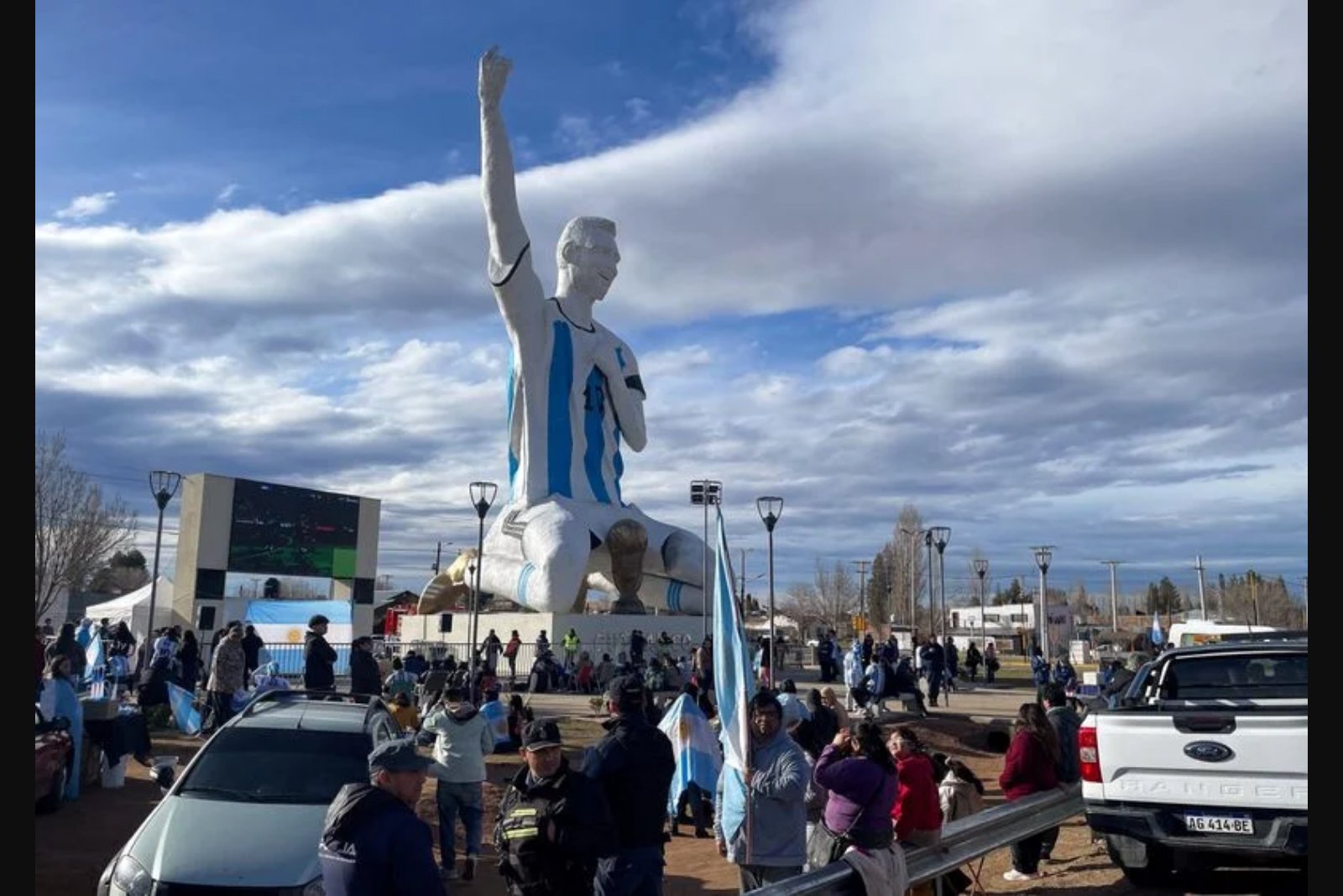
In Cutral Co, a Patagonian town that recently unveiled an 85-foot (26-metre) statue of Lionel Messi, local residents celebrated loudly after Argentina advanced to the World Cup final by beating long-time rivals England.
The victory, a 2-1 comeback after falling 1-0 behind, reverberated from the southern province of Neuquen to Buenos Aires and across the nation. Only Spain now stands between Argentina and a consecutive World Cup title - a feat no country has achieved since 1962.
In Cutral Co, a crowd of about 300 people gathered to view the semi-final on a screen placed near the massive statue, positioning themselves close to what locals called Messi’s towering knees. When the referee blew the final whistle, the group erupted in screams and celebration.
Standing near the monument, Lucas Romero, 32, described the result as "a victory of suffering." He stood beside his wife and gestured toward the statue, saying: "It’s a good recognition of all that Messi has done."
The match itself carried layers of history and rivalry. Observers framed the semi-final through landmarks including England’s 1966 World Cup victory, the 1982 conflict over the Falkland Islands - known in Argentina as the Islas Malvinas - and Diego Maradona’s "Hand of God" goal in 1986. In advance of the game, Argentina’s Vice President Victoria Villarruel wrote on X: "This isn’t just another match. I’m not going to be politically correct or cold-hearted; against the English, it’s always something more. It’s the Malvinas, it’s Diego, it’s Leo’s last one, and it’s putting the brakes on the invaders."
Cutral Co, with a population of about 40,000, includes many families whose livelihoods are tied to work in the nearby Vaca Muerta formation, which contains among the world’s largest shale gas and oil reserves. The town made national headlines in June when it inaugurated the new monument by local artist Aldo Beroisa. The sculptor’s depiction shows a smiling Messi kneeling while pointing a finger to the sky, and town officials declared it the tallest monument to Messi in the world.
At the outset of the 2026 tournament, the national mood in Argentina had been noticeably more subdued than in 2022, with many suggesting the pressure felt lower because of the prior Qatar victory. As the team progressed through the tournament, however, that restraint eased. After successive wins, crowds repeatedly gathered in central Buenos Aires, filling downtown areas following matches in which Argentina sometimes faced close calls or staged comebacks.
The heightened public attention also prompted practical concerns. Local newspapers interviewed cardiologists who warned readers about the signs of heart attacks, reflecting public anxiety tied to the intensity of watching the national team.
In Buenos Aires, which had been comparatively quiet during Wednesday’s match, supporters waved flags, chanted and joined a chorus of celebratory car horns when the result was confirmed. Mariano Gecik, 49, a university professor who watched the match at friends’ home, said: "I’m overcome with emotion." He added: "Once again, it’s about resurrection, resilience, and sheer grit; we truly deserve our place in the World Cup final."
As Argentina prepares to meet Spain in the final, the scene in Cutral Co and the reaction in the capital illustrate how sport, local identity and national memory have converged in this tournament, producing fervent public celebration and heightened attention to the social and health implications of mass emotional engagement.