
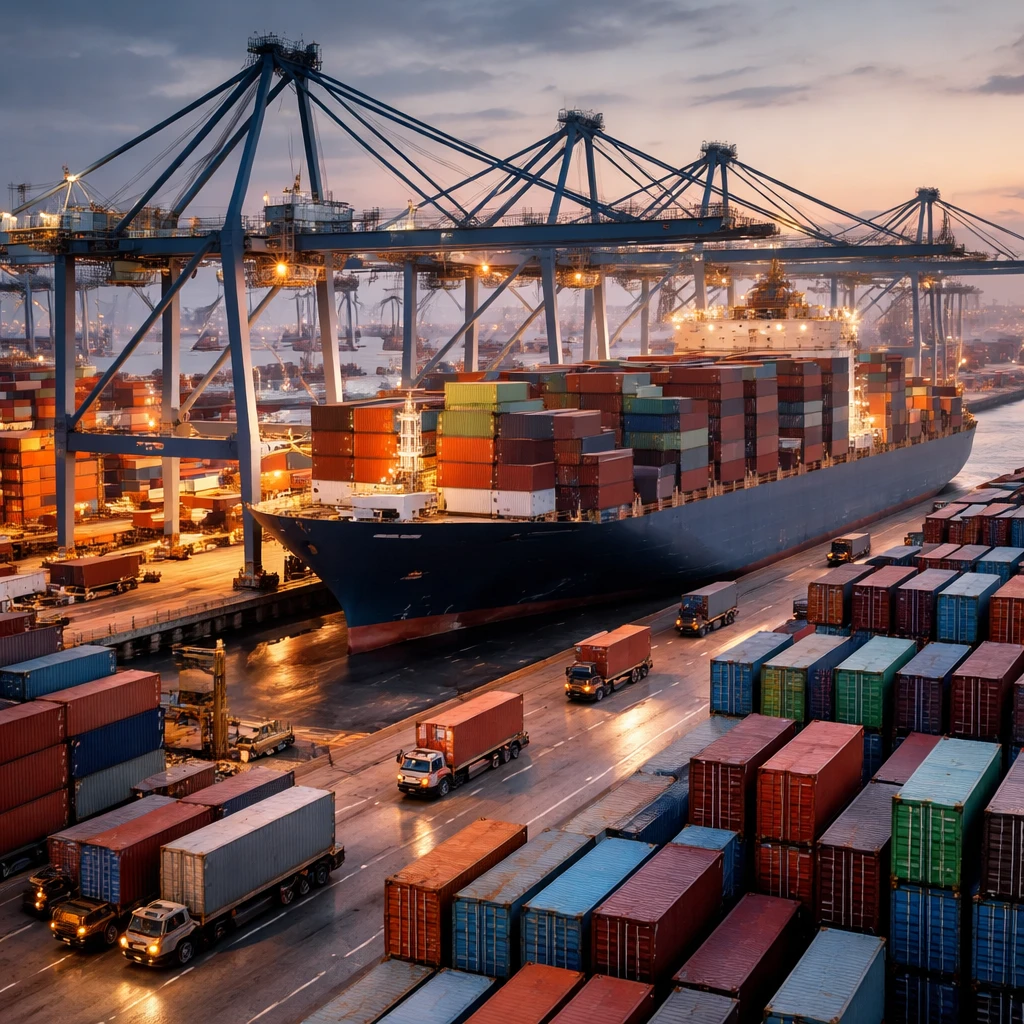
The Port of Los Angeles announced on Wednesday that it handled a record volume of cargo in June as businesses accelerated import activity to sidestep higher marine fuel costs and forthcoming U.S. tariffs.
Last month the port processed 1,002,734 twenty-foot equivalent units (TEUs), an increase of 12% compared with June 2025. According to executive director Gene Seroka, this is only the third time in the port's 118-year history that monthly throughput exceeded 1 million TEUs.
Port data show that June imports climbed 13% to 530,558 TEUs, while exports were effectively unchanged, rising 0.2% to 126,365 TEUs. Those movements reflect a concentrated rise in inbound cargo as companies sought to move goods before costs of transport rose further.
The adjacent Port of Long Beach also reported robust volumes on Tuesday, handling 779,331 TEUs last month. That represented its third-busiest June on record and included an 11% increase in imports.
At the national level, U.S. container imports rose 8.2% in June year-over-year, based on data from supply chain technology provider Descartes Systems Group (TSX:DSG).
Industry participants have pointed to disruptions tied to the U.S.-Israeli war with Iran as a factor affecting global maritime traffic. Those disruptions have altered shipping routes and contributed to higher marine fuel costs. Retailers and manufacturers have expressed concern that essential raw materials and factory goods could either become scarce or face materially higher transport costs as a result.
The concentration of import activity at West Coast gateways underscores how tariff considerations and fuel-price dynamics can compress shipping schedules and drive near-term volume spikes. Ports, shipping lines, retailers and manufacturing supply chains are among the sectors experiencing immediate effects from these developments.
Summary: The Port of Los Angeles moved just over 1 million TEUs in June, a 12% year-over-year rise, driven by a 13% leap in imports to 530,558 TEUs as companies rushed cargo in anticipation of higher marine fuel costs and new U.S. tariffs. The Port of Long Beach and national import data also showed solid gains, while geopolitical tensions linked to the U.S.-Israeli war with Iran have disrupted routes and pushed up fuel prices.
Contextual note: Data cited in this report come from port-released figures and Descartes Systems Group (TSX:DSG) as specified above.