
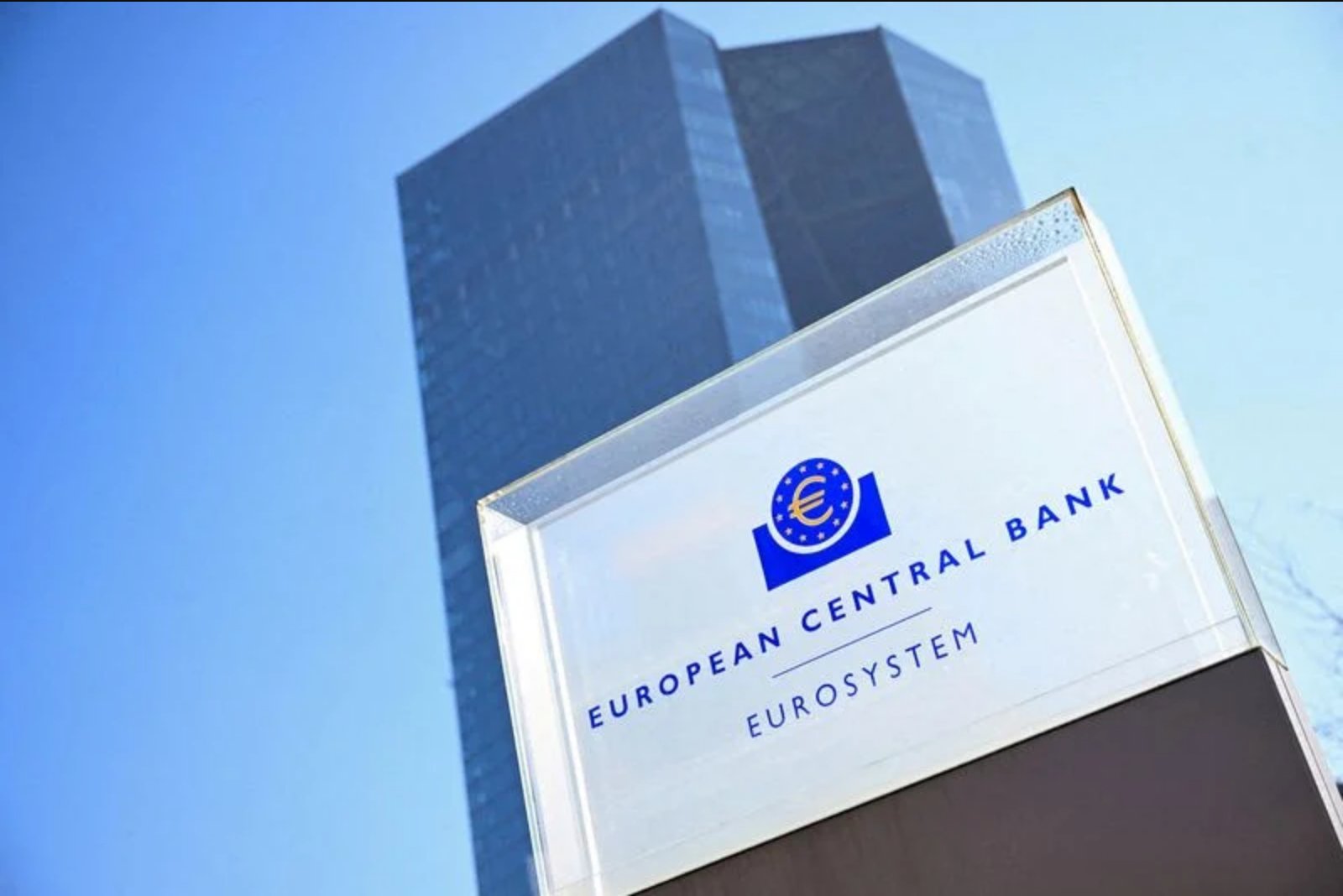
The European Central Bank is expected to stand pat at its July 23 policy meeting, but a Reuters poll of economists indicates that officials will likely resume tightening in September if recent energy price moves persist. All 74 respondents to the July 13-16 poll forecast that the ECB will keep its deposit rate unchanged at 2.25% next week, matching prevailing market pricing.
Market and survey signals have shifted in recent weeks after energy prices surged. A 20% jump in oil prices following a re-escalation of war in the Middle East has pushed markets to price in two additional rate hikes this year, up from the single hike that had been expected before the latest ceasefire arrangement between the U.S. and Iran ended. That abrupt change in energy market dynamics has heightened concerns about upward pressure on inflation.
Preliminary official figures showed euro zone inflation eased to 2.8% in June. While this represents a moderation, it remains above the ECB’s 2.0% objective, leaving open the case for further monetary tightening. At the same time, weak economic growth and limited evidence that temporary price shocks are feeding into broader wage and price-setting behaviour counsel caution for policymakers.
Within the poll, 52 of the 74 economists - about 70% - expected one more rate increase this year, most likely in September. That represents an increase from roughly 60% in the prior month's poll. Nearly 30% of those surveyed still project rates will remain unchanged for the remainder of the year, and only three economists anticipated two additional hikes.
Commenting on the implications of recent energy market moves, Chris Scicluna, head of economic research at Daiwa Capital Markets, said, "The ECB probably would have needed to hike anyway even if we hadn’t had all of this extra noise around the Strait of Hormuz over the past week or so. Gas prices are significantly higher and electricity power prices are higher as well. The ECB is going to have to take account of this when it next updates its forecast in September. But for now it will judge there’s no urgency for it to raise rates just yet again."
Poll respondents noted that while headline inflation has moderated from earlier peaks, the risk that higher energy costs translate into broader inflation through wages and firms' price-setting remains a key concern. Policymakers have struck a cautious tone, emphasizing vigilance but also recognizing that domestic growth momentum limits how aggressive they can be with policy tightening.
Alain Durre, head of Europe macro research at Natixis, captured that balance by saying, "The balance in the Governing Council today is slightly more on the side of the hawkish people even though everybody knows pretty well that because of the growth momentum we have today in the euro area they have to be very cautious with a policy rate hike."
Despite the recent poll uptick in the likelihood of a September rise, economists collectively trimmed their 2026 inflation projections by around 40 basis points on average, according to poll medians. Those reductions largely predated the latest flare-up in the Middle East and marked the first downward revision in five months. Even with those downward revisions, the poll showed inflation was not expected to return to the ECB’s 2% target until the second quarter of 2027, and core price pressures were forecast to rise.
Simon Wells, chief European economist at HSBC, stressed the transmission risk from energy to wages and prices: "It’s very difficult to be confident about anything right now. But it’s very clear to me the higher energy inflation goes ... the bigger the risk of second-round effects on wages and subsequently prices as firms raise their prices to pay a higher wage bill. So yes, if we go into the September meeting with oil at $90 and still highly uncertain about where things are heading with possible upside risks to that, it may well be prudent for the ECB to hike again."
The survey also captured softness in the region’s growth outlook. The euro zone economy contracted by 0.2% in the first quarter but was expected by poll respondents to have expanded by 0.2% in the second quarter and to grow at a similar pace in the current quarter. Those projections put 2026 growth at 0.5%, marking the fourth straight downgrade to GDP forecasts in the Reuters poll.
Summary
The Reuters poll of 74 economists shows unanimity on a July pause by the ECB, with a growing majority forecasting a September rate increase as a rebound in energy prices heightens inflation risks, even as growth remains weak and forecasts for 2026 have been downgraded.
Key points
- All 74 economists expect the ECB to hold its deposit rate at 2.25% at the July meeting - a view aligned with markets.
- About 70% of respondents (52 of 74) see one more hike this year, likely in September, up from around 60% in last month’s poll - indicating a shift driven by higher energy prices.
- Economic growth forecasts have been downgraded, with 2026 growth seen at 0.5% and the euro zone having contracted 0.2% in Q1.
Risks and uncertainties
- Resurgent energy prices could trigger second-round inflation effects, impacting wages and corporate pricing decisions - a risk to consumer-facing sectors and firms with tight margins.
- Weak growth in the euro zone limits the ECB’s scope to tighten policy aggressively, creating uncertainty for banks and credit-sensitive industries.
- Forecast uncertainty for inflation remains high, with expectations that headline inflation will not return to target until Q2 2027 - a factor that could affect fixed income and long-term investment decisions.
This analysis reflects the views and data reported in the July Reuters poll of economists and does not introduce additional information beyond that poll and quoted commentary.