
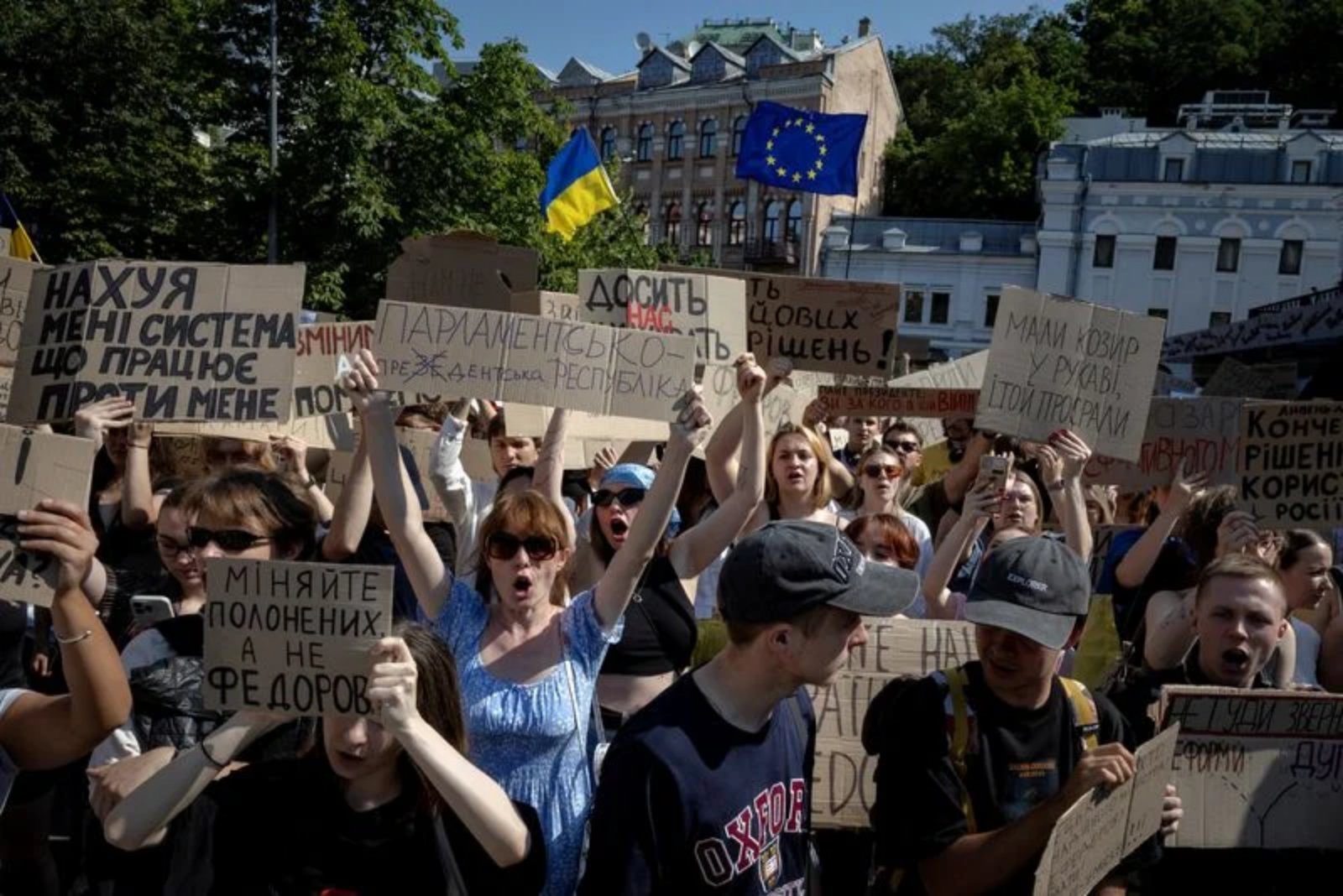
KYIV, July 16 - The sudden dismissal of Defence Minister Mykhailo Fedorov ignited uncommon street protests in Kyiv and other Ukrainian cities on Thursday, exposing a public backlash after a visible clash between the reformist minister and the country’s top general emerged during President Volodymyr Zelenskiy’s second cabinet reshuffle while the nation remains at war.
Fedorov, 35, a former digital transformation minister who moved into the defence role with a reputation as a tech-savvy reformer, was dropped from the leadership team in a move that has provoked anger among citizens and parts of the armed services. Supporters credit him with cutting red tape, accelerating drone warfare capability, and using data-driven methods to strain Russian forces, though critics say his recruitment reform promises have not progressed fast enough.
Public reaction and demonstrations
More than 1,000 demonstrators gathered outside the presidential office in Kyiv, chanting "Shame!" and holding placards with slogans calling for answers. Protesters compared the current moment to last July’s mass demonstrations that forced the reversal of another controversial governmental change, and many voiced support for Fedorov as a modern and effective manager. Some participants demanded that the president remove army chief Oleksandr Syrskyi instead.
"We’re in favour of an upgrade - not a downgrade," said a protester who identified himself as Ali, describing Fedorov as an effective and modern manager. Other signs read sentiments such as "For what?" and "The Russians are celebrating" as a reflection of the public mood seeking clarity about the reshuffle.
Accusations and military resignations
Speaking to reporters in Kyiv after his ouster, Fedorov said he had refused an offer from Zelenskiy to remain as an adviser. He accused army chief Oleksandr Syrskyi of obstructing initiatives from the defence ministry and failing to confront problems head-on. Dressed in his characteristic casual T-shirt and jeans, Fedorov said: "Instead of working out how to defeat Russia, he has figured out how to split the country."
Syrskyi, 60, who has served as army chief since early 2024, has faced criticism for a command approach some service members say is inflexible and contributes to high troop losses. Ukraine’s General Staff did not immediately respond to requests for comment on the accusations.
In reaction to Fedorov’s dismissal, Pavlo Yelizarov, a deputy commander of the air force and an influential figure in Ukraine’s drone warfare efforts, announced his resignation. Yelizarov called the change "a great evil" for the country’s defence, underlining the ripple effects within the military leadership caused by the minister’s removal.
Political reshuffle and parliamentary proceedings
As part of the government reorganization, an administration led by energy executive Sergii Koretskyi secured approval on Thursday, though votes on other prospective ministers remain uncertain. Lawmakers have suggested that Interior Minister Ihor Klymenko could be positioned to replace Fedorov, a prospect that has contributed to waning confidence in Zelenskiy’s direction among some segments of the public and officials.
Zelenskiy has not publicly commented directly on Fedorov’s removal. Earlier in the week, he told reporters he expected the defence ministry and military to work with greater unity on their most critical responsibilities.
Koretskyi, in a post on X, outlined his government’s stated priorities: to more fully equip the armed forces with an array of drones, expand Ukraine’s defence sector capabilities, and prepare for another winter of Russian strikes on the power grid.
Operational context and strategic consequences
Despite the political upheaval, Kyiv’s forces are described as being in their strongest battlefield stance since late 2022, launching drone and missile operations that have targeted Russia’s oil infrastructure and military logistics. These operations have inflicted damage on Moscow’s war-fighting capacity, according to available accounts.
Nevertheless, Ukrainian forces continue to confront grinding Russian advances in the east, face a critical shortage of ground troops, and lack sufficient air defences as Moscow increases the use of ballistic missiles. Those military constraints frame the stakes of any instability at the top of Ukraine’s defence apparatus.
Commentary from Ukrainian media and public figures reflected frustration and concern. Vitalii Sych, editor-in-chief of the outlet NV, wrote that President Zelenskiy can act heroically in difficult moments but also reminded readers that some crises are driven by what he described as the president’s poor decisions.
A spokesperson for Russian President Vladimir Putin said the Kremlin was watching Kyiv’s reshuffle closely but suggested that a different prime minister or defence minister would not change the situation unless Kyiv was prepared to make a responsible decision toward a peace settlement.
What this means going forward
The dismissal has created a multifaceted challenge for Kyiv’s leadership: calming public outrage, restoring unity among defence and military structures, and ensuring that ongoing operations and preparations for winter do not suffer from leadership turbulence. With parliamentary votes still pending for some cabinet posts and with resignations among military figures, the immediate future will test the government’s ability to maintain focus on defence needs while managing political fallout.