
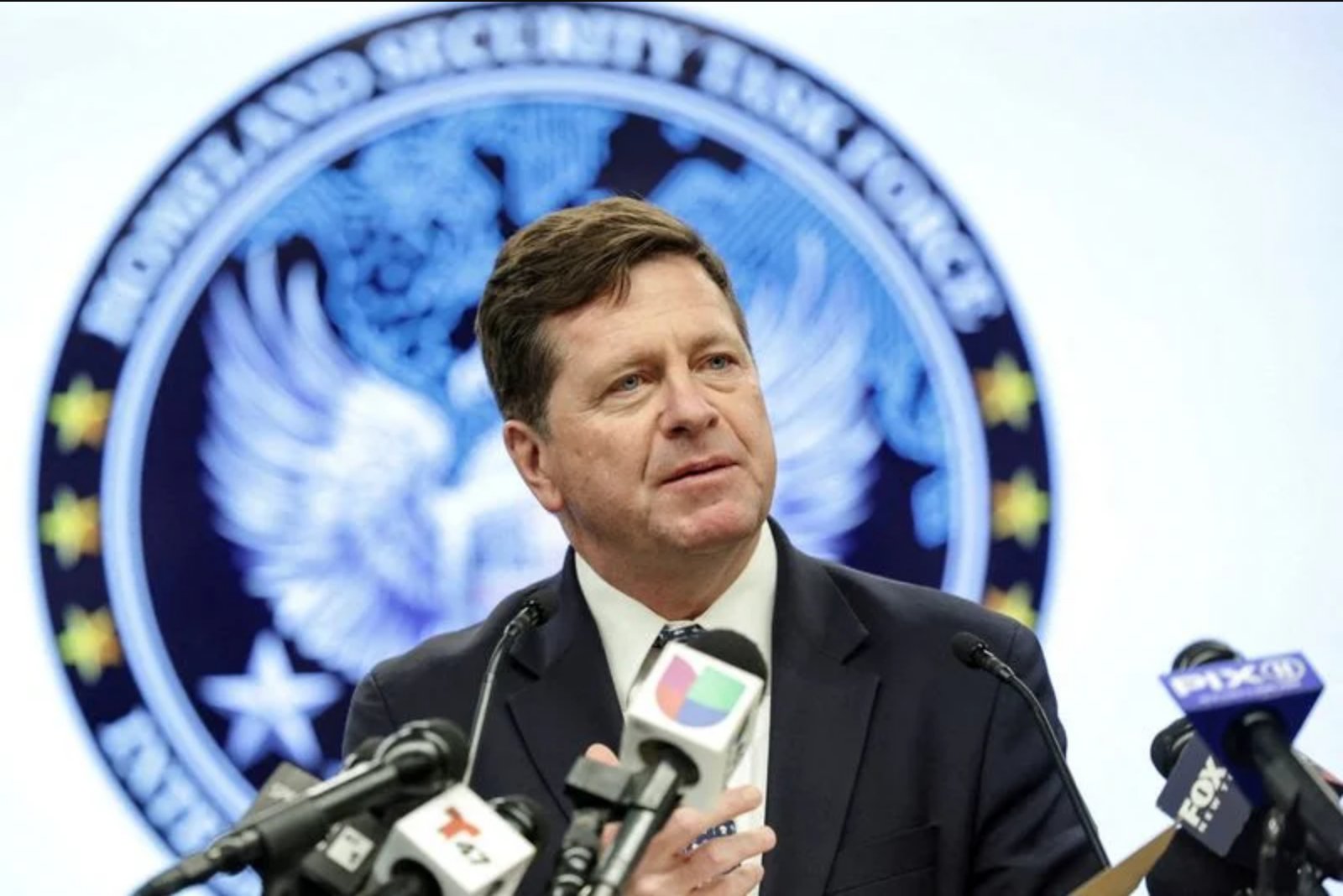
Republican senators are pressing for a rapid confirmation of Jay Clayton to head the U.S. intelligence community, while Democratic lawmakers say they will wait to see his testimony at a scheduled Senate Intelligence Committee hearing before deciding how to proceed.
President Trump submitted Clayton’s nomination less than a week ago, following a contentious period in which the administration tapped Federal Housing Finance Agency director Bill Pulte as acting Director of National Intelligence. Pulte’s appointment drew fire because he has no background in national security, and some members of both parties raised concerns that he could use access to classified information to target individuals the president views as political adversaries.
The selection of Clayton - the U.S. attorney for the Southern District of New York - was met with broad relief on Capitol Hill. While Clayton does not bring extensive experience in national security operations, he is widely regarded with respect by members of both parties.
Democrats on Tuesday stressed that they plan to scrutinize Clayton closely but refrained from making a final judgment until after his hearing. Senator Ron Wyden of Oregon, a senior Democratic member of the Intelligence Committee, told reporters he supports a comprehensive vetting and a thorough examination of all relevant issues. Senate Democratic leader Chuck Schumer of New York said Democrats would determine their next steps only following Clayton’s appearance before the committee.
Senate Majority Leader John Thune of South Dakota and other Republicans want Democrats to agree to a waiver of Senate rules that would enable a confirmation vote on Clayton as soon as this week. Thune described Clayton as "eminently qualified" and argued that the U.S. attorney role entails dealing with intelligence matters.
Clayton’s rapid confirmation is also tied to the looming renewal of Section 702 of the Foreign Intelligence Surveillance Act - the authority that permits collection of foreign intelligence that can include communications involving Americans without prior judicial authorization. Democrats had previously said they would withhold votes to renew Section 702 while Pulte was serving as acting DNI.
Thune said the statute needs prompt attention and expressed hope that Democrats would cooperate to address the matter quickly.
Clayton currently holds the prominent post of U.S. attorney for the Southern District of New York, a coveted position within the Justice Department. His office is overseeing the case against former Venezuelan President Nicolas Maduro, who was seized in a lightning raid on January 3. That prosecution is likely to be one of the topics raised at Clayton’s hearing.
He may also face questions about televised remarks he made shortly before his nomination, in which he suggested there may have been fraud in the counting of votes in the Los Angeles mayoral race. Officials note that vote counts in California can be delayed because mail-in ballots may be postmarked by Election Day but received up to seven days later.
Democrats point to recent repeated claims from President Trump asserting irregularities in elections, including recycled and unproven allegations that the 2020 presidential contest was stolen. They warn such assertions could signal an intent to interfere in future electoral processes.
It remains unclear whether Pulte will serve in any capacity as interim DNI after Tulsi Gabbard’s last day on June 19. Gabbard, a former Democrat who does not have deep intelligence experience, was accused by Democrats of using the post to further the president’s efforts to retaliate against perceived enemies and to promote disputed claims of election fraud.
Clayton is also likely to be pressed on any plans to sharply cut staffing within the Office of the Director of National Intelligence, or on proposals to eliminate the office entirely. The president had indicated he wanted Pulte to pursue cuts during his tenure as interim director.
Context and next steps
Republicans are seeking procedural shortcuts to enable a swift confirmation vote this week, while Democrats insist on completing a full vetting process at the scheduled hearing. The outcome of those deliberations could influence the timing of congressional action on Section 702 of the Foreign Intelligence Surveillance Act, and at the same time will test the Senate’s appetite for rapid change atop the U.S. intelligence apparatus following the controversy over the interim appointment.