
Overview
Israeli strikes on Saturday resulted in two Palestinian deaths in Gaza and destroyed two warehouses used to store medical supplies for a southern Gaza hospital, according to Palestinian health authorities and hospital staff. The incidents occurred against a backdrop of unclear implementation of a reported agreement between Israel and Hamas on disarmament.
Deaths in Gaza City
Palestinian health officials reported that two Palestinians were killed in the Sheikh Radwan area of Gaza City during an Israeli air strike. The Israeli military said those targeted were Hamas militants but offered no additional details about the identities of the dead or the circumstances of the operation.
Warehouses near Al-Aqsa Martyrs Hospital destroyed
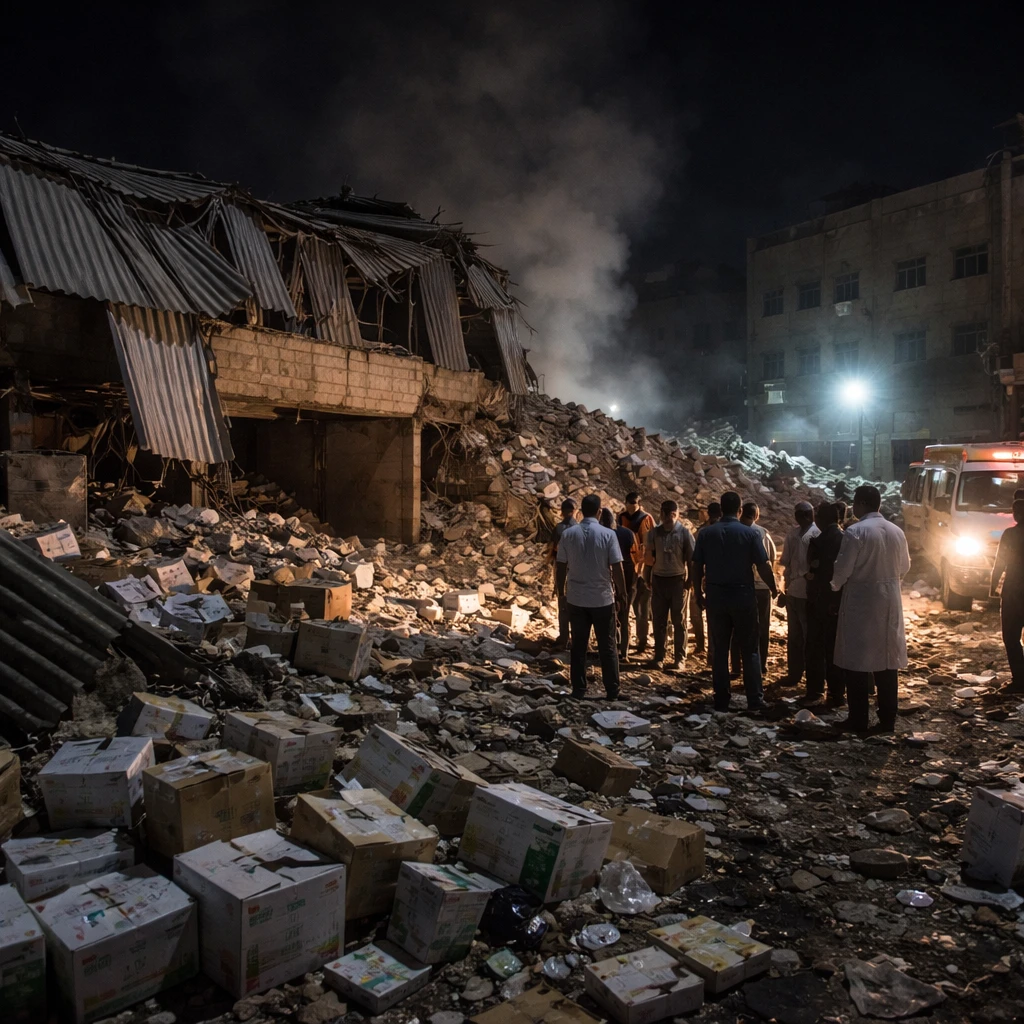
Earlier on the same day, an air strike struck two warehouses in Deir al-Balah that had been storing medicine for the Al-Aqsa Martyrs Hospital, the Gaza health ministry said in a statement. The military did not immediately respond with comment on that strike.
Hospital officials said two additional warehouses that stored medical supplies, along with the hospital's outpatient clinic, sustained damage. There were no immediate reports of injuries from the strike on the storage facilities.
The hospital described the destroyed supplies as essential, noting they included materials used to treat patients with kidney failure undergoing dialysis, as well as gauze and other items used in wound care and routine treatments.
Commenting on the destruction of the supplies, Khalil al-Daqran, a doctor at the hospital, characterized the incident as "a heinous crime," saying that the warehouse containing medical supplies was targeted and completely destroyed in the middle of the night.
Witness accounts and legal context
Witnesses said the military issued an evacuation warning for the area prior to the strike. International humanitarian law protects hospitals and other civilian facilities, but that protection may be forfeited if those sites are used for military purposes. The Israeli military maintains that Hamas and other armed groups operate from within civilian areas and facilities.
Fatima Sharab, a displaced person sheltering in a camp near the warehouses, described the human impact: many people needing medical attention had been staying close to the hospital to remain near care. After the strike, she said she returned to find the camp destroyed.
Wider context and political statements
Israel has continued carrying out strikes on Gaza after agreeing last October to a U.S.-mediated ceasefire, a campaign that Palestinian health officials say has killed 1,222 Palestinians in the past nine months, most of them civilians including women and children. Hamas rarely publishes casualty figures for its own ranks.
U.S. President Donald Trump on Thursday appeared to announce what he called a breakthrough in his plan to end the war, saying Hamas had agreed to lay down its weapons as part of the arrangement both sides signed last year. Israeli Prime Minister Benjamin Netanyahu had not commented publicly on the announcement. By contrast, National Security Minister Itamar Ben-Gvir said the agreement was unacceptable and argued that Israel should carry on with its policy of targeting Hamas leaders.
Trump's Board of Peace, tasked with implementing his plan for ending the Gaza war, released a roadmap outlining final steps for the initiative. The document states that Israel will cease military operations as part of its commitments under the 20-point plan signed last year.
Humanitarian implications
The destruction of stored medical supplies, and damage to outpatient facilities, has direct consequences for patient care in southern Gaza, notably for dialysis patients and those in need of wound-care materials. The reported deaths in central Gaza and ongoing strikes underline continued volatility in the territory as questions linger over whether a reported disarmament deal will be carried out by all parties involved.