
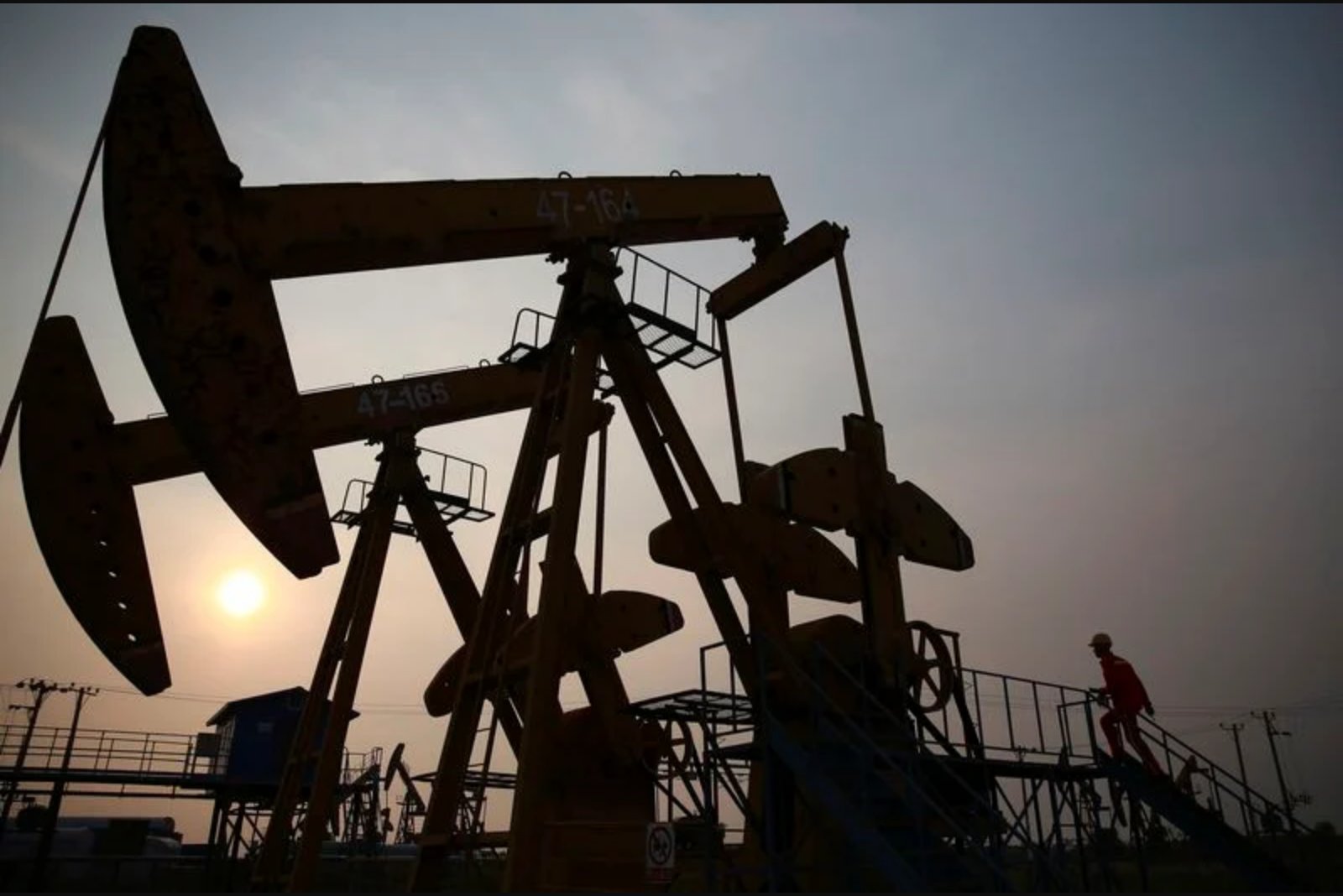
Oil futures moved higher on Friday, reaching levels not seen in roughly six months as uncertainty over potential renewed U.S. military action against Iran revived concerns that supply could be interrupted.
As of 01:15 ET (05:15 GMT), December Brent futures were up 1.1% at $116.12 per barrel, while U.S. West Texas Intermediate crude futures rose 0.8% to $103.01 per barrel. Earlier in the session Brent climbed to $117.84 per barrel, its strongest reading since late April. Both benchmarks were positioned to record a fourth straight month of gains exceeding 10%.
The elevated prices followed a report that U.S. Central Command chief Admiral Brad Cooper briefed President Donald Trump on military options for Iran at the White House on Thursday. The briefing reportedly included Defence Secretary Pete Hegseth and other senior officials and covered the ongoing U.S. blockade as well as the possibility of renewed major combat operations.
President Trump has indicated that further strikes could occur after the November 3 U.S. midterm elections, responding that "anything's possible" when asked whether additional attacks were being planned. Those statements, and the broader discussion of military options, have dimmed prospects for a quick diplomatic resolution even as Washington seeks fresh contacts with Tehran aimed at restarting negotiations to end the conflict.
U.S. Vice President JD Vance has been reported to have reached out to Iranian security official Mohsen Rezaei as part of efforts to revive talks, and mediators have been working on a potential framework for a settlement. However, the reporting noted that Tehran has rejected a proposed settlement, leaving the likelihood of a near-term agreement uncertain.
Markets remained sensitive to developments around the Strait of Hormuz, a strategic chokepoint for global oil shipments. Regional security incidents have contributed to a geopolitical risk premium in oil prices. Saudi Arabia's air defences intercepted another ballistic missile launched by Yemen's Iran-aligned Houthi movement toward the kingdom's Eastern Province, the Saudi Press Agency reported on Thursday. That incident followed Houthi claims earlier in the week of an attack on the Ras Tanura refinery.
On the supply-data front, U.S. commercial crude inventories fell by 1.9 million barrels in the week ended October 23 to 410.6 million barrels, according to the Energy Information Administration. The draw was contrary to market expectations for a modest increase and offered additional support to prices.
Market context
- Benchmarks: Brent and WTI both rose, with Brent briefly trading at $117.84 per barrel during the session.
- Geopolitical drivers: Reports of U.S. military briefings and ongoing hostilities in the Gulf region sustained concern about supply risks.
- Inventory influence: An unexpected 1.9 million-barrel draw in U.S. commercial crude stocks added upward pressure on prices.
The interplay between military signaling, diplomatic outreach, and physical supply metrics kept traders attentive to both near-term disruptions and the evolving political trajectory. With talks reportedly ongoing in parallel to military planning, the near-term outlook remains conditioned by both diplomatic prospects and security developments around major oil infrastructure and shipping lanes.