
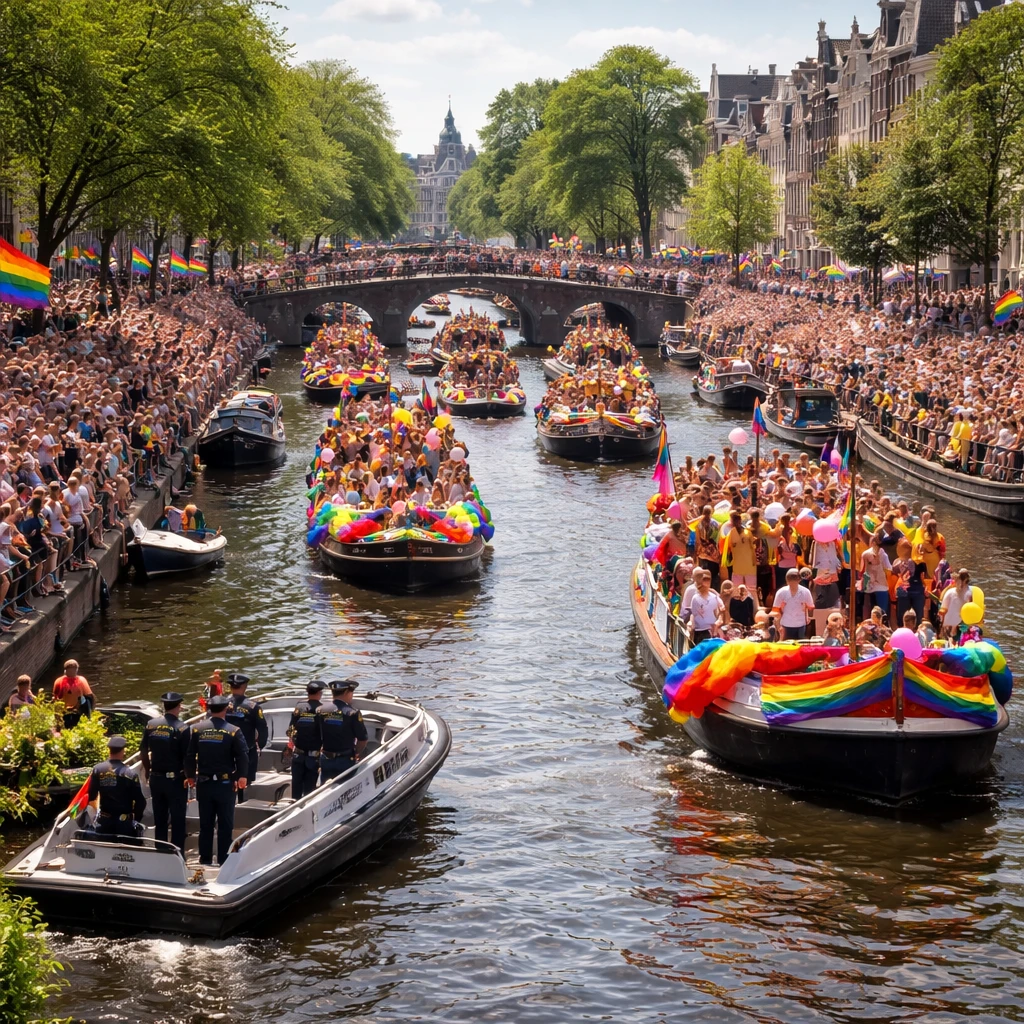
Amsterdam is preparing for one of the largest moments of WorldPride on Saturday, when the city’s famous canal parade will serve as the focal point of two weeks of activities. Organisers expect scores of boats decorated with rainbow flags and balloons to process along the waterways while large crowds in colourful attire watch from the banks.
The parade is the highlight of Amsterdam Pride and this year the event was chosen to host WorldPride by other Pride organisers around the globe. The slogan for the fortnight of events across the Netherlands is "UNITY".
Local authorities have announced enhanced security measures in response to a deadly attack in Berlin last week, in which one person was killed and more than 30 were injured when a van was driven into a crowd. The suspect in that attack was later shot dead by German police.
Mayor Femke Halsema said Amsterdam would implement unspecified extra measures following the Berlin incident. Dutch police confirmed they will deploy both visible and covert security measures during WorldPride events.
A spokesperson for Amsterdam Pride, Martijn Albers, said that preparations were proceeding as planned and that the additional security would not alter the event’s emphasis on inclusivity. He framed the response to the Berlin attack as refusing to allow terror to succeed in spreading fear, saying:
"The aim of terrorism is to spread fear, and we must not give in to that."
Individuals taking part in the parade stressed the continuing necessity of Pride. Julianne van der Heide, 25, who plans to be on one of the boats, said the Berlin attack underscored "how important and necessary Pride still is to this day."
On Tuesday, thousands gathered at Amsterdam’s Homomonument to mark the victims of the Berlin attack. The memorial, set beside a canal, is made of pink granite triangles and serves as a site to lay flowers and remember victims of anti-gay oppression.
Voices from advocacy organisations emphasised both the community’s resilience and the vulnerability revealed by the attack. Caspar Pisters of the Dutch HIV Association said the Berlin incident would remain in people’s minds, but added an assertion of endurance: "As long as there are people, there will be LGBTQ+ people, and no amount of violence, not even a million bombs, can change that."
Mick Groeneveld from Queer Museum, an organisation working to establish a permanent LGBT museum in the Netherlands, reflected on the tension the attack created for the community. He said the event highlighted vulnerability, while cautioning that withdrawing from public life was not the appropriate response: "At the same time, making ourselves invisible is not the answer."
As Amsterdam moves forward with the canal parade and related WorldPride activities, organisers and authorities are balancing the need for visible celebration with enhanced protection measures intended to reduce risk without changing the inclusive character of the events.