
Politics July 30, 2026 06:05 AM

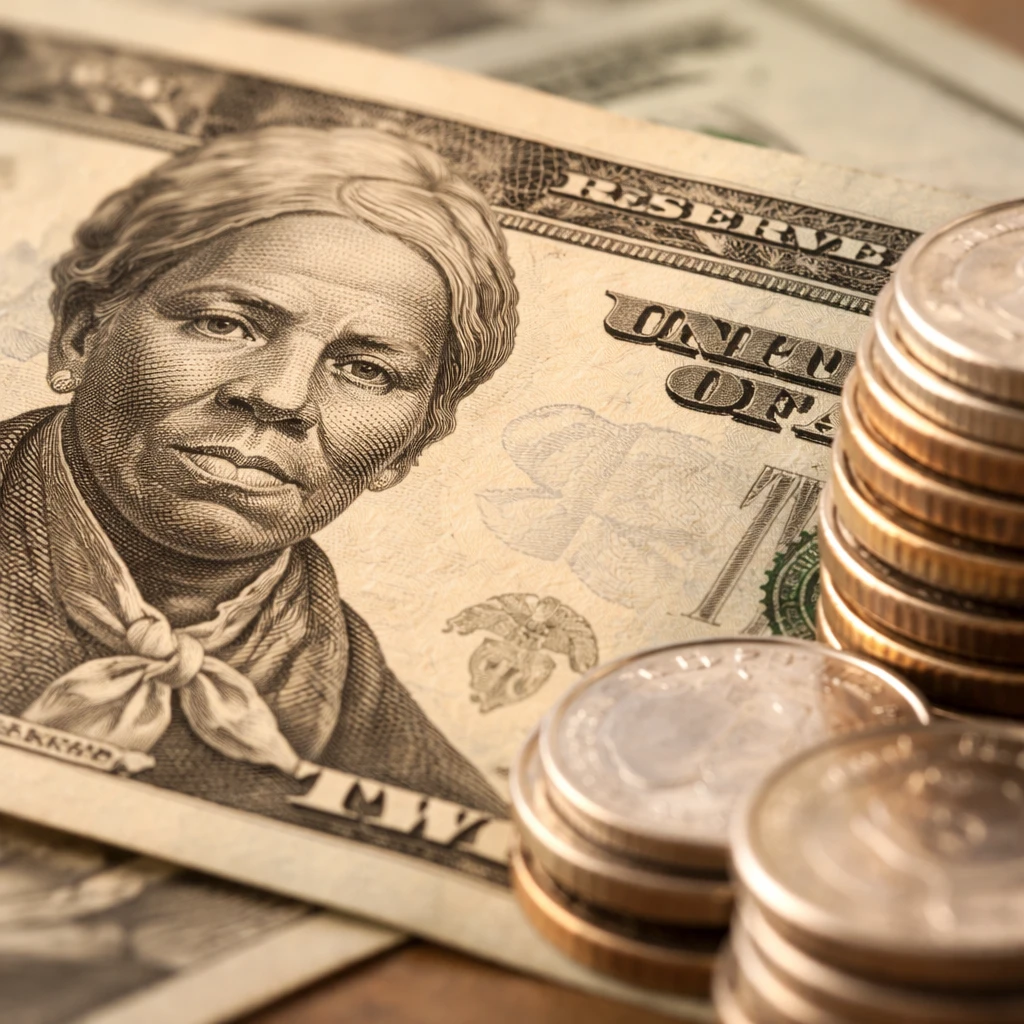
Democratic Senators Press Treasury to Restore Harriet Tubman $20 Redesign

Lawmakers ask Treasury Secretary to reverse pause on putting Tubman on the $20 bill and explain the basis for the decision

By Leila Farooq
Share
Twitter Reddit Facebook LinkedIn

A group of U.S. Democratic senators has urged Treasury Secretary Scott Bessent to reinstate plans to place Harriet Tubman on the $20 note after the Treasury indicated it was no longer pursuing the redesign. The request follows an Obama-era announcement that Tubman would replace Andrew Jackson, and comes amid separate discussions within the administration about placing President Trump’s likeness on commemorative currency.

Democratic Senators Press Treasury to Restore Harriet Tubman $20 Redesign
Summarize with
ChatGPT Perplexity Claude Grok Gemini

Key Points

  • Senators led by Jeanne Shaheen and Chris Van Hollen asked Treasury Secretary Scott Bessent to reinstate plans to place Harriet Tubman on the $20 bill and to explain the decision to pause the redesign - sectors impacted include government policy and financial institutions managing currency.
  • The 2016 Obama administration announcement designated Tubman to replace Andrew Jackson; the move would have made Tubman the first African American on the face of U.S. paper currency - this involves the Treasury and cultural commemoration processes.
  • Some administration officials are pushing to place President Trump on a proposed $250 bill, a change the Treasury says would require an act of Congress; coin production for a $1 commemorative coin bearing Trump is already underway authorized by a 2020 law.

A coalition of Democratic senators has called on the Treasury Department to revive a long-planned redesign that would place Harriet Tubman on the U.S. $20 bill, after Treasury Secretary Scott Bessent said earlier this month the department was not pursuing the change.

The effort dates back to a 2016 announcement from the Obama administration that Tubman - who was born into slavery in the early 1820s and later helped hundreds of enslaved people escape - would replace former President Andrew Jackson on the $20 note. Under that plan, Tubman would have been the first African American depicted on the face of U.S. paper currency.


In a letter to Secretary Bessent, senators led by Jeanne Shaheen of New Hampshire and Chris Van Hollen of Maryland said the Treasury’s decision abandons years of work and public engagement that had secured bipartisan support for honoring Tubman on the bill.

"The process to celebrate Tubman through our currency included extensive public engagement and bipartisan recognition of her extraordinary contributions to our nation, but your recent decision ignores that and abandons years of work at Treasury to honor her legacy," the group of senators wrote.

The senators pressed Bessent to "immediately reconsider and resume plans to create the new bill without further delay," and asked the Treasury to explain what informed the department's decision.


Secretary Bessent had said earlier this month that the Treasury was "not at present" planning to place Tubman on the $20 bill, halting what the senators described as a decade-long effort. That campaign had drawn support across party lines up to the point the Treasury signaled it would not move forward.

The pause comes as some officials within the current administration have advocated for placing President Donald Trump’s image on a proposed $250 bill tied to the nation’s 250th anniversary. Treasury officials have acknowledged that such a step would require legislation from Congress to permit living persons to appear on U.S. paper currency.

Separately, the government is producing a $1 coin bearing President Trump’s image to commemorate the U.S. 250th anniversary. That coin was authorized under a 2020 commemorative coin law signed by Trump during his first term.


No new individual has been added to the faces of U.S. paper currency since 1928, and the senators’ appeal frames the Tubman redesign as the culmination of sustained, bipartisan work that now faces unexpected reversal. The letter demands clarification from Treasury on the administrative rationale for shelving the plan.

Lawmakers’ requests and the debates inside the administration highlight a rare intersection of currency design, public commemoration and legislative authority over who may appear on U.S. paper money.

Risks

  • Political and procedural uncertainty - the Treasury's pause on the Tubman redesign creates ambiguity over currency design policy and could prompt legislative or political responses - impacting federal policymakers and institutions that oversee currency.
  • Legislative hurdles and timing - placing a living person on paper currency would require Congress to change existing rules, introducing legal and political risk to any effort to depict current or recently serving officials - affecting Treasury operations and lawmakers.
  • Reversal of bipartisan initiatives - shelving a decade-long, bipartisan effort to honor Tubman could provoke further political debate and delay outcomes tied to public commemoration and currency issuance - with potential reputational implications for the Treasury.

More from Politics

Senator Withholds Backing, Putting AG Nomination at Risk Over $1.8 Billion Settlement Provision Jul 29, 2026 Prosecutors Say Alleged Shooter Targeted Charlie Kirk Over Anti-LGBT Political Views Jul 29, 2026 Democratic Support for Israel Shows Fractures as Gaza War and Political Alignments Intensify Debate Jul 29, 2026 Trump Calls Meetings With Netanyahu and Zelenskiy Positive After Washington Memorial Jul 28, 2026 Trump Seeks Supreme Court Review of $83.3 Million Defamation Judgment in E. Jean Carroll Case Jul 28, 2026