
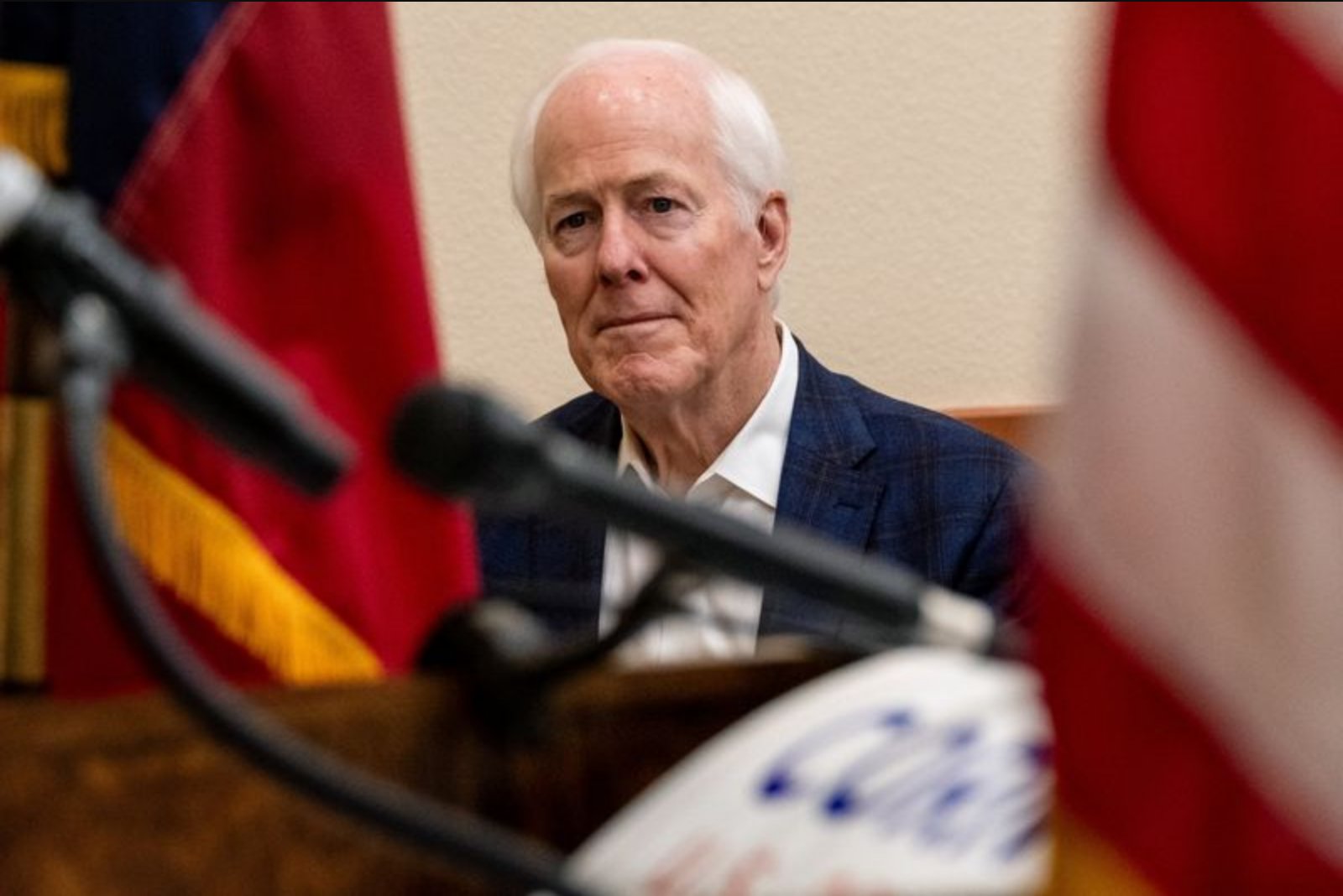
Voters in Texas are poised to choose the Republican nominee for the U.S. Senate in a runoff on Tuesday in a contest that has drawn national attention and could influence which party controls the chamber.
Contestants and recent momentum
John Cornyn, 74, a four-term senator with backing from GOP leadership, is confronting a stiff challenge from Ken Paxton, 63, the state attorney general whose campaign has been clouded by multiple scandals. Paxton won the endorsement of former President Donald Trump last week, and that support has helped him carry leads over Cornyn in most public opinion polls cited in the race.
The Republican runoff winner will likely face Democrat James Talarico in the fall. Talarico, 37, a state representative and Presbyterian seminarian, has emerged as a leading fundraiser who has targeted independent and moderate voters. His campaign began in earnest after defeating U.S. Representative Jasmine Crockett on March 3, giving him a roughly three-month head start on general election preparations.
National consequences and party calculations
Senate Republicans currently hold a 53-47 majority. Democrats would need a net gain of four seats in November to take control. Party strategists say that a competitive Senate race in Texas - a state that has not elected a Democrat statewide since 1994 - could widen the Democrats’ path to a majority and compel Republicans to reallocate resources.
An internal memo from the Senate Republicans’ campaign arm last year cautioned that nominating Paxton "would hand Democrats an opening to flip Texas and cause Republicans to divert hundreds of millions of dollars that would otherwise be spent winning key battlegrounds." The memo frames the strategic calculation: defending a potentially vulnerable nominee in Texas could drain funds targeted at other competitive states.
The broader November map already presents challenges for both parties. Democrats are defending seats in two states that the former president won in 2024 - Georgia and Michigan - yet could secure control by holding those seats and flipping North Carolina, Maine, Ohio and Alaska. A costly, high-profile contest in Texas would add a new variable to those plans.
Endorsements, turnout dynamics and campaign messaging
By endorsing Paxton a week before the runoff, Trump signaled a preference for loyalty over perceived electability, a choice that reflects his growing sway among Republican voters. This month, candidates backed by Trump prevailed against intraparty incumbents in other races, underscoring the influence of his endorsements on Republican primaries and runoffs.
Democratic outside groups seized on the endorsement to highlight Paxton’s legal troubles. Lauren French, a spokesperson for Senate Majority PAC, a Democratic super PAC, said: "Donald Trump just endorsed a man who was impeached by his own party, indicted for felony fraud, reported to the FBI by his own staff, ordered to pay $6.6 million to the whistleblowers he tried to destroy, and whose wife is divorcing him on biblical grounds." Paxton has denied any wrongdoing.
Political analysts note that primary and runoff electorates tend to skew toward more ideologically driven segments of the party, often favoring Tea Party and MAGA-aligned voters. That composition helps explain Paxton’s strength in polls and his appeal to those likely to vote in a runoff.
Cornyn has appealed directly to Republican voters to weigh electability in November. He framed the decision as a choice between "a strong nominee to help our GOP candidates down ballot and defeat Talarico in November, or a weak nominee who jeopardizes everything we care about."
Negative advertising and personal attacks
Both campaigns have traded aggressive attacks. Cornyn’s team has run character-focused ads targeting Paxton under the epithet "Crooked Ken," including an online dating-game style feature that invites users to swipe on Paxton’s alleged mistresses. Paxton urged Cornyn to halt the negative ads "for the good of our party."
On social media, Paxton indicated his campaign had adjusted advertising schedules to end the run on a more positive note so the focus could return to the general election, where he pledged to take on what he called "the leftist lunatic" in the fall.
House runoffs and local contests
Beyond the Senate contest, voters across Texas will decide nominees in more than a dozen congressional districts. Both parties’ nominees will be selected in the San Antonio-area 35th district, an open seat Democrats hope to capture.
On the Republican side, the choice is between state Representative John Lujan and U.S. Air Force veteran Carlos De La Cruz. Democrats’ preferred candidate is Johnny Garcia, a public information officer for Bexar County Sheriff Javier Salazar. Democrats have accused Republicans of interfering in their primary through a Republican-aligned committee called Lead Left PAC, which spent to boost Garcia’s opponent, Maureen Galindo, who has been widely condemned for antisemitic comments.
What to watch next
Tuesday’s runoff will test the relative weight of establishment backing and insurgent, loyalty-driven support within the Texas Republican electorate. The outcome will determine whether the party moves into the general election with Cornyn’s long-standing leadership and institutional relationships or with Paxton’s Trump-fueled momentum and controversial profile. Either result will have strategic implications for how both parties allocate funds and attention in the closing months ahead of November.