
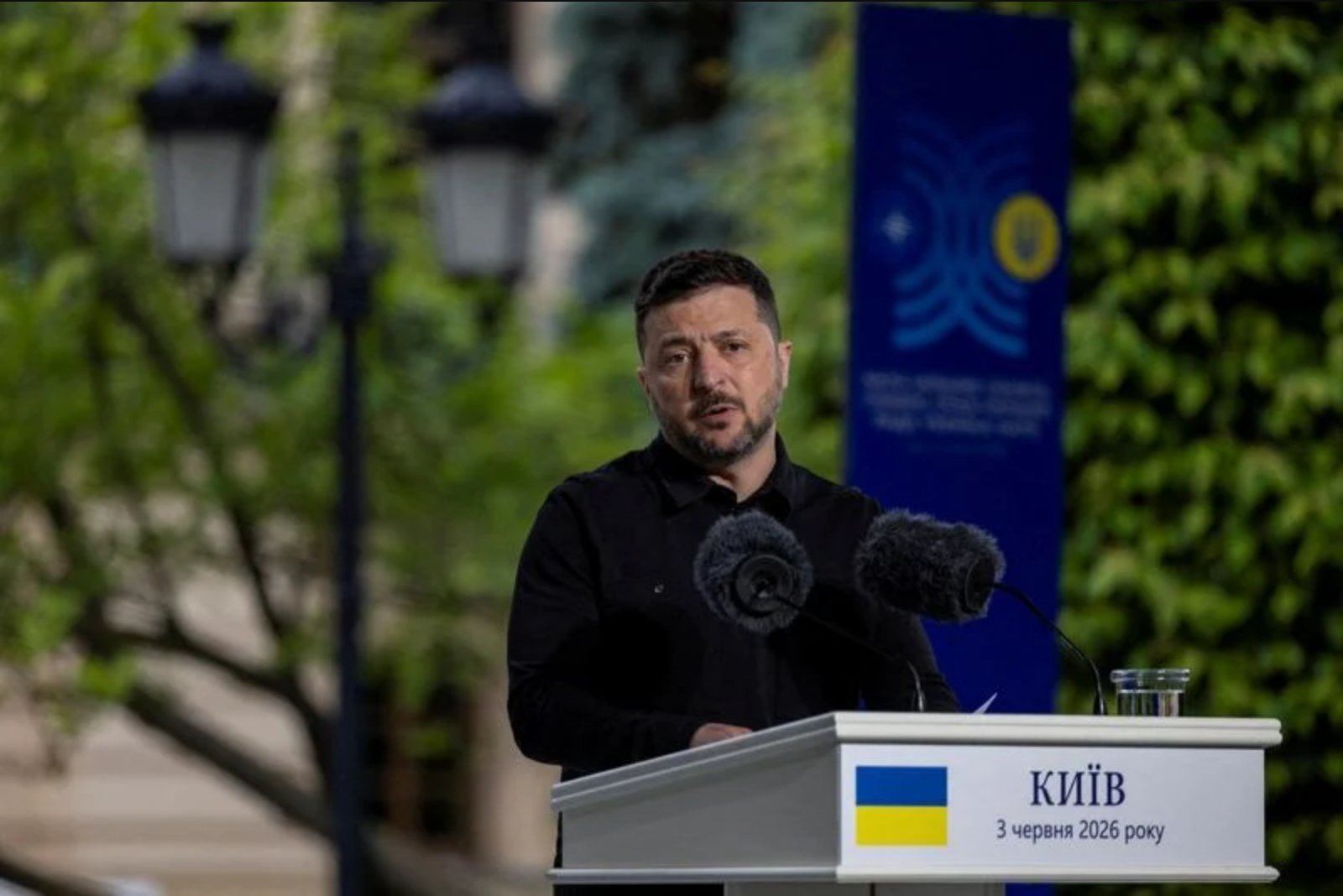
Ukraine will boost military pay and pursue expanded recruitment of foreign fighters as its armed forces contend with a shortage of personnel after four years of conflict with Russia, President Volodymyr Zelenskiy said on Friday following a meeting with key cabinet ministers.
Zelenskiy said the government had reached agreement on steps to shore up defence finances and to continue transforming the armed forces. "We agreed on how to increase the financial resilience of our defence and further transformation of the Ukrainian army," he said. He added that the cabinet would approve a specific implementation mechanism and that "the government should start the first new payments as early as June."
Funding for the measures has been enabled by a €90 billion loan from the European Union, which Zelenskiy said allows Kyiv to lift defence spending to a record 4.4 trillion hryvnias ($97 billion) this year. Those funds are expected to begin arriving this month.
Under the announced pay changes, the basic military wage will be increased by one-third to 30,000 hryvnias ($700). The change is intended to bring the basic military salary in line with the country's average monthly wage, which has risen during the war amid staffing shortages, officials and analysts said.
Frontline infantry soldiers will see a larger rise: their average monthly pay will be set at 300,000 hryvnias (about $7,000), up from current typical levels of roughly 100,000 to 150,000 hryvnias. In addition to higher pay, Kyiv will offer a new category of fixed-term contracts for combat duties, available for terms of 10, 14 or 24 months.
On recruitment, Zelenskiy said he had directed the government to expand opportunities for foreign volunteers to join the Ukrainian armed forces. "I have instructed to create significantly more opportunities to recruit foreign volunteers into the Ukrainian army, and there will be more recruitment channels in this regard," he said.
Ukrainian military publications estimate that about 10,000 foreign volunteers from more than 70 countries have joined Ukraine's armed forces since the conflict began. The administration said it would study and implement other measures to bolster personnel after earlier talks on ending the war with Russia stalled.
Context and implications
- The pay increases and contract options are part of a broader push to address manpower gaps that have emerged over four years of sustained military operations.
- The new defence budget is financed by a large EU loan and is scheduled to start disbursing this month, enabling immediate increases in personnel spending.
- Efforts to recruit more foreign volunteers are being formalized through additional recruitment channels, building on existing numbers of volunteers from dozens of countries.